
How to Choose the Right Bike Engine Oil for Your Motorcycle
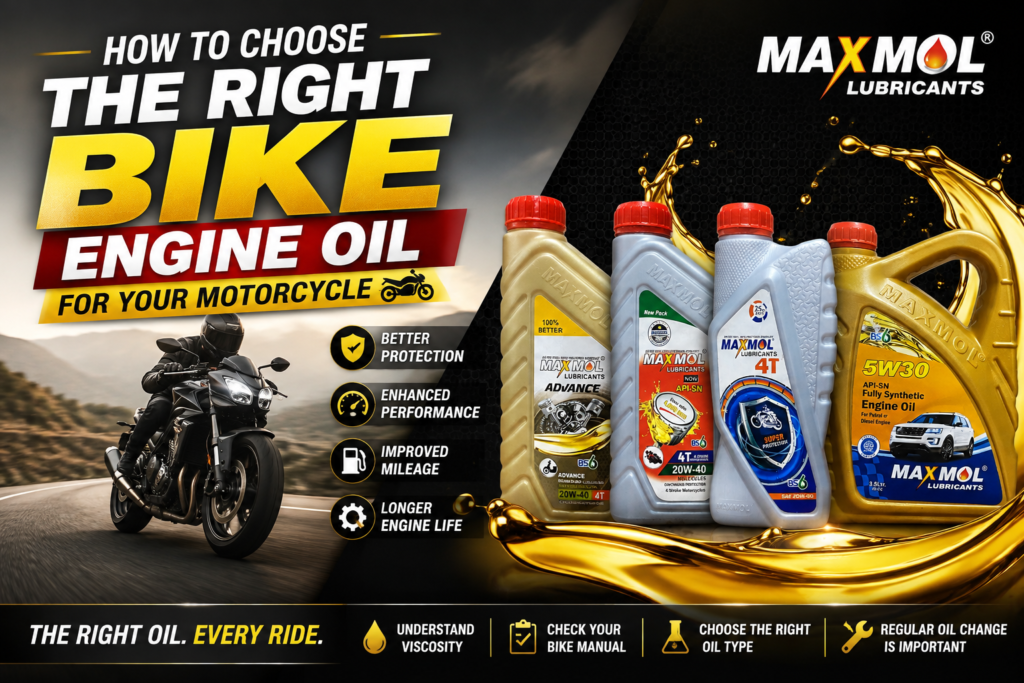
Choosing the right bike engine oil is important for maintaining smooth engine operation, proper lubrication, and long-term engine performance. With different SAE grades, API ratings, and JASO specifications available, selecting the right motorcycle engine oil can sometimes be confusing.The best approach is to understand your motorcycle manufacturer’s recommendation and then choose an engine oil that matches the required specifications.
Table Of Content
Why Choosing the Right Bike Engine Oil Matters
- Check Your Motorcycle Manufacturer’s Recommendation
- Understand Engine Oil Grades Like 20W-40 and 20W-50
- What Do API and JASO Ratings Mean?
- Mineral, Semi-Synthetic and Fully Synthetic Engine Oil
- How Often Should You Change Bike Engine Oil?
- Common Mistakes to Avoid When Choosing Engine Oil
- How to Choose the Right Bike Engine Oil
- Frequently Asked Questions
- Which Oil Is Best engine oil for Bike?
- Is 20W-40 Suitable for Motorcycles?
- How Often Should Motorcycle Engine Oil Be Changed
Why Choosing the Right Bike Engine Oil Matters
Engine oil lubricates the moving components inside a motorcycle engine and helps reduce friction and wear. It also helps manage heat, supports engine cleanliness, and contributes to smooth engine operation.Using an engine oil with the appropriate viscosity and performance specifications can help the engine operate as intended under different riding conditions.
Check Your Motorcycle Manufacturer's Recommendation
Before choosing any motorcycle engine oil, check the owner’s manual or the manufacturer’s recommended specifications.
Look for information such as:
Recommended SAE viscosity grade
API performance specification
JASO specification
Recommended oil capacity
Recommended oil-change interval
For example, some 4-stroke motorcycles may require grades such as SAE 20W-40 or SAE 15W-50. However, the correct grade depends on the specific motorcycle and the manufacturer’s recommendation.
Understand Engine Oil Grades Like 20W-40 and 20W-50
SAE grades describe the viscosity characteristics of engine oil.
In 20W40 Motorcycle Oil, the first number with the letter “W” indicates the oil’s viscosity characteristics at lower temperatures, while the second number indicates its viscosity characteristics at higher operating temperatures.Similarly, 15W50 Bike Engine Oil is a different viscosity grade.Neither grade is universally better for every motorcycle. The appropriate choice is the grade specified or approved by the motorcycle manufacturer.
Mineral, Semi-Synthetic and Fully Synthetic Engine Oil
Motorcycle engine oils are available in different formulation types, including mineral, semi-synthetic, and fully synthetic oils.
The right choice depends on factors such as:
- Motorcycle manufacturer’s recommendation
- Engine design
- Riding conditions
- Operating temperature
- Service requirements
- Oil specification
A more expensive oil is not automatically the correct oil for every motorcycle. The important point is to select an oil that meets the required viscosity and performance specifications.
How Often Should You Change Bike Engine Oil?
Lorem ipsum dolor sit amet, consectetur adipiscing elit. Ut elit tellus, luctus nec ullamcorper mattis, pulvinar dapibus leo.The recommended oil-change interval varies between motorcycles.
Factors that can affect the interval include:
Manufacturer recommendations
Riding frequency
Traffic conditions
Short-distance riding
High-temperature operation
Heavy loads
Riding environment
Always follow the maintenance schedule provided by your motorcycle manufacturer. If your motorcycle is used under severe operating conditions, the manufacturer may recommend more frequent maintenance.
Common Mistakes to Avoid When Choosing Engine Oil
Choosing Oil Only by Price
Price should not be the only deciding factor. Check the required SAE, API, and JASO specifications first.
Choosing a Grade Without Checking the Manual
Do not assume that 20W-40 Bike Engine Oil, 15W-50 Bike Engine Oil, or another viscosity grade will work for every motorcycle.
Ignoring Motorcycle-Specific Specifications
Motorcycle engines may have specific requirements, particularly when the engine and wet clutch share the same oil.
Mixing Different Oils Without Checking Compatibility
If you need to top up or change the oil, follow the manufacturer’s recommendations and use a suitable product with the required specifications.
Choosing the right motorcycle engine oil is important for smooth performance, engine protection and long-term reliability. Before selecting an oil, consider these key points:
1. Check the Recommended Viscosity
Always check the motorcycle manufacturer’s recommended viscosity before buying engine oil. For bikes that require this grade, 10W30 motorcycle oil can provide suitable lubrication and reliable performance under the recommended operating conditions.
2. Choose the Right 4T Engine Oil
Most modern motorcycles use four-stroke engines and require a suitable 4T motorcycle lubricant. Products such as Max 4T engine oil should be selected according to the bike manufacturer’s recommended viscosity and API specification.
3. Consider Engine Compatibility
When searching for Max engine oil for bike, don’t choose an oil based only on the brand name. Check whether its viscosity and performance specification match your motorcycle’s requirements.
4. Focus on Engine Protection
The best bike engine oil should provide reliable lubrication, help reduce friction and support protection against engine wear during everyday riding.
5. Choose According to Riding Conditions
Daily commuting, long-distance riding, heavy traffic and demanding riding conditions can affect engine oil requirements. The best engine oil for bike is therefore the one that matches both the manufacturer’s specification and your riding conditions.
6. Compare the Recommended Specifications
When looking for the best engine oil for motorbike, compare viscosity grade, API specification and the manufacturer’s recommendations rather than choosing solely on price or popularity.
7. Select the Right Oil for Your Engine
Ultimately, the best oil for bike engine is not necessarily the most expensive option. It is the lubricant that meets the motorcycle manufacturer’s required viscosity and performance specifications while providing dependable lubrication and engine protection.
Conclusion
Choosing the right bike engine oil Manufacture is not simply about selecting a particular brand or viscosity grade. The most important factors are your motorcycle manufacturer’s recommendations, SAE viscosity, API classification, and JASO specification where applicable.
By checking these requirements before purchasing motorcycle engine oil, you can choose a product that is appropriate for your bike’s specified application and maintenance requirements.
Frequently Asked Questions
The best engine oil depends on your motorcycle manufacturer’s recommended SAE viscosity and performance specifications. Always select an oil that meets those requirements.
20W-40 can be suitable for motorcycles that specify or approve this viscosity grade. Check your owner’s manual before selecting it.
The recommended interval varies by motorcycle. Follow the maintenance schedule provided by the manufacturer and consider the operating conditions of the motorcycle.