
Engine oil is one of the most important fluids in your bike. It lubricates moving engine parts, reduces friction, helps control heat, and protects the engine from excessive wear. But engine oil gradually loses its effectiveness as you ride.
The problem is that many riders wait until the next scheduled service instead of paying attention to the warning signs. In some cases, your bike can give you clear signals that the engine oil needs attention sooner than expected.
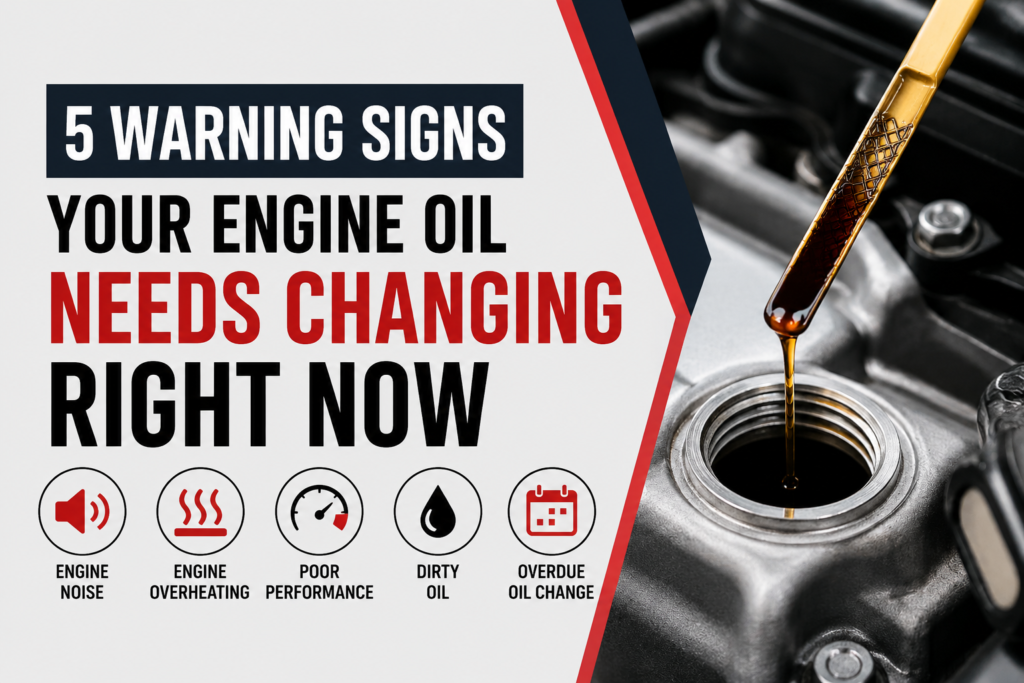
Here are 5 warning signs your engine oil needs changing right now that every bike owner should know.
One of the first signs of old or degraded engine oil can be a noticeable change in engine noise.
Fresh engine oil creates a protective lubricating layer between moving engine components. As the oil becomes contaminated or loses some of its protective properties, lubrication may become less effective.
You may notice:
- Increased engine noise
- Ticking or tapping sounds
- A harsher engine sound
- More mechanical noise during acceleration
- Increased vibration
A change in engine sound does not always mean the oil is the problem. However, checking the oil level and condition is a good first step.
If the noise is sudden, severe, or continues after an oil change, have the engine inspected by a qualified mechanic.
Does your bike no longer feel as smooth as it used to?
A rough-running or less responsive engine can be another warning sign that the engine oil needs attention. As engine oil ages, contaminants can accumulate and its lubricating performance can change.
You may notice that your bike:
- Feels rough while riding
- Vibrates more than usual
- Responds slowly to the throttle
- Feels less smooth during acceleration
- Does not feel as refined as before
Old engine oil is not necessarily the only reason for these symptoms. Air filters, spark plugs, fuel systems, clutch components, and other engine parts can also affect performance.
Still, if your oil-change interval is due and the engine feels different, checking the oil should be part of your maintenance routine.
Engine oil does more than lubricate engine components. It also helps manage heat inside the engine.
When oil becomes degraded or the oil level is too low, the engine may experience increased friction. This can contribute to higher operating temperatures.
You might notice:
- More heat from the engine
- The bike getting unusually hot in traffic
- Increased engine temperature during longer rides
- Cooling fan operating more frequently on bikes equipped with one
- A noticeable change in normal engine behavior
Remember that overheating can have several causes, including problems with the cooling system, coolant level, airflow, or other components.
If your motorcycle is overheating, do not ignore it. Check the oil and have the bike inspected if the problem continues.
Checking the oil itself is one of the easiest ways to monitor its condition.
Used engine oil naturally becomes darker as it circulates through the engine. Therefore, dark oil alone does not always mean that it must immediately be replaced.
However, oil that appears extremely dirty, thick, gritty, or contaminated deserves attention.
When checking the oil, look for:
- Excessive dirt
- Visible particles
- Unusual sludge
- An unusually thick appearance
- Metallic particles
If you notice metal particles or an unusual amount of debris, do not simply change the oil and forget about it. The motorcycle should be inspected to determine why the contamination is occurring.
Regular oil checks can help you catch potential problems before they become more expensive
Sometimes the biggest warning sign is simply the number of kilometres or months since your last oil change.
Every motorcycle has a recommended maintenance schedule. The correct interval depends on the motorcycle model, engine design, oil specification, riding conditions, and manufacturer’s recommendations.
You may need to pay particular attention if you frequently ride in:
- Heavy traffic
- Stop-and-go conditions
- Dusty environments
- Extremely hot weather
- Short-distance trips
- Demanding riding conditions
If your bike has reached the manufacturer’s recommended oil-change interval, don’t wait for symptoms such as engine noise or poor performance.
Preventive maintenance is better than waiting for an engine problem to develop.
Engine oil gradually becomes contaminated during normal operation. It can collect combustion by-products, dirt, and microscopic wear particles while additives in the oil become depleted over time.
Delaying an oil change for too long may contribute to:
- Increased friction
- Increased engine wear
- Reduced lubrication
- Sludge and deposits
- Poor engine performance
- Higher operating temperatures
- Potentially expensive repairs
Changing engine oil at the recommended interval is one of the simplest ways to support long-term engine health.
Checking your bike’s engine oil regularly is a simple maintenance habit.
Step 1: Park on a Level Surface
Keep the motorcycle on a level surface and follow your manufacturer’s instructions for checking the oil.
Step 2: Locate the Oil-Level Indicator
Depending on your motorcycle, you may have an oil dipstick or an oil inspection window.
Step 3: Check the Oil Level
Make sure the oil level is between the minimum and maximum marks.
Step 4: Look at the Oil Condition
Check for excessive contamination, unusual particles, or sludge.
Step 5: Change the Oil When Required
If the oil-change interval has been reached, use the correct engine oil specification recommended for your motorcycle.
There is no universal oil-change interval for every motorcycle.
Your motorcycle manufacturer’s owner’s manual should be your primary reference. The recommended interval may be based on kilometres, months, or both.
Your riding conditions can also influence how quickly the oil becomes contaminated or degraded.
For example, frequent short trips and heavy stop-and-go traffic can place different demands on an engine compared with regular highway riding.
Instead of relying on a fixed interval from another motorcycle, always check the recommendations for your specific model.
Using the correct engine oil is just as important as changing it on time.
Before buying engine oil, check your motorcycle manufacturer’s recommendations for:
- Viscosity grade
- API specification
- JASO specification
- Oil type
- Required oil quantity
Common motorcycle oil grades may include 10W-30, 10W-40, 15W-40, and 20W-40, but the correct grade depends on the motorcycle.
Do not select an engine oil based only on viscosity. Always make sure the oil meets the specifications required by your motorcycle manufacturer.
If your engine oil is overdue for replacement, continuing to ride without servicing it is not a good maintenance practice.
Old or degraded oil may provide less effective protection than fresh oil. Continuing to delay an overdue oil change can increase the risk of engine wear.
If you notice multiple warning signs—such as increased engine noise, rough performance, overheating, or unusually dirty oil—check the oil level and condition and consider having the motorcycle inspected.
Knowing the 5 warning signs your engine oil needs changing right now can help you take action before a small maintenance issue becomes a bigger problem.
If your engine becomes noisier, feels rough, runs hotter than usual, the oil looks heavily contaminated, or your motorcycle has reached its recommended oil-change interval, it’s time to check the engine oil.
Most importantly, don’t wait for your bike to develop a serious problem before servicing it. Follow the manufacturer’s maintenance schedule, check your oil regularly, and always use the correct engine oil specification for your motorcycle.