Maxmollubricants

Bike Engine Oil

Bike Engine Oil: Guides, Tips and Maintenance

Choosing the right bike engine oil is important for smooth engine operation, effective lubrication and routine motorcycle maintenance. The correct oil depends on your bike manufacturer’s recommendations, engine design, riding conditions and the required oil specification.

Explore our bike engine oil articles to understand engine oil grades, compare mineral and synthetic oils, learn how to check engine oil levels, and identify common problems such as engine oil leakage. These practical guides help Indian riders make informed decisions about motorcycle engine oil and everyday bike care.

Explore Bike Engine Oil Guides

Choosing the Right Engine Oil for Your Bike

Learn how to select engine oil based on your motorcycle’s recommended viscosity grade, specifications and riding requirements.

Understanding Bike Engine Oil Grades

Understand what grades such as 10W-30 and 20W-40 mean and why you should follow the viscosity recommended in your owner’s manual.

Bike Engine Oil Maintenance

Discover how to check your engine oil level, recognise signs of low oil and understand when an oil change may be required.

Common Bike Engine Oil Problems

Learn about possible causes of bike engine oil leakage, warning signs and when professional inspection is necessary.

Mineral, Semi-Synthetic and Synthetic Engine Oil

Understand the differences between common engine oil types and how to choose an option that meets your motorcycle manufacturer’s specifications.

Explore more educational resources from MAXMOL Lubricants to build your understanding of engine oil selection, motorcycle maintenance and lubrication.

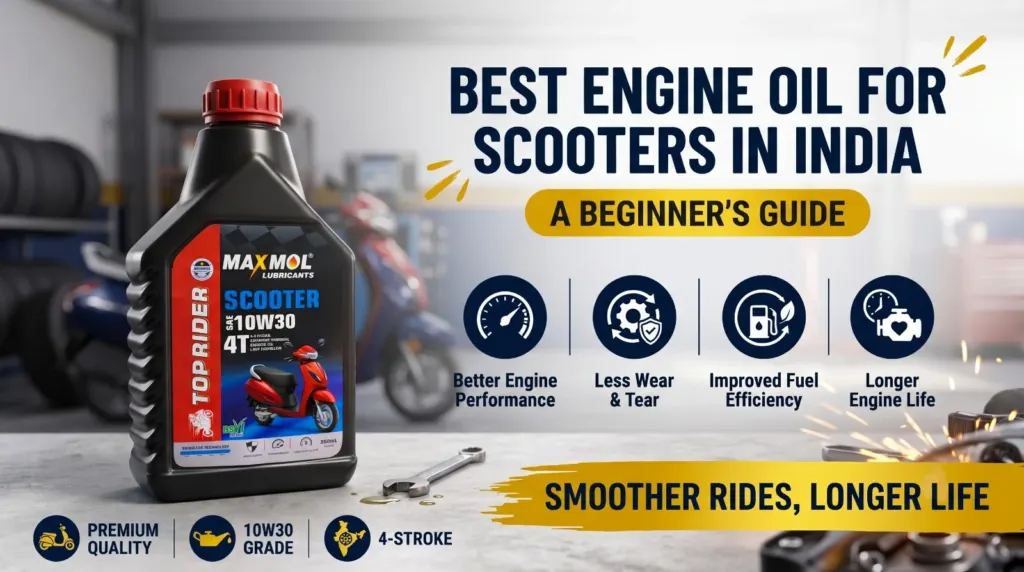
MAXMOL Scooter Rider 10W30 4T engine oil for scooters in India

Best Engine Oil for Scooter in India: A Beginner’s Guide

Best Engine Oil for Scooter in India: A Beginner’s Guide Choosing the best engine oil for scooter is important for maintaining engine performance, reducing friction, and supporting smooth daily rides. Whether you use your scooter for commuting to work, running errands, or travelling short distances, the right engine oil helps protect engine components and maintain reliable performance. However, not every scooter uses the same type of engine oil. The correct oil depends on your scooter’s manufacturer recommendations, engine design, required viscosity grade, and service conditions. In this beginner-friendly guide, we will explain how to choose the best engine oil for scooter in India, which oil grades to look for, when to change the oil, and what to check before buying engine oil for your scooter. What Is the Best Engine Oil for a Scooter? The best engine oil for a scooter is the oil that meets the viscosity grade and performance specifications recommended by its manufacturer. There is no single engine oil that is suitable for every scooter. Most petrol scooters use four-stroke engines, but the recommended oil grade can differ by model. Some scooters require a grade such as SAE 10W-30, while others may specify SAE 10W-40 or another grade. Before purchasing scooter engine oil, check your owner’s manual for: Following these instructions is more important than choosing oil simply because it is marketed as premium, synthetic, or suitable for all vehicles. How to Choose the Best Engine Oil for Scooter in India Indian scooters operate in different conditions, including hot weather, traffic congestion, frequent stops, dusty roads, and regular short-distance journeys. These conditions make proper lubrication and timely maintenance especially important. Consider the following factors when choosing scooter engine oil. 1. Check the Recommended Viscosity Grade Viscosity describes how easily engine oil flows at different temperatures. The SAE grade printed on the container helps identify its viscosity characteristics. For example, SAE 10W-30 is a multigrade oil designed to meet specified viscosity requirements at lower and higher temperatures. However, this does not automatically make it the right choice for every scooter. Always use the grade recommended by your scooter manufacturer rather than selecting oil based only on local weather conditions. 2. Understand Mineral, Semi-Synthetic, and Fully Synthetic Oil Engine oils are commonly sold in different formulations. A more expensive formulation is not automatically better for your scooter. Choose the oil that meets the manufacturer’s requirements and suits your maintenance needs. 3. Check the Performance Specifications Do not rely on viscosity alone. The engine oil must also meet the required performance standards. Look for the API service category or other specifications listed in your owner’s manual. Some scooters also have specific requirements related to their engine design and lubrication system. Using oil with unsuitable specifications may affect engine protection and performance. 4. Buy from a Reliable Supplier Purchase genuine engine oil from a reliable dealer, distributor, or authorised retailer. Check the packaging, product seal, batch details, manufacturer information, and product specifications before use. Avoid choosing an oil only because it is inexpensive. The right product should meet the scooter manufacturer’s requirements and come from a trustworthy source. Which Engine Oil Grade Is Best for a Scooter? The correct engine oil grade depends on the scooter model and its manufacturer’s recommendations. Here are examples of grades that may be specified for different scooters: Engine oil grade What to know SAE 10W-30 Used in some scooters where the manufacturer specifies this grade. SAE 10W-40 Suitable only when the scooter manufacturer permits or recommends it. Other recommended grades Some models may require a different viscosity grade or specific performance standard. These grades are examples, not universal recommendations. Always confirm the exact requirement in your owner’s manual before buying oil. Is 10W-30 Engine Oil Good for Scooters? SAE 10W-30 can be a suitable choice for scooters that specifically recommend this viscosity grade. It is a multigrade oil designed to meet defined flow and viscosity requirements across a range of temperatures. However, it should not be considered the best engine oil for every scooter. If your scooter requires another grade, follow that recommendation instead. Also check the required API category and any additional specifications. Using the correct combination of viscosity and performance standards helps ensure that the oil is appropriate for your engine. Is Synthetic Engine Oil Better for Scooters? Synthetic engine oil can provide useful performance characteristics, depending on its formulation and the requirements of the engine. However, it is not automatically the best option for every scooter. When comparing mineral, semi-synthetic, and fully synthetic oils, consider: The most suitable engine oil is one that meets your scooter’s requirements. Do not switch to a different viscosity grade or extend oil-change intervals without checking the manufacturer’s guidance. How Often Should You Change Scooter Engine Oil? The recommended engine oil replacement interval varies by scooter model, engine design, and riding conditions. Your owner’s manual or authorised service centre should be your primary reference. You may need to pay closer attention to maintenance if you regularly ride in heavy traffic, make frequent short trips, or operate in dusty conditions. These factors can affect maintenance needs, but they do not establish one universal oil-change interval. To maintain your scooter properly: Never overfill or underfill the engine with oil. Both conditions can cause problems. What Are the Signs That Your Scooter Needs an Oil Check? Checking your scooter’s engine oil regularly can help you identify maintenance problems early. Watch for these warning signs: These signs do not always mean the engine oil alone is responsible. If you notice persistent unusual noises, overheating, leaks, or warning lights, have the scooter inspected by a qualified mechanic. Can You Use Motorcycle Engine Oil in a Scooter? Not every motorcycle engine oil is suitable for every scooter. Although both may use four-stroke petrol engines, their lubrication requirements can differ. Some motorcycles have wet-clutch systems that require specific friction characteristics. Many scooters use a different transmission arrangement, but requirements still vary by model. Before using motorcycle engine oil in a scooter, confirm that

Best Engine Oil for Scooter in India: A Beginner’s Guide Read More »
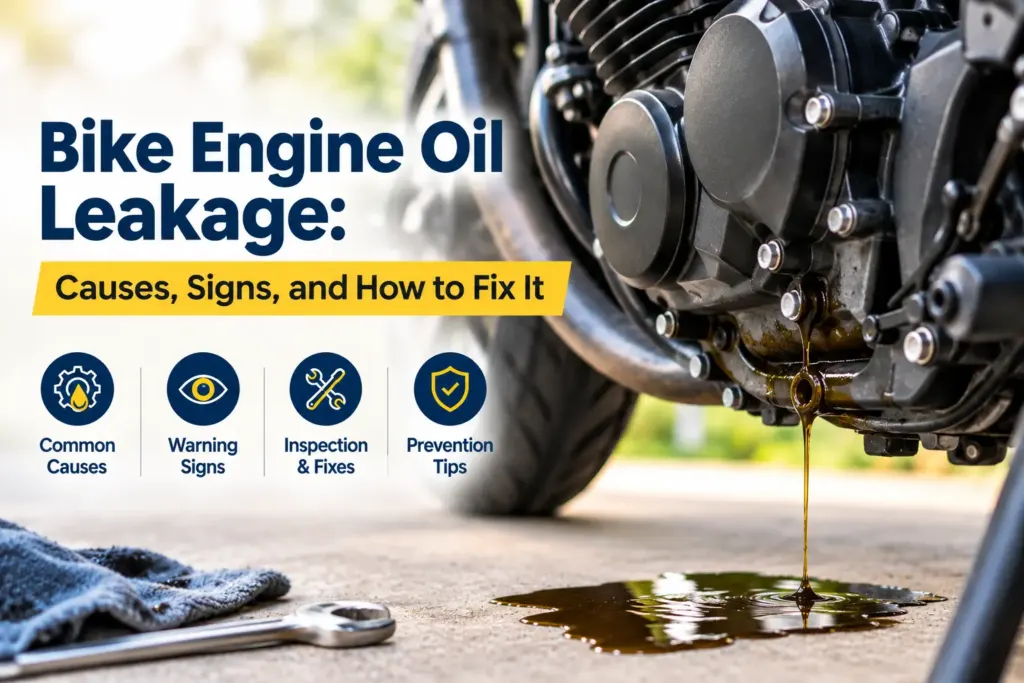
Bike engine oil leakage showing oil dripping from the motorcycle engine onto the ground.

Bike Engine Oil Leakage: Causes, Signs, and How to Fix It

Bike Engine Oil Leakage: Causes, Signs, and How to Fix It Bike engine oil leakage is a common problem that motorcycle owners should never ignore. A few drops of oil under your bike, oily marks around the engine, or a noticeable drop in engine oil level can indicate a leak. While some leaks may result from a loose drain bolt or worn seal, others may require professional inspection. Understanding the causes of bike engine oil leakage can help you identify warning signs early, protect your engine, and avoid unnecessary repair costs. In this beginner-friendly guide, we will explain why engine oil leaks, how to identify the problem, and what you should do to fix it safely. To understand how to select the correct oil for your motorcycle, read our guide on [choosing the right engine oil for your bike]. What Is Bike Engine Oil Leakage? Bike engine oil leakage occurs when lubricating oil escapes from the engine or its connected components. Engine oil reduces friction between moving parts, helps manage heat, and protects internal components from wear. When oil leaks out, the engine may not receive adequate lubrication if the oil level becomes too low. This can increase friction, cause overheating, and potentially lead to serious engine damage. A small oil stain does not always mean there is major engine damage, but every suspected leak should be checked to find its source. What Are the Common Causes of Bike Engine Oil Leakage? Several issues can cause engine oil to leak from a motorcycle. The most common causes include the following. 1. Loose or Damaged Oil Drain Bolt The oil drain bolt is removed during an engine oil change. If it is not tightened correctly, or if its sealing washer is damaged, oil may leak from the bottom of the engine. What to look for: Fresh oil around the drain bolt or an oily patch underneath the engine. 2. Worn Engine Oil Seals Oil seals help prevent lubricating oil from escaping around rotating shafts and other engine components. Over time, seals may harden, wear out, or become damaged. What to look for: Oil around shaft openings, engine covers, or other sealed areas. The exact location depends on the motorcycle’s design. 3. Damaged Gaskets Gaskets create a seal between engine components, such as the crankcase sections or engine covers. A damaged, incorrectly installed, or deteriorated gasket may allow oil to escape. What to look for: Oil seeping along the joint between two engine components. 4. Overfilled Engine Oil Adding more engine oil than the manufacturer recommends can contribute to leakage or oil being forced through certain openings, depending on the engine design. What to do: Check the oil level according to the owner’s manual. Do not assume that adding more oil will improve engine protection. 5. Loose or Improperly Fitted Engine Components Incorrect installation after servicing can leave bolts, covers, filters, or sealing components improperly secured. This may result in oil leakage after an oil change or engine repair. What to look for: Leakage that starts soon after servicing. Have the workshop inspect the area rather than tightening engine bolts randomly. 6. Excessive Crankcase Pressure Problems with the crankcase ventilation system or other internal engine issues can increase pressure and contribute to oil escaping through seals or vents. What to do: If the leak continues despite correct oil levels and intact external seals, ask a qualified mechanic to inspect the ventilation system and engine condition. What Are the Warning Signs of Bike Engine Oil Leakage? Identifying the signs early can help you respond before the problem becomes serious. Do not rely on visible stains alone. Oil can travel along engine surfaces, so the point where it drips may not be the actual source of the leak. How Can You Check Bike Engine Oil Leakage at Home? You can perform a basic visual inspection before visiting a mechanic. Follow these steps carefully. Step 1: Park the Bike Safely Park the motorcycle on level ground, switch off the engine, and allow it to cool. Keep the bike stable and away from traffic. Step 2: Check for Oil Under the Bike Look for fresh drops or puddles beneath the engine. Avoid touching hot components or crawling under an unstable motorcycle. Step 3: Inspect Visible Engine Areas Look for wetness around the drain bolt, engine covers, accessible seals, and other visible joints. Do not dismantle engine components unless you have the necessary skills and tools. Step 4: Check the Engine Oil Level Use the checking procedure specified in your owner’s manual. Some bikes require the motorcycle to be upright, while the correct method for checking the level varies by model. For more guidance, read this guide on [how to check your bike’s engine oil level] and always follow the checking procedure recommended for your motorcycle. Step 5: Observe When the Leakage Occurs Notice whether the leak appears after parking, after riding, or immediately following an oil change. This information can help a mechanic diagnose the problem. Important: If oil is leaking rapidly, the oil level is very low, an oil-pressure warning appears, or oil reaches the tyre or brake components, do not ride the bike. Arrange professional assistance. How Can Bike Engine Oil Leakage Be Fixed? The correct repair depends on the source of the leak. There is no single solution for every motorcycle. Cause Possible repair Loose drain bolt Correct tightening to the manufacturer’s specification and inspection of the sealing washer Damaged drain-bolt washer Replacement with the correct washer Worn oil seal Replacement of the affected seal Damaged gasket Replacement of the gasket and proper reassembly Excess engine oil Correct the oil level using the manufacturer’s procedure Faulty crankcase ventilation Inspection and repair of the ventilation system Damaged engine casing Professional assessment and appropriate repair Avoid using random sealants, additives, or excessive tightening as quick fixes. Incorrect repairs may damage threads, interfere with proper sealing, or make the problem worse. For persistent or significant leakage, consult a qualified motorcycle mechanic. Can the Wrong Engine

Bike Engine Oil Leakage: Causes, Signs, and How to Fix It Read More »

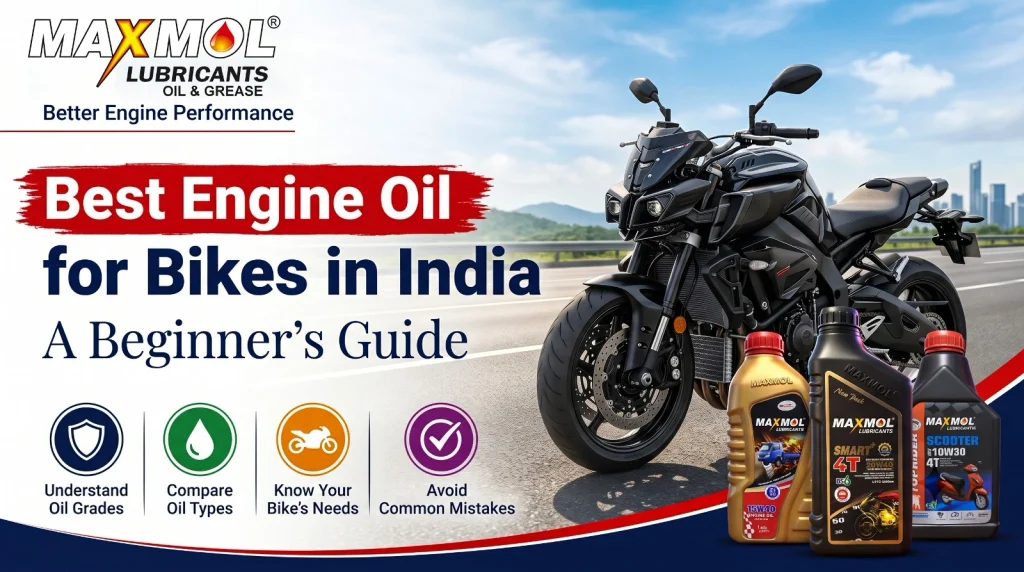
Best engine oil for bikes in India beginner's guide featuring MAXMOL Lubricants engine oil bottles and a motorcycle.

Best Engine Oil for Bikes in India: A Beginner’s Guide

You’re getting your bike serviced, and the mechanic asks which engine oil you want: 10W-30, 10W-40, 15W-40, or 20W-40. If these numbers look confusing, you’re not alone. Choosing the best engine oil for bikes in India can feel difficult because there are different oil grades, brands, and types available. The right choice depends on your motorcycle’s engine, the manufacturer’s recommendations, and how you use your bike. In this guide, you’ll learn how to choose bike engine oil, understand common oil grades, compare mineral and synthetic oils, and avoid mistakes that could affect your engine. What Is Engine Oil, and Why Does Your Bike Need It? Engine oil is a lubricant that helps the moving parts inside your motorcycle’s engine work smoothly. As the engine runs, its internal components move at high speeds and generate heat. Good engine oil performs several important functions: Using the correct engine oil and changing it at the recommended intervals are important parts of motorcycle maintenance. Which Is the Best Engine Oil for Bikes in India? There is no single engine oil that is best for every motorcycle. A commuter bike used for daily office travel may have different oil requirements from a high-performance motorcycle or a bike used for long-distance touring. Before choosing an oil, check three things: For example, if your motorcycle manufacturer recommends SAE 10W-30 with a specified JASO rating, choose an oil that meets those requirements rather than switching to a different grade simply because another oil is more expensive. The best engine oil for your bike is the one that meets the manufacturer’s requirements and suits the way you ride. Understanding Bike Engine Oil Grades You may have noticed numbers such as 10W-30, 10W-40, 15W-40, and 20W-40 printed on engine oil containers. These numbers describe the oil’s viscosity, or how it flows at different temperatures. What Does 10W-30 Mean? In a multigrade oil such as SAE 10W-30: A lower number before W generally indicates better low-temperature flow characteristics within the relevant grading system. However, this does not mean that a lower-numbered oil is automatically better for every motorcycle. Common Bike Engine Oil Grades 10W-30 bike engine oil: Used in many modern motorcycles and scooters when specified by the manufacturer. 10W-40 bike engine oil: Offers a different viscosity profile and is suitable for engines whose manufacturers recommend this grade. 15W-40 bike engine oil: Commonly associated with certain diesel engines, but it can be used in a motorcycle only when the oil meets the motorcycle manufacturer’s required specifications. 20W-40 bike engine oil: Used in some motorcycles, including models whose manufacturers specify this grade. These grades are not interchangeable in every engine. Always check your owner’s manual before selecting one. Mineral vs Synthetic Engine Oil: Which Is Better? Another common question is whether to choose mineral, semi-synthetic, or fully synthetic engine oil. The main difference is the oil formulation and the performance characteristics it is designed to deliver. 1. Mineral Engine Oil Mineral engine oil is made using refined petroleum base oils. It may be a suitable option for motorcycles whose manufacturers recommend this type of lubricant. Consider it when: 2. Semi-Synthetic Engine Oil Semi-synthetic engine oil combines mineral and synthetic base oils. Its formulation aims to provide a balance of performance characteristics and cost. Consider it when: 3. Fully Synthetic Engine Oil Fully synthetic engine oil uses synthetic base oils and is formulated for particular performance requirements. Depending on the formulation, it may provide benefits such as improved oxidation stability or performance across a wider range of operating conditions. Consider it when: Which should you choose? Do not assume that fully synthetic oil is always the right choice or that mineral oil is always inferior. The correct specification for your motorcycle matters more than the product category alone. How to Choose Engine Oil for Your Bike Follow these practical steps before purchasing bike engine oil. Step 1: Check Your Owner’s Manual Look for the recommended SAE viscosity grade, API classification, JASO rating, and any other requirements. If you cannot find the information, consult an authorized service centre. Step 2: Identify Your Engine Type Most everyday motorcycles in India use four-stroke engines. These may require oil that is suitable for both engine lubrication and, in many models, a shared gearbox and wet clutch. Two-stroke engines have different lubrication requirements. Never assume that oil intended for a four-stroke motorcycle is suitable for a two-stroke engine. Step 3: Check API and JASO Ratings API ratings indicate defined engine oil performance categories. JASO ratings are particularly relevant to motorcycle oils. For many four-stroke motorcycles with wet clutches, the manufacturer may specify JASO MA or MA2. These ratings help identify oils designed to meet particular friction requirements. Other motorcycles may have different requirements, so check the manual. Step 4: Consider Your Riding Conditions Think about how you normally use your motorcycle: Your riding style helps you understand your needs, but it should not override the manufacturer’s oil specifications. Step 5: Buy From a Reliable Seller Purchase sealed, properly labelled engine oil from a trusted dealer or retailer. Check the manufacturer’s details, batch information, seal, and product specifications. Avoid suspiciously cheap products from unverified sellers. Best Engine Oil for Popular Bike Categories The right oil depends on the exact motorcycle model and year, not just the brand name. Bike category What to check Everyday commuter bikes Recommended viscosity and API/JASO specifications Scooters The manufacturer’s engine oil requirements; do not assume scooter and motorcycle oils are identical Royal Enfield motorcycles The exact model’s owner’s manual and specified oil grade Sport and performance bikes Required viscosity, performance ratings, and service recommendations Older motorcycles The original manufacturer’s requirements and any official updated recommendations For example, two motorcycles from the same manufacturer may require different viscosity grades. Even models with similar engine capacities may have different lubrication requirements. Before purchasing, search for your exact model and year in the official owner’s manual rather than relying only on a general online recommendation. Common Mistakes to Avoid When Choosing Bike Engine Oil 1. Choosing

Best Engine Oil for Bikes in India: A Beginner’s Guide Read More »
Full synthetic 5W-30 engine oil being poured into a car engine, showing benefits of better engine protection, high-temperature stability, cold-start performance, and longer oil-change intervals

What Makes Synthetic Engine Oil Worth the Extra Cost?

When it comes to choosing the engine oil one question often comes up: Is synthetic engine oil really worth the cost? Compared with mineral oil, synthetic oil is generally more advanced, offering better protection, improved performance, and greater stability across a wide range of temperatures. Although the initial synthetic oil price may be higher, its long-term benefits can make it a smart choice for cars, bikes, commercial vehicles, and high-performance engines. What exactly makes full synthetic oil worth paying more for Let’s take a closer look What Is Synthetic Engine Oil? Synthetic engine oil is specially engineered using highly refined base oils and advanced additive technology. Unlike conventional oils, which are refined directly from crude petroleum, synthetic lubricants are designed to provide more consistent molecular properties and predictable performance. Fully synthetic oil is formulated to deliver reliable lubrication during cold starts, high-temperature operation, heavy loads, and extended driving conditions. This makes synthetic oil particularly suitable for modern engines that operate at higher temperatures and tighter tolerances. 1. Better Engine Protection One of the biggest advantages of synthetic oil is its ability to protect engine components from wear. During engine operation, hundreds of moving components constantly rub against each other. A high-quality synthetic lubricant forms a strong protective film between these surfaces, helping reduce metal-to-metal contact. This can help protect critical components such as: For drivers who want long-term engine reliability, this improved protection is one of the main reasons to consider the best synthetic oil for their vehicle. 2. Excellent Performance at High Temperatures Engine temperatures can become extremely high, particularly during highway driving, heavy traffic, towing, or demanding operating conditions. A quality best synthetic motor oil is engineered to maintain its viscosity and protective properties under high-temperature conditions. Synthetic formulations generally resist thermal breakdown better than conventional oils. This means the oil can continue providing lubrication when the engine is working hard. For vehicles operating in hot climates or under heavy loads, this can be a significant advantage. 3. Better Cold-Start Protection Engine wear can occur during startup because oil needs time to circulate throughout the engine. Synthetic oil is designed to flow effectively at low temperatures, helping it reach critical engine components quickly after startup. For example, 5W-30 engine oil is a popular viscosity grade because it is designed to provide suitable low-temperature flow while maintaining the required viscosity at normal operating temperatures. A 5W30 fully synthetic oil can therefore be an excellent option for vehicles whose manufacturers recommend this viscosity grade. However, always check your vehicle owner’s manual before choosing an engine oil viscosity. 4. Improved Oxidation and Thermal Stability Heat and oxygen can cause engine oil to oxidize over time. Oxidation can contribute to oil degradation, deposits, sludge, and reduced lubrication performance. Synthetic formulations are engineered for better resistance to oxidation and thermal stress. This allows fully synthetic oil to maintain its performance for longer under demanding conditions, although the correct oil-change interval should always follow the vehicle manufacturer’s recommendations. 5. Cleaner Engine Operation A quality synthetic lubricant can help reduce the formation of sludge and deposits when compared with lower-quality or heavily degraded lubricants. Cleaner oil circulation helps maintain lubrication around important engine components. Some advanced synthetic oils also contain detergent and dispersant additives designed to help keep contaminants suspended and reduce deposit formation. The result can be a cleaner and more efficiently lubricated engine. 6. Potentially Longer Oil-Change Intervals One reason people consider synthetic oil despite its higher upfront price is its durability. Because synthetic oil can offer better resistance to oxidation, heat, and viscosity breakdown, some vehicle manufacturers allow longer oil-change intervals when the specified synthetic oil is used. However, longer oil-change intervals should never be assumed simply because an oil is synthetic. Always follow the manufacturer’s recommended service interval and oil specification. 7. Better Fuel Efficiency Potential Engine oil affects the amount of friction inside an engine. Modern synthetic oils can be formulated with carefully controlled viscosity and friction-reducing characteristics. Lower internal resistance can potentially contribute to improved fuel economy. The actual improvement depends on the vehicle, engine design, driving conditions, oil viscosity, and other factors, so synthetic oil should not be viewed as a guaranteed fuel-saving solution. Synthetic Oil vs Conventional Oil Feature Synthetic Oil Conventional Oil Engine protection Excellent Good High-temperature stability Excellent Moderate Cold-start performance Excellent Good Oxidation resistance High Moderate Deposit control Generally better Depends on formulation Performance consistency High Moderate Initial price Higher Lower Modern engine suitability Excellent when specified Depends on manufacturer The important point is that more expensive does not automatically mean better for every engine. The best oil is the one that meets your vehicle manufacturer’s required viscosity and performance specifications. Is 5W-30 Engine Oil a Good Choice? 5W-30 engine oil is widely used in many modern petrol and diesel engines. The “5W” indicates the oil’s low-temperature viscosity performance, while “30” represents its viscosity at operating temperature. A 5W30 fully synthetic oil can provide a combination of good cold-start flow and reliable protection at normal engine operating temperatures. However, viscosity requirements vary between engines. Always check the owner’s manual or manufacturer’s specification before purchasing 5W-30. Why Is Synthetic Oil More Expensive? The higher synthetic oil price is mainly associated with the quality of the base oils, advanced formulation technology, additive systems, testing, and manufacturing processes used to produce the lubricant. You’re not simply paying for the word “synthetic.” A premium lubricant may offer: Therefore, the real value of synthetic oil should be evaluated based on performance and protection over the vehicle’s service life, rather than only the price of one bottle. How to Choose the Best Synthetic Oil for Your Vehicle Choosing the best synthetic oil isn’t simply about buying the most expensive product. Consider these factors: 1. Check the Recommended Viscosity Your vehicle manufacturer may recommend 5W-30, 5W-40, 0W-20, 10W-40, or another viscosity grade. 2. Check the Required Performance Specification Look for the performance standards and approvals required by your vehicle manufacturer. 3. Consider Your Driving Conditions Frequent city driving, long highway

What Makes Synthetic Engine Oil Worth the Extra Cost? Read More »

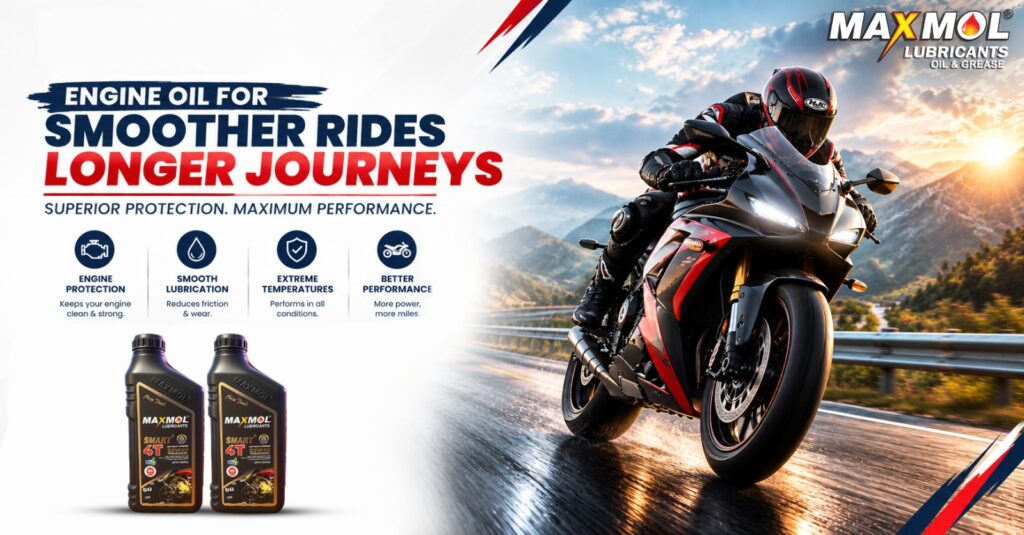
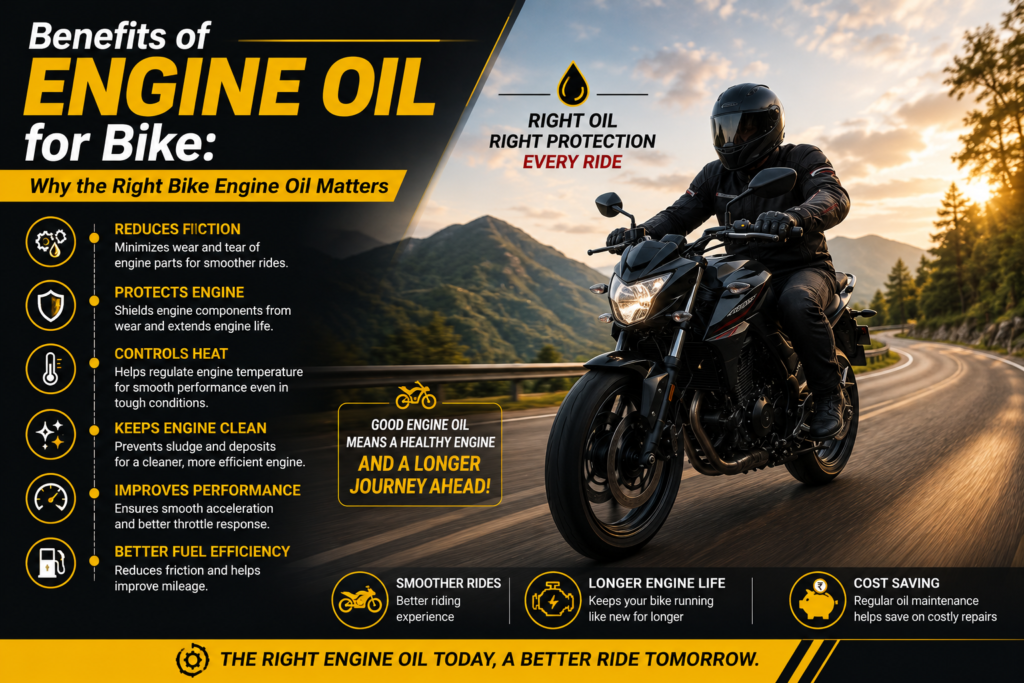
Engine oil for bike for smoother rides and longer journeys by Maxmol Lubricants

Monsoon Bike Care: Why Oil Change Frequency Matters More in Rainy Season

Monsoon season is tough for bike owners. Heavy rain, humidity, muddy roads, and waterlogged streets can hurt your motorcycle’s performance, and it needs more care. While tyres, brakes, and chains get a lot of focus in the season, **engine oil for bike** maintenance is just as important. Using the right **engine oil for the bike** and following the suggested service schedule can keep the engine running and protect key internal parts. Engine oil has a job of lubricating moving parts, lowering friction, managing heat and keeping the engine clean. As the oil ages, its protective power fades timely replacement becomes a key part of regular motorcycle maintenance. During monsoons, bikes face moisture, muddy water, and tough riding conditions. Short trips and riding through waterlogged roads can make good maintenance more vital. Rain alone does not mean every motorcycle needs another oil change. The right interval depends on the motorcycle manufacturer’s advice, the oil specification, the bike’s condition, and how you ride. Choosing the *best bike engine oil** is not just about picking the priciest option. The oil must match the viscosity and performance specs the motorcycle needs. Before buying engine oil check your owners manual for: * Recommended viscosity grade * API specification * JASO specification * Recommended oil quantity * Recommended oil‑change interval Using an oil that **matches** the specs the motorcycle calls for gives lubrication and fits the engine and if the bike has a wet clutch fits that too. **20W40 engine oil** is one choice for motorcycles. It is not automatically right for every bike. The proper viscosity depends on the motorcycle manufacturers specification. The numbers in 20W‑40 tell how thick the oil is at temperatures.. Picking oil just from the viscosity grade is not enough. API and JASO specs must also be checked if the motorcycle says so. Some motorcycles may need 20W‑40 while others may need a viscosity like 10W‑30, 10W‑40 or 15W‑50. So do not change to 20W‑40 just because it is monsoon season. Always follow the viscosity and performance specs the motorcycle wants. Oil‑change frequency matters because engine oil changes over use. The correct replacement time keeps lubrication. Protects the engine. During monsoon riders who often go through traffic, muddy roads or waterlogged spots should watch their bike more closely. If the motorcycle has faced conditions a qualified mechanic can check if extra service is needed. Watch for signs such as: * engine noise * Rough engine operation * Oil leakage * Changes in engine performance * oil appearance * Oil level below the recommended mark If you see any of these signs get the motorcycle inspected instead of just changing the oil without finding the real problem. The *bike engine oil manufacturer** is another factor buyers often think about. A reputable manufacturer must give details about the oils viscosity, performance specs, recommended use and how to use it. The brand name alone should not decide your choice. Always compare the oils viscosity and API/JASO specs with what the motorcycles manual says. Different motorcycles can need oil grades and specs so the right product for one bike may not fit another. **Bike engine oil price** can change based on things like brand, viscosity, formula, pack size. Whether the oil is mineral, semi‑synthetic or synthetic. Of picking oil just because it is cheaper check if it meets the specs your motorcycle needs. A higher‑priced oil is not always right if its specs do not match the bike. Before buying compare the oils specs. How much your motorcycle needs. Engine oil is one part of rainy‑season maintenance. For monsoon bike care pay attention to the following areas: * Check the Chain * Inspect the Brakes * Check Tyres * Clean the Bike * Check the Air Filter Rain and mud raise the risk of corrosion.. Lubricate the chain often with a good motorcycle chain oil. Wet roads need care. Check brake pads, discs or drums. Have any odd braking checked. Check Tyres Keep the tyre pressure as recommended. Check the tread often. Good tyre condition is very important on roads. Clean the Bike Mud and dirty water can gather around the engine, chain and other parts. Clean the motorcycle often. Let it dry well. Check the Air Filter A dirty or wet air filter can hurt airflow and engine performance. Follow the inspection and replacement plan the motorcycle wants. Final Thoughts Proper **monsoon bike care** does not always mean changing oil often just because it rains. Instead it means watching the motorcycle closely and following the manufacturers maintenance plan. Whether you are looking for *engine oil, for bike** comparing the **best bike engine oil** checking if **20W

Monsoon Bike Care: Why Oil Change Frequency Matters More in Rainy Season Read More »

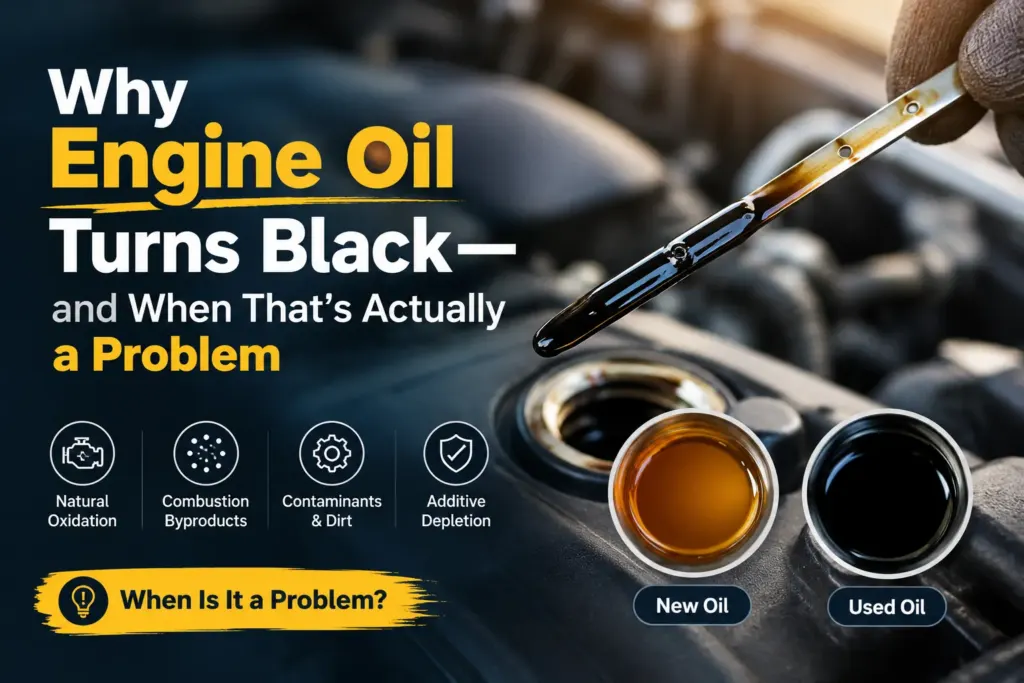
Engine oil turning black on a dipstick showing the difference between new and used oil

Why Engine Oil Turns Black—and When That’s Actually a Problem

Have you ever checked your vehicle’s engine oil and noticed that it has turned black? If so, you may immediately think that the oil has become dirty and needs to be replaced. But black engine oil is not always a sign of a problem. Engine oil naturally changes colour as it circulates through the engine. It collects microscopic particles, absorbs combustion by-products, and works with detergents and dispersants to keep the engine clean. However, extremely dark oil, unusual smells, sludge, or changes in oil consistency can sometimes indicate an underlying engine problem. In this guide, we’ll explain why engine oil turns black, when it is normal, when it becomes a warning sign, and how regular engine oil changes can help protect your vehicle. There are several reasons why engine oil changes from its original amber or golden colour to dark brown or black. 1. Engine Oil Absorbs Contaminants As engine oil circulates through the engine, it picks up microscopic particles, carbon deposits, dust, and other contaminants. These particles can make the oil appear darker. This is one of the main reasons engine oil turns black during normal use. 2. Detergents Keep the Engine Clean Modern engine oils contain detergents and dispersants. These additives help prevent deposits from sticking to engine components and keep contaminants suspended in the oil. As the oil performs this cleaning function, its colour can become darker. So, in many cases, black engine oil means the oil is doing its job rather than failing. 3. Combustion By-Products Enter the Oil During combustion, small amounts of soot and other by-products can enter the engine oil. This is particularly noticeable in diesel engines, where soot production can make oil turn dark relatively quickly. Even in petrol engines and motorcycles, combustion-related deposits can gradually darken the oil. 4. High Engine Temperatures Engine oil operates in a hot environment. Repeated exposure to high temperatures can gradually change the colour and properties of the oil. If the engine regularly operates under heavy loads or in extreme conditions, the oil may darken faster. 5. Normal Wear and Contamination Tiny amounts of metal particles and other materials generated through normal engine operation can enter the oil. The oil filter removes many contaminants, but some particles remain suspended in the oil. This can also contribute to the oil becoming darker over time. Yes, black engine oil can be completely normal. Colour alone is not a reliable way to determine whether engine oil needs to be changed. Fresh engine oil is generally amber or golden, but after running through an engine, it can become brown or black relatively quickly. This does not automatically mean that the oil has lost its protective properties. Instead of judging oil only by its colour, pay attention to: If the oil is dark but still within its recommended service interval and the engine is operating normally, the colour alone may not be a reason for concern. While dark oil can be normal, there are situations where it may indicate a problem. 1. Oil Becomes Extremely Thick or Sludgy If the oil looks unusually thick, sticky, or contains visible sludge, it may indicate excessive contamination, overheating, poor maintenance, or an unsuitable oil-change interval. Sludge can restrict oil flow and prevent important engine components from receiving adequate lubrication. 2. Strong Burnt Smell A strong burnt or overheated smell from the engine oil can indicate that the oil has been exposed to excessive heat. If you notice a burnt smell along with unusually dark oil, it is worth having the vehicle inspected. 3. Oil Level Keeps Dropping If the engine oil level decreases significantly between oil changes, the engine may be consuming or leaking oil. Low oil levels can reduce lubrication and increase engine wear. 4. Milky or Creamy Oil Black oil is one thing, but milky or creamy engine oil can be a more serious warning sign. It may indicate that coolant or moisture has mixed with the oil. This requires prompt inspection because contaminated oil may not provide adequate engine protection. 5. Excessive Sludge or Deposits Heavy sludge under the oil filler cap or around engine components may indicate poor maintenance, extended oil-change intervals, overheating, or another mechanical issue. 6. Unusual Engine Noise If dark oil is accompanied by knocking, ticking, rattling, or other unusual engine noises, don’t ignore it. The issue may not be the colour of the oil itself, but the oil could be contaminated, degraded, too low, or unsuitable for the engine. Instead of relying only on oil colour, look for multiple warning signs. You should consider checking or changing your oil if you notice: If several of these symptoms occur together, professional inspection is recommended. There is no single oil-change interval that works for every vehicle. The correct interval depends on the vehicle manufacturer, engine type, oil specification, riding or driving conditions, and type of engine oil being used. For motorcycles, bike engine oil should be changed according to the motorcycle manufacturer’s recommended service schedule. If you frequently ride in: your engine oil may experience greater stress. Always follow the vehicle owner’s manual for the recommended engine oil change interval and oil specification. Using the correct oil is just as important as changing it on time. When choosing engine oil for bike, consider the manufacturer’s recommended: For motorcycles with wet clutches, it is particularly important to use an oil that meets the appropriate motorcycle specification. Avoid choosing engine oil simply because it is marketed as suitable for another type of vehicle. Always check the specifications recommended for your engine. You can help maintain engine performance and oil quality with a few simple habits. Check the Oil Level Regularly Checking the engine oil level periodically can help you identify leaks or excessive oil consumption early. Follow the Recommended Oil Change Schedule Don’t wait for the oil to become completely black before changing it. Follow the recommended service interval. Use the Correct Oil Grade Using the correct engine oil for bike or car according to the manufacturer’s specifications helps

Why Engine Oil Turns Black—and When That’s Actually a Problem Read More »

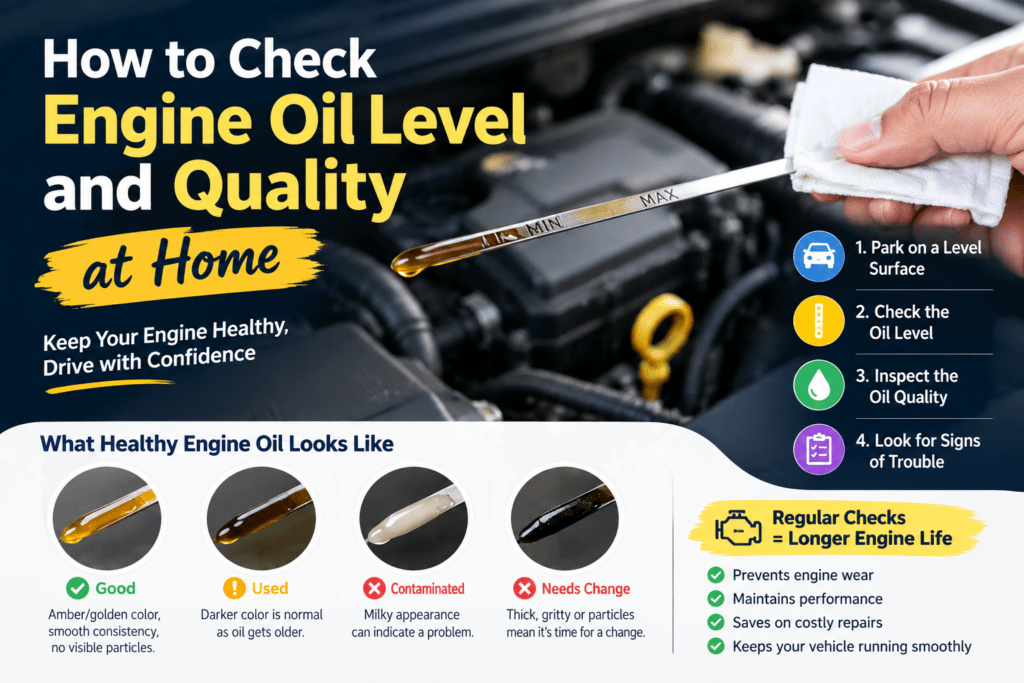
How to check engine oil level and quality at home using a dipstick, with examples of healthy, used, and contaminated engine oil.

How to Check Engine Oil Level and Quality at Home

Regularly checking your engine oil is one of the easiest ways to keep your bike’s engine running smoothly. The right bike engine oil lubricates moving parts, reduces friction, helps manage engine temperature, and protects internal components from excessive wear. The good news is that you don’t always need a mechanic to check engine oil level and quality. With a few simple steps, you can check your bike engine oil at home and identify common signs that it may need a top-up or replacement. In this guide, we’ll explain how to check engine oil level and quality at home, what healthy motorcycle oil should look like, when to check it, and the warning signs you shouldn’t ignore. Table of Contents Engine oil plays a vital role in protecting your motorcycle engine. It lubricates components such as pistons, bearings, camshafts, gears, and other moving parts. Using the correct engine oil for bike applications is important because motorcycle engines can have different lubrication requirements depending on the engine design and manufacturer’s specifications. Over time, bike engine oil can become contaminated, lose some of its protective properties, or fall below the recommended level. Riding with low or degraded oil can increase friction and engine wear. A regular engine oil level and quality check can help you: The best time to check engine oil is when your bike is parked on a level surface and the engine has been switched off for enough time for the oil to settle. For many motorcycles, the correct oil-checking procedure can vary. Some bikes use a dipstick, while others have an oil-level inspection window. Always follow the procedure specified in your owner’s manual. You should also check your bike engine oil before a long ride and whenever you notice unusual engine noise, rough performance, difficult gear shifting, or an oil warning light. You don’t need special equipment for a basic engine oil inspection. You will generally need: Make sure the bike is safely parked and the engine is switched off before beginning the inspection. The method for checking motorcycle engine oil level depends on your bike. Many motorcycles use an oil-level window, while some use a dipstick. Step 1: Park the Bike on a Level Surface Park your motorcycle on a flat and level surface. An uneven surface can cause the oil reading to be inaccurate. Keep the motorcycle in the position recommended by the manufacturer when checking the oil level. Step 2: Locate the Oil Level Indicator Depending on your motorcycle, you may find an oil-level inspection window or a dipstick. If your bike has a dipstick, locate it near the engine oil filler area. If it has an inspection window, look for the MIN and MAX or lower and upper level markings. Step 3: Check the Oil Level Correctly If your bike uses a dipstick, remove it and wipe it clean with a lint-free cloth. Reinsert it according to the manufacturer’s instructions and remove it again to check the oil level. If your motorcycle uses an inspection window, keep the bike in the correct position and check whether the oil level falls within the marked range. Step 4: Check the Oil Level The oil level should normally be within the recommended range. Never overfill the engine. Use the correct engine oil for bike specified by the manufacturer and add oil gradually if a top-up is required. Checking oil level is only part of motorcycle maintenance. You can also inspect your bike engine oil for its appearance and consistency. 1. Check the Oil Color Fresh engine oil is often amber or golden, depending on the oil type. As it is used, it normally becomes darker because it collects contaminants and combustion by-products. Dark oil does not automatically mean it is bad. Oil color should be considered along with its age, mileage, condition, and the manufacturer’s recommended service interval. 2. Check the Oil Consistency Healthy motorcycle engine oil should generally have a smooth, oily consistency. If the oil appears unusually thick, heavily contaminated, or contains visible particles, it may require further inspection. 3. Look for Contamination Pay attention to unusual deposits or particles in the oil. If you notice a milky or creamy appearance, especially around the oil filler area or in the oil itself, it can indicate contamination and should be professionally inspected. 4. Smell the Oil Carefully A strong burnt smell can be a warning sign that the oil has been exposed to excessive heat or may need attention. If the oil smells unusually burnt, consider having the bike inspected. There is no single color that defines healthy bike engine oil because oil appearance changes depending on the oil type, engine, mileage, and operating conditions. Generally, motorcycle oil should: Remember that oil color alone is not a reliable way to determine whether engine oil needs changing. Apart from checking the oil level, watch for signs that your bike engine oil may need attention. Common warning signs include: If the oil level keeps falling between checks, don’t simply keep topping it up. Have the motorcycle checked for leaks or possible oil consumption. When checking bike engine oil at home, avoid these common mistakes: Checking on an Incline Always try to check the oil on a level surface. Parking on a slope can produce an inaccurate reading. Checking Only Once If your motorcycle uses a dipstick, clean it, follow the manufacturer’s procedure, and check the level again. Overfilling the Engine Adding too much engine oil can be harmful. Add oil gradually and recheck the level rather than adding a large amount at once. Using the Wrong Oil Always use the best engine oil for your bike based on the viscosity, specification, and oil type recommended by the motorcycle manufacturer. Don’t select bike oil based only on brand or price. The correct specification is more important. Judging Oil Only by Color Dark oil isn’t necessarily bad, and clean-looking oil isn’t necessarily good. Consider the oil’s age, mileage, specification, and overall condition. A good habit is to check your bike

How to Check Engine Oil Level and Quality at Home Read More »

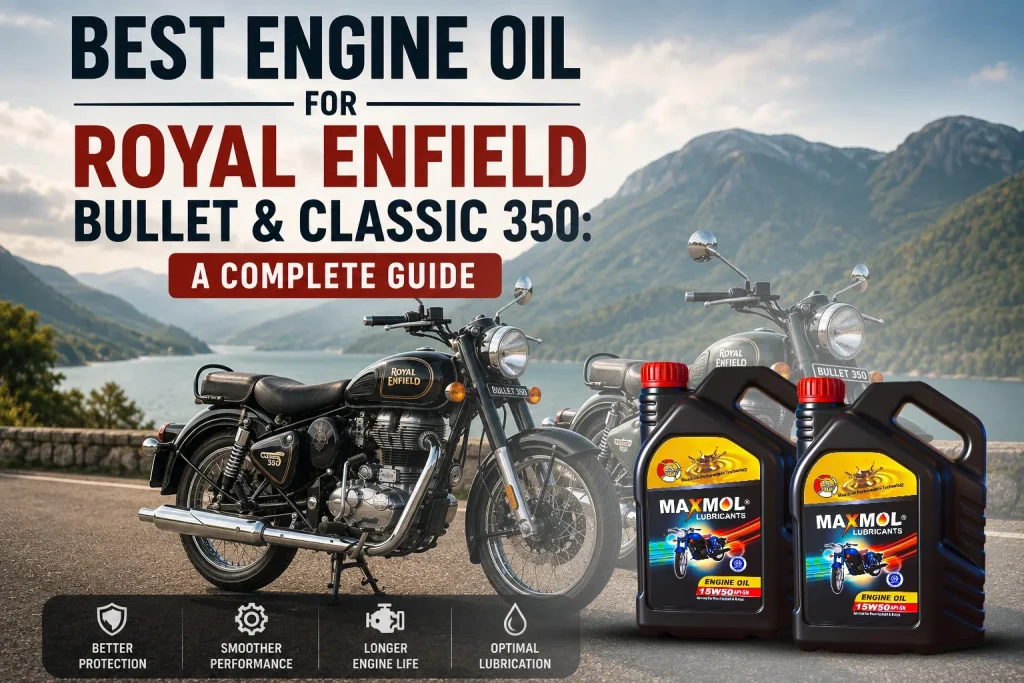
Best engine oil for Royal Enfield Bullet 350 and Classic 350 with Maxmol engine oil

Royal Enfield Bullet 350 & Classic 350 Engine Oil Capacity and Best Oil Guide

Royal Enfield Bullet 350 and Classic 350 are known for their refined engines, comfortable riding experience, and strong road presence. But to keep the engine running smoothly for years, choosing the best engine oil for Royal Enfield Bullet 350 is just as important as regular servicing. Many riders search for the best oil for Bullet 350, best engine oil for Bullet 350, best engine oil for Royal Enfield 350, or the recommended engine oil for Royal Enfield Classic 350. With so many options available, choosing the right one can be confusing. The good news is that you do not need to choose engine oil based only on brand or price. The most important factors are the viscosity, API rating, JASO rating, oil type, and your motorcycle’s model year. For the current Royal Enfield Bullet 350 and Classic 350, the recommended specification is SAE 15W-50, API SL, JASO MA2, semi-synthetic engine oil. Table of Contents Royal Enfield 350 Engine Oil Capacity at a Glance The engine oil capacity of the Royal Enfield Bullet 350 and Classic 350 depends on the model generation and the type of service being performed. For current-generation J-series models, the approximate engine oil refill capacity is 1.7 litres, while the dry-fill capacity is approximately 2.2 litres. Always confirm these figures in the owner’s manual for your specific motorcycle. Royal Enfield Model Approx. Refill Capacity Approx. Dry-Fill Capacity Current Bullet 350 (J-series) 1.7 litres 2.2 litres Current Classic 350 (J-series) 1.7 litres 2.2 litres Older Standard 350 / Bullet 350 Varies by model Varies by model Important: Refill capacity and dry-fill capacity are different. Do not use the dry-fill quantity automatically during a routine oil change. Older Royal Enfield 350 models may require different oil quantities and specifications. Before choosing engine oil, check your motorcycle’s owner’s manual for the recommended viscosity grade and performance specifications. For compatible current-generation models, verify the specified SAE grade, API category and JASO rating before purchasing. If you own a current-generation Royal Enfield 350, the first thing to check on the engine oil bottle is whether it meets the manufacturer’s recommended specifications. Specification Current Bullet 350 / Classic 350 Viscosity SAE 15W-50 API API SL JASO JASO MA2 Oil Type Semi-Synthetic Following the correct specification is more important than simply choosing the most expensive engine oil. A good motorcycle oil should provide proper lubrication, help reduce friction, support smooth engine operation, and remain compatible with the motorcycle’s wet clutch system. The current Royal Enfield Bullet 350 is powered by a 349cc single-cylinder engine and uses a wet multi-plate clutch. For the current Bullet 350, Royal Enfield recommends: SAE 15W-50API SLJASO MA2Semi-Synthetic This is the key specification to remember when searching for the best engine oil for Bullet 350. Instead of choosing oil only because a particular brand is popular, compare products based on these specifications first. The Royal Enfield Classic 350 also uses a 349cc engine, and its current engine-oil requirement is very similar to the Bullet 350. The recommended specification is: 15W-50 + API SL + JASO MA2 + Semi-Synthetic So, riders looking for the best engine oil for Royal Enfield Classic 350 should first make sure the oil they purchase matches these requirements. For the current versions, Bullet 350 and Classic 350 use the same basic engine-oil specification. Feature Bullet 350 Classic 350 Engine 349cc 349cc Viscosity 15W-50 15W-50 API SL SL JASO MA2 MA2 Oil Type Semi-Synthetic Semi-Synthetic Clutch Wet Multi-Plate Wet Multi-Plate This means a motorcycle oil that meets the required specification can be suitable for both current models. However, the oil quantity and service procedure may differ, so always check the owner’s manual for your exact motorcycle. You may have noticed 15W-50 printed on engine oil bottles. The first number, 15W, describes how the oil behaves at lower temperatures, while 50 refers to its viscosity characteristics at higher engine temperatures. In simple terms, 15W-50 is a multi-grade oil designed to provide appropriate lubrication during starting while maintaining suitable viscosity when the engine is hot. For the current Bullet 350 and Classic 350, 15W-50 is the manufacturer’s recommended viscosity. Choosing motorcycle engine oil is not just about viscosity. The Bullet 350 and Classic 350 use wet multi-plate clutches, so the oil should also meet the appropriate motorcycle specification. JASO MA2 is therefore an important specification to check when purchasing engine oil for these motorcycles. Your basic checklist should be: 15W-50 + API SL + JASO MA2 Do not choose an engine oil simply because it says “premium,” “racing,” or “fully synthetic” on the packaging. One of the most common questions among Royal Enfield owners is whether fully synthetic oil is better than semi-synthetic oil. Semi-synthetic oil is a practical choice for everyday motorcycle use and is the oil type specified for the current Bullet 350 and Classic 350. It can be suitable for: Fully synthetic oil is generally positioned as a premium option and can be attractive for riders who frequently ride long distances or operate their motorcycles under demanding conditions. However, fully synthetic does not automatically mean it is the best choice. The most important thing is that the oil is compatible with your motorcycle and meets the required specifications. The engine oil capacity of a Royal Enfield 350 depends on the motorcycle model and generation. Current Royal Enfield 350 models, including the Bullet 350 and Classic 350, use the J-series engine platform, while older 350 models can have different oil capacities. Royal Enfield Standard 350 Engine Oil Capacity For older Royal Enfield Standard 350 models using the UCE 350 engine platform, the engine oil capacity is approximately 2.75 litres for the first fill and around 2.30–2.50 litres for subsequent oil refills. The recommended engine oil grade for these older models is generally 15W50 with the required API and JASO specifications. Since the Standard 350 has been available in different model generations, always check the owner’s manual for the exact oil capacity and specification of your motorcycle.. Royal Enfield Bullet 350 Engine Oil Capacity The current Royal

Royal Enfield Bullet 350 & Classic 350 Engine Oil Capacity and Best Oil Guide Read More »

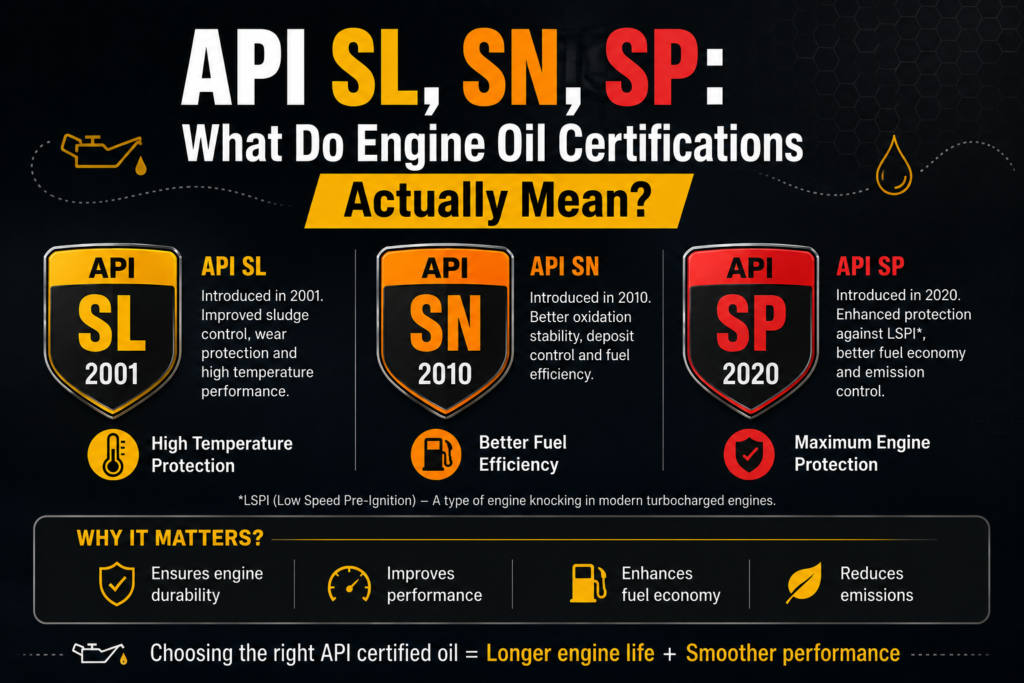
Infographic explaining API SL, SN, and SP engine oil certifications, showing their introduction years, key benefits, and how API-certified oil supports engine durability, performance, fuel economy, and emissions control.

API SL, SN, SP: What Do Engine Oil Certifications Actually Mean?

Table of Contents What is API SL Certification? API SL is a performance classification for gasoline or petrol engine oils under the American Petroleum Institute’s engine oil classification system. Here, API stands for American Petroleum Institute. The API engine oil classification system helps identify the performance level of lubricants designed for different engine requirements. The SL in API SL identifies a specific gasoline-engine performance category. In simple terms, API SL tells you about the performance requirements that an engine oil is designed to meet. It is important to understand that API SL is not a viscosity grade. For example: 20W-40 API SL In this example: Therefore, API SL and 20W-40 provide two different types of information about the oil. API means American Petroleum Institute. In the engine oil industry, API classifications are used to identify performance categories for lubricants. For gasoline engines, you may see API categories such as: These categories have evolved over time as engine technology and lubricant performance requirements have changed. This is why understanding API SL vs SN vs SP is useful when comparing engine oils. However, API classification is only one part of choosing the correct engine oil. You should also consider the viscosity grade and the vehicle manufacturer’s specifications. API SL is an established gasoline-engine oil performance category. Engine oils meeting the API SL requirements are designed to provide performance in areas such as: API SL was introduced for gasoline engines and has been used in many vehicle applications. However, API SL alone does not determine whether an oil is suitable for every vehicle. Before choosing an API SL engine oil, check the manufacturer’s recommended: The complete oil specification should match your vehicle’s requirements. SN is a newer gasoline-engine oil performance category than API SL. API SN was developed to address updated requirements for gasoline engines and provide performance in areas such as: The general progression of gasoline-engine API categories includes: API SL → API SM → API SN Therefore, API SN reprAPI esents a later generation of performance requirements than API SL. However, a newer API category should not automatically be assumed to be suitable for every vehicle. Always check the vehicle manufacturer’s recommendations. API SP is a newer gasoline-engine oil performance category developed for modern petrol engines. Modern engines can operate under demanding conditions due to technologies such as: API SP addresses modern engine protection requirements, including areas such as: For vehicles that specifically require API SP, using an engine oil that meets the required API SP specification is important. One of the most common questions is: What is the difference between API SL, SN and SP? The simplest way to understand these ratings is to view them as different generations of gasoline-engine oil performance classifications. API Category General Position Main Focus API SL Earlier category Wear, deposits and oxidation protection API SN Newer category Updated engine protection and deposit control API SP Newer generation Modern engine protection, including LSPI and timing-chain wear requirements The general progression is: API SL → API SM → API SN → API SP As engine technology has developed, lubricant performance requirements have also evolved. However, this does not mean that every vehicle needs API SP. The correct API category depends on the engine manufacturer’s requirements. API SP is a newer gasoline-engine performance category than API SN and API SL. It was developed to address additional performance requirements associated with modern engines. For example, API SP includes requirements related to: Therefore, API SP represents a newer level of gasoline-engine oil performance requirements. But there is an important point: The newest API category is not automatically the correct oil for every engine. Always follow the vehicle manufacturer’s recommended API specification and viscosity grade. A common mistake is confusing API ratings with engine oil viscosity. They are completely different specifications. API Rating Examples include: These describe the oil’s performance classification. Viscosity Grade Examples include: These describe the oil’s viscosity characteristics. Example Suppose an engine oil label says: 15W-40 API SL This means: 15W-40 = viscosity grade API SL = performance category Therefore, API SL does not tell you whether an oil is 10W-40, 15W-40, or 20W-40. Both viscosity and performance requirements should be checked before selecting engine oil. If your vehicle requires an API SL performance category, an appropriate API SL engine oil can provide important areas of engine protection. 1. Engine Wear Protection Engine components operate under high temperatures, pressure, and friction. Engine oil creates a lubricating film between moving components, helping reduce friction and wear. 2. Deposit Control Engine oil is exposed to heat and combustion-related contaminants. A properly formulated lubricant helps control deposits and maintain engine cleanliness. 3. Oxidation Resistance High temperatures can accelerate oil oxidation. Suitable oxidation resistance helps maintain lubricant performance under appropriate operating conditions. 4. Sludge Control Sludge can develop from oil degradation, contaminants, moisture, and combustion by-products. Proper engine oil performance helps control sludge and unwanted deposits. 5. High-Temperature Performance Engine oil must continue to perform under demanding operating temperatures. Appropriate performance characteristics help protect engine components during normal and demanding operation. Whether API SL is suitable for a motorcycle depends on the manufacturer’s requirements. Motorcycles can have specific lubrication requirements because, in many designs, the same oil may lubricate the: Therefore, when choosing API SL bike engine oil or API SL motorcycle engine oil, you should not look at API SL alone. Also check: For example, a motorcycle may require 10W-30, 10W-40, 15W-40, or 20W-40, depending on the manufacturer’s specifications. A suitable motorcycle oil may also need to meet an appropriate JASO requirement. API SL may be suitable for certain petrol cars, particularly applications that specify or allow this performance category. However, newer vehicles may require newer API categories or specific manufacturer approvals. Before using API SL engine oil in a car, check: The correct engine oil is the one that meets the specifications required for your particular engine. Choosing the right engine oil is easier when you check the specifications in the correct order. Step 1: Check the Owner’s

API SL, SN, SP: What Do Engine Oil Certifications Actually Mean? Read More »

Benefits of Synthetic Engine Oil for Bikes: Why Your Motorcycle Needs It

Benefits of Synthetic Engine Oil for Bikes: Why Your Motorcycle Needs It

Choosing the right bike engine oil is one of the most important parts of motorcycle maintenance. Engine oil lubricates the internal components of the engine, reduces friction, controls heat, and helps keep the engine running smoothly. Among the different types of motorcycle engine oils available today, synthetic engine oil for bikes has become a popular choice for riders who want better engine protection and performance. Synthetic engine oils are specially formulated using advanced base oils and additives to provide consistent lubrication under different riding conditions. Whether you use your motorcycle for daily commuting, highway riding, or long-distance journeys, the right synthetic bike engine oil can help maintain engine performance and efficiency. Synthetic engine oil is a specially engineered lubricant designed to provide improved performance compared with conventional mineral oils. Its formulation offers better resistance to heat, oxidation, and viscosity breakdown. Fully synthetic engine oil is particularly designed to maintain stable lubrication across a wide range of operating temperatures. This makes it suitable for modern motorcycles that operate at high engine speeds and temperatures. Depending on the motorcycle manufacturer’s recommendation, riders may choose grades such as 10W-30, 10W-40, 15W-40, or 20W-40 4T bike engine oil. 1. Better Engine Protection One of the biggest benefits of synthetic engine oil for bikes is improved engine protection. Synthetic formulations create a strong and consistent lubricating film between moving engine components. This helps reduce metal-to-metal contact between components such as pistons, bearings, camshafts, and other moving parts. Better lubrication can help minimize wear and support longer engine life. For riders who use their motorcycles frequently, choosing a suitable motorcycle engine oil can be an important part of regular maintenance. 2. Reduces Engine Friction Engine components are constantly moving against each other. Excessive friction can generate heat and contribute to component wear. Synthetic oil is formulated to provide effective lubrication, helping reduce friction between moving components. Lower friction can allow the engine to operate more smoothly and efficiently. Using the correct synthetic engine oil for bikes according to the manufacturer’s recommended viscosity can therefore contribute to smoother engine operation. 3. Excellent High-Temperature Performance Motorcycle engines can reach high temperatures, particularly during heavy traffic, long rides, or high-speed highway riding. A quality synthetic lubricant generally offers strong resistance to thermal breakdown. This means the oil can continue providing effective lubrication when the engine is operating under demanding conditions. This makes fully synthetic bike engine oil a useful option for riders who regularly experience high engine temperatures or demanding riding conditions. 4. Helps Keep the Engine Clean Engine oil can accumulate contaminants and deposits over time. High-quality synthetic engine oils contain carefully balanced additive packages that help control sludge and deposits. A cleaner engine can support smoother operation and effective lubrication of internal components. Regular oil changes are still essential. Even the best engine oil for bikes needs to be replaced according to the motorcycle manufacturer’s recommended service interval. 5. Better Performance in Different Temperatures A motorcycle may be started in a cool morning and later operated at high temperatures. Engine oil needs to provide suitable lubrication across these changing conditions. Synthetic engine oils are engineered to maintain their viscosity characteristics over a broad temperature range. This can help provide reliable lubrication during both cold starts and hot engine operation. However, riders should always select the oil viscosity recommended in their motorcycle owner’s manual. 6. Supports Smooth Engine Performance The right engine oil can make a noticeable difference in how a motorcycle feels during everyday riding. By providing consistent lubrication and helping reduce friction, synthetic 4T bike engine oil can support smooth engine operation. Riders may notice smoother engine response and quieter operation, although actual results depend on the motorcycle, engine condition, oil grade, and riding conditions. 7. Suitable for Modern Motorcycle Engines Many modern motorcycles are designed with advanced engine technology and require lubricants that meet specific performance standards. Synthetic engine oils are available in a variety of viscosity grades and specifications to suit different motorcycle engines. Some formulations are also designed specifically for four-stroke motorcycles and wet-clutch systems. Before purchasing synthetic motorcycle engine oil, always check the motorcycle manufacturer’s recommended viscosity and performance specification. Understanding the difference between synthetic and mineral oil can help you choose the right bike engine oil. Feature Synthetic Engine Oil Mineral Engine Oil Engine protection High Standard Temperature stability Excellent Moderate Resistance to oxidation Generally higher Generally lower Friction control Excellent Good Performance under demanding conditions Strong Moderate Price Usually higher Usually lower Suitable for modern engines Often suitable Depends on manufacturer specification Synthetic oil can offer advantages in demanding conditions, but the most important factor is always selecting an oil that meets your motorcycle manufacturer’s requirements. Not necessarily. The best engine oil for a bike depends on the motorcycle’s engine design, age, operating conditions, manufacturer’s specifications, and recommended viscosity. For example, some motorcycles may require a specific 10W-30 or 10W-40 motorcycle engine oil, while others may require a different grade. Therefore, don’t choose engine oil only because it is synthetic. Check the owner’s manual and select an oil that meets the required viscosity and performance standards. Synthetic oil can provide excellent protection, but it does not mean you can ignore regular oil changes. Engine oil gradually becomes contaminated with combustion by-products, dirt, moisture, and other particles. Its additives can also become depleted over time. Follow your motorcycle manufacturer’s recommended oil-change interval. You should also consider your riding conditions. Frequent stop-and-go traffic, dusty environments, very high temperatures, heavy loads, and aggressive riding can place additional demands on engine oil. Before buying synthetic engine oil for bikes, consider these factors: Choosing the correct 4T bike engine oil is more important than simply choosing the most expensive product.

Benefits of Synthetic Engine Oil for Bikes: Why Your Motorcycle Needs It Read More »

Shopping Cart
WhatsApp

BECOME A
DISTRIBUTOR

Partner with Maxmol Lubricants and grow your business with our quality lubricant products and reliable distribution opportunities.

✓ Attractive Distributor Margins
✓ Premium Quality Lubricant Products
Become A Distributor