
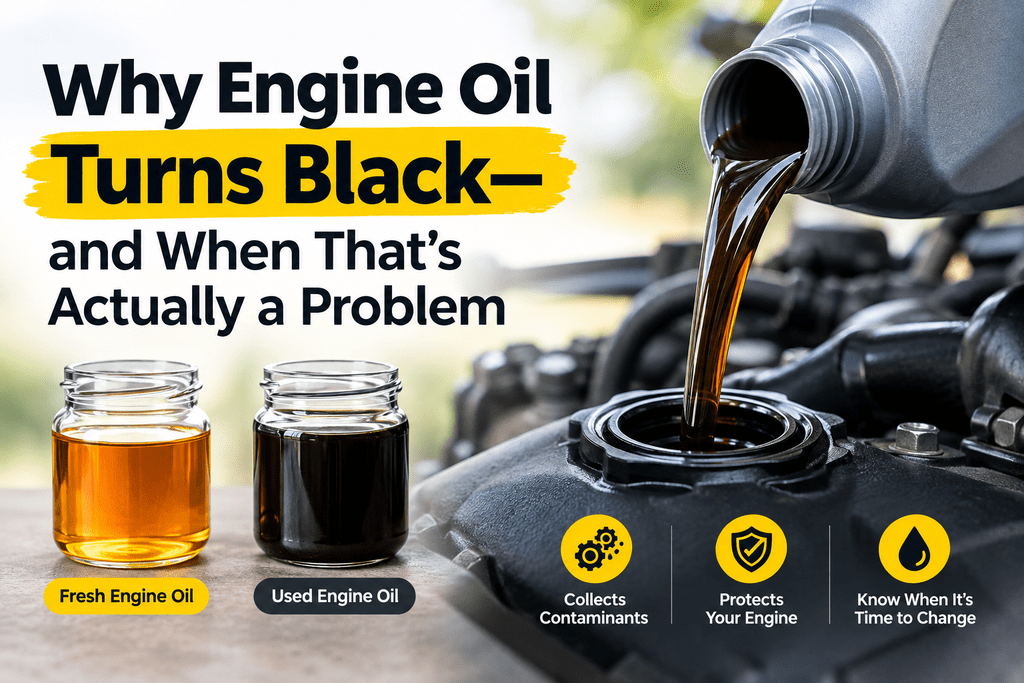
Have you ever checked your vehicle’s engine oil and noticed that it has turned black? If so, you may immediately think that the oil has become dirty and needs to be replaced.
But black engine oil is not always a sign of a problem.
Engine oil naturally changes colour as it circulates through the engine. It collects microscopic particles, absorbs combustion by-products, and works with detergents and dispersants to keep the engine clean. However, extremely dark oil, unusual smells, sludge, or changes in oil consistency can sometimes indicate an underlying engine problem.
In this guide, we’ll explain why engine oil turns black, when it is normal, when it becomes a warning sign, and how regular engine oil changes can help protect your vehicle.
- Why Does Engine Oil Turn Black?
- Is Black Engine Oil Normal?
- When Is Black Engine Oil a Problem?
- Signs That Your Engine Oil Needs Attention
- How Often Should You Change Engine Oil?
- Choosing the Right Engine Oil
- Tips to Keep Engine Oil in Good Condition
- Frequently Asked Questions
- Conclusion
There are several reasons why engine oil changes from its original amber or golden colour to dark brown or black.
1. Engine Oil Absorbs Contaminants
As engine oil circulates through the engine, it picks up microscopic particles, carbon deposits, dust, and other contaminants. These particles can make the oil appear darker.
This is one of the main reasons engine oil turns black during normal use.
2. Detergents Keep the Engine Clean
Modern engine oils contain detergents and dispersants. These additives help prevent deposits from sticking to engine components and keep contaminants suspended in the oil.
As the oil performs this cleaning function, its colour can become darker.
So, in many cases, black engine oil means the oil is doing its job rather than failing.
3. Combustion By-Products Enter the Oil
During combustion, small amounts of soot and other by-products can enter the engine oil. This is particularly noticeable in diesel engines, where soot production can make oil turn dark relatively quickly.
Even in petrol engines and motorcycles, combustion-related deposits can gradually darken the oil.
4. High Engine Temperatures
Engine oil operates in a hot environment. Repeated exposure to high temperatures can gradually change the colour and properties of the oil.
If the engine regularly operates under heavy loads or in extreme conditions, the oil may darken faster.
5. Normal Wear and Contamination
Tiny amounts of metal particles and other materials generated through normal engine operation can enter the oil. The oil filter removes many contaminants, but some particles remain suspended in the oil.
This can also contribute to the oil becoming darker over time.
Yes, black engine oil can be completely normal.
Colour alone is not a reliable way to determine whether engine oil needs to be changed.
Fresh engine oil is generally amber or golden, but after running through an engine, it can become brown or black relatively quickly. This does not automatically mean that the oil has lost its protective properties.
Instead of judging oil only by its colour, pay attention to:
- Oil change interval
- Oil level
- Oil viscosity and consistency
- Unusual engine noise
- Oil smell
- Sludge or thick deposits
- Manufacturer recommendations
- Vehicle operating conditions
If the oil is dark but still within its recommended service interval and the engine is operating normally, the colour alone may not be a reason for concern.
While dark oil can be normal, there are situations where it may indicate a problem.
1. Oil Becomes Extremely Thick or Sludgy
If the oil looks unusually thick, sticky, or contains visible sludge, it may indicate excessive contamination, overheating, poor maintenance, or an unsuitable oil-change interval.
Sludge can restrict oil flow and prevent important engine components from receiving adequate lubrication.
2. Strong Burnt Smell
A strong burnt or overheated smell from the engine oil can indicate that the oil has been exposed to excessive heat.
If you notice a burnt smell along with unusually dark oil, it is worth having the vehicle inspected.
3. Oil Level Keeps Dropping
If the engine oil level decreases significantly between oil changes, the engine may be consuming or leaking oil.
Low oil levels can reduce lubrication and increase engine wear.
4. Milky or Creamy Oil
Black oil is one thing, but milky or creamy engine oil can be a more serious warning sign. It may indicate that coolant or moisture has mixed with the oil.
This requires prompt inspection because contaminated oil may not provide adequate engine protection.
5. Excessive Sludge or Deposits
Heavy sludge under the oil filler cap or around engine components may indicate poor maintenance, extended oil-change intervals, overheating, or another mechanical issue.
6. Unusual Engine Noise
If dark oil is accompanied by knocking, ticking, rattling, or other unusual engine noises, don’t ignore it.
The issue may not be the colour of the oil itself, but the oil could be contaminated, degraded, too low, or unsuitable for the engine.
Instead of relying only on oil colour, look for multiple warning signs.
You should consider checking or changing your oil if you notice:
- Oil level below the recommended mark
- Extremely thick or sludgy oil
- Burnt oil smell
- Milky or foamy appearance
- Metal particles in the oil
- Frequent oil loss
- Increased engine noise
- Excessive smoke
- Reduced engine performance
- Oil that has exceeded the recommended service interval
If several of these symptoms occur together, professional inspection is recommended.
There is no single oil-change interval that works for every vehicle.
The correct interval depends on the vehicle manufacturer, engine type, oil specification, riding or driving conditions, and type of engine oil being used.
For motorcycles, bike engine oil should be changed according to the motorcycle manufacturer’s recommended service schedule.
If you frequently ride in:
- Heavy traffic
- Extremely hot weather
- Dusty conditions
- Stop-and-go traffic
- Short-distance trips
- High-RPM conditions
your engine oil may experience greater stress.
Always follow the vehicle owner’s manual for the recommended engine oil change interval and oil specification.
Using the correct oil is just as important as changing it on time.
When choosing engine oil for bike, consider the manufacturer’s recommended:
- Viscosity grade
- Performance specification
- API classification
- JASO specification, where applicable
- Engine type
- Riding conditions
For motorcycles with wet clutches, it is particularly important to use an oil that meets the appropriate motorcycle specification.
Avoid choosing engine oil simply because it is marketed as suitable for another type of vehicle. Always check the specifications recommended for your engine.
You can help maintain engine performance and oil quality with a few simple habits.
Check the Oil Level Regularly
Checking the engine oil level periodically can help you identify leaks or excessive oil consumption early.
Follow the Recommended Oil Change Schedule
Don’t wait for the oil to become completely black before changing it. Follow the recommended service interval.
Use the Correct Oil Grade
Using the correct engine oil for bike or car according to the manufacturer’s specifications helps ensure proper lubrication and performance.
Replace the Oil Filter When Recommended
The oil filter traps contaminants and helps keep the lubrication system clean. A clogged or neglected filter can affect oil flow and filtration.
Avoid Overfilling
Too much engine oil can also create problems. Always maintain the oil level within the manufacturer’s recommended range.
Engine oil can turn black quickly because it collects combustion by-products, contaminants, and carbon particles while detergents keep deposits suspended in the oil. Darkening does not automatically mean the oil is bad.
Fresh engine oil is commonly amber or golden, but used oil can become brown or black. Colour varies depending on the oil formulation, engine type, fuel, and operating conditions.
Follow the vehicle manufacturer’s recommended service interval and oil specification. Also consider driving or riding conditions, oil level, engine performance, and any unusual oil characteristics.
So, why does engine oil turn black? In most cases, it is because the oil is doing its job—collecting contaminants, suspending deposits, and dealing with combustion by-products inside the engine.
Therefore, black engine oil does not automatically mean that something is wrong.
However, extremely thick oil, sludge, a burnt smell, low oil level, milky contamination, unusual engine noise, or excessive oil consumption should not be ignored.
For reliable engine protection, use the right engine oil, maintain the correct oil level, follow the recommended engine oil change schedule, and inspect the engine if you notice unusual symptoms.
Regular maintenance is one of the simplest ways to support better lubrication, engine performance, and long-term engine life.