

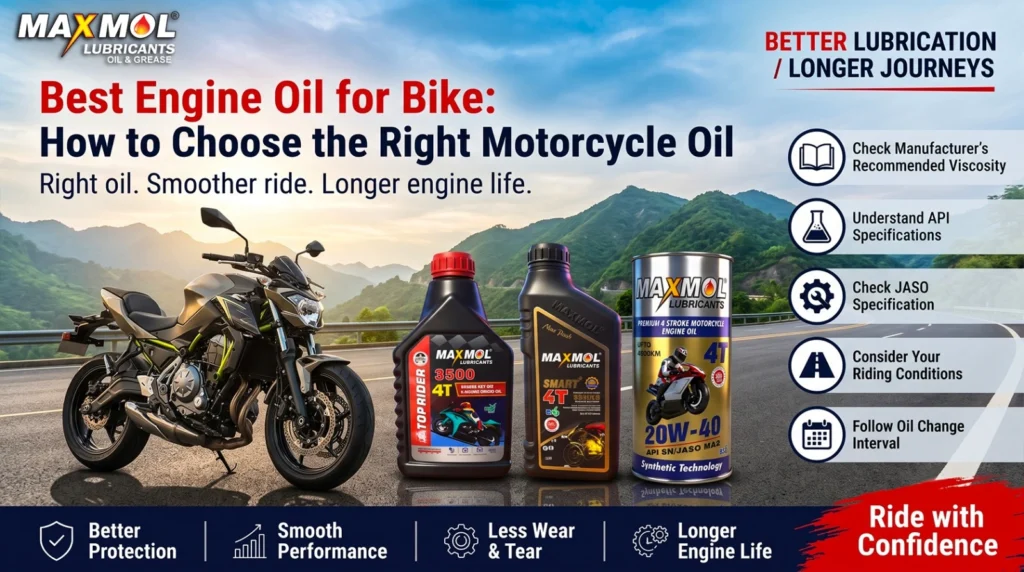
Best Engine oil for Bike: How to Choose the Right Motorcycle Oil
Best Engine Oil for Bike: How to Choose the Right Oil Choosing the best engine oil for a bike depends on several factors, including the motorcycle manufacturer’s recommended viscosity, engine type, API specification, JASO specification and riding conditions. The right motorcycle engine oil helps provide proper lubrication, reduce friction and support smooth engine performance. With different options such as 10W-30, 10W-40, 15W-40 and 20W-40 available in the market, choosing the right oil can be confusing. In this guide, we explain how to choose engine oil for a bike, how viscosity grades work and what to consider when selecting motorcycle engine oil. Why Is Engine Oil Important for a Bike? The engine contains many moving components that operate at high temperatures and speeds. Friction between these components can cause wear if the engine does not receive adequate lubrication. Motorcycle engine oil performs several important functions, including: Lubricating moving engine components Helping reduce friction and wear Supporting smooth engine operation Helping transfer heat away from engine components Helping keep internal engine components cleaner Supporting reliable performance under normal operating conditions Using the appropriate bike engine oil can therefore play an important role in maintaining your motorcycle. However, choosing an engine oil should not be based only on brand, price or viscosity. The motorcycle manufacturer’s recommended specifications should always be the starting point. Next, the engine oil is added, which lessens wear between the engine’s components to prevent damage. Engine oil’s primary purpose is to supply the engine with enough lubrication so that it can operate smoothly and effectively. After learning about motor bike engine oil, let’s discuss selecting the right engine oil for your motorcycle. How to Choose the Best Engine Oil for Bike The best engine oil for a bike is not necessarily the same for every motorcycle. Different engines require different oil specifications. Follow these important factors when selecting motorcycle engine oil. 1. Check the Manufacturer’s Recommended Viscosity The first step is to check your motorcycle owner’s manual. The manufacturer normally specifies one or more recommended SAE viscosity grades for the engine. Common motorcycle oil grades may include: 10W-30 10W-40 15W-40 20W-40 20W-50 The correct grade depends on the motorcycle’s engine design, operating conditions and manufacturer’s recommendations. Do not select an oil simply because a particular viscosity is popular. Always check which viscosity is recommended for your motorcycle. Understand API Specifications API, or the American Petroleum Institute, classifies engine oils according to performance requirements. You may see specifications such as: API SL API SM API SN API SP The appropriate API specification depends on the motorcycle manufacturer’s requirements and the engine design. If you want to understand API classifications in more detail, see our guide on API engine oil specifications. 3. Check the JASO Specification JASO specifications are particularly relevant to motorcycle engine oils. Many motorcycles use a wet clutch, where the engine oil can also come into contact with the clutch system. Therefore, using an oil with the appropriate motorcycle specification is important. Common JASO classifications include: JASO MA JASO MA2 JASO MB The correct JASO specification should be selected according to the motorcycle manufacturer’s recommendation. For motorcycles with wet-clutch systems, the manufacturer may specify a JASO MA or MA2 oil. 4. Consider Your Riding Conditions Your riding conditions can also affect engine oil requirements. For example, motorcycle use may involve: Frequent traffic and stop-and-go riding Long-distance highway riding Hot weather Frequent short trips Heavy loads High engine speeds However, riding conditions should be considered after checking the manufacturer’s recommended specifications. They should not be used as a reason to ignore the recommended viscosity or performance requirements. 5. Follow the Recommended Oil Change Interval Even good-quality engine oil needs to be changed at the recommended interval. Over time, engine oil can become contaminated and its performance can change because of heat, engine operation and contaminants. Follow the oil-change interval provided by your motorcycle manufacturer. If your motorcycle is used under particularly demanding conditions, consult the manufacturer’s maintenance recommendations. What Is the Best Engine Oil for a Motorcycle? The best engine oil for a motorcycle is the oil that meets the specifications recommended by the motorcycle manufacturer. There is no single engine oil that is universally best for every motorcycle. When selecting best motorcycle oil, consider: Recommended SAE viscosity API specification JASO specification Engine type Motorcycle manufacturer’s recommendations Operating and riding conditions For example, one motorcycle may require 10W-30 while another may recommend 10W-40 or 20W-40. Therefore, choosing oil based only on the engine’s size or another motorcycle owner’s recommendation may not be appropriate. Which Engine Oil Is Best for Bike? If you are wondering which engine oil is best for bike, start with your motorcycle owner’s manual. The correct engine oil should meet the manufacturer’s recommended viscosity and performance specifications. For example, if the manufacturer recommends a particular SAE grade and JASO specification, choose a motorcycle engine oil that meets those requirements rather than selecting an oil simply because it has a higher price or a different viscosity. The right oil should be matched to the motorcycle—not selected based on a universal “best” grade. Types of Motorcycle Engine Oil Motorcycle engine oils are commonly available in three broad categories: If you want to understand the differences between these oil types, read our guide to mineral vs semi-synthetic vs fully synthetic engine oil. Mineral Engine Oil Mineral engine oils are formulated from mineral base oils and are commonly used in various motorcycle applications. They can be suitable where the motorcycle manufacturer recommends a mineral-based oil of the required specification. Semi-Synthetic Engine Oil Semi-synthetic engine oils combine mineral and synthetic base-oil components. They can provide a balance between performance characteristics and cost, depending on the specific formulation and manufacturer’s requirements. Fully Synthetic Engine Oil Fully synthetic engine oils are formulated using synthetic base oils and are designed for applications where higher performance characteristics may be required. They can offer good performance over a range of operating temperatures, depending on the formulation. Important: Engine displacement alone should not determine whether you should use
Best Engine oil for Bike: How to Choose the Right Motorcycle Oil Read More »