
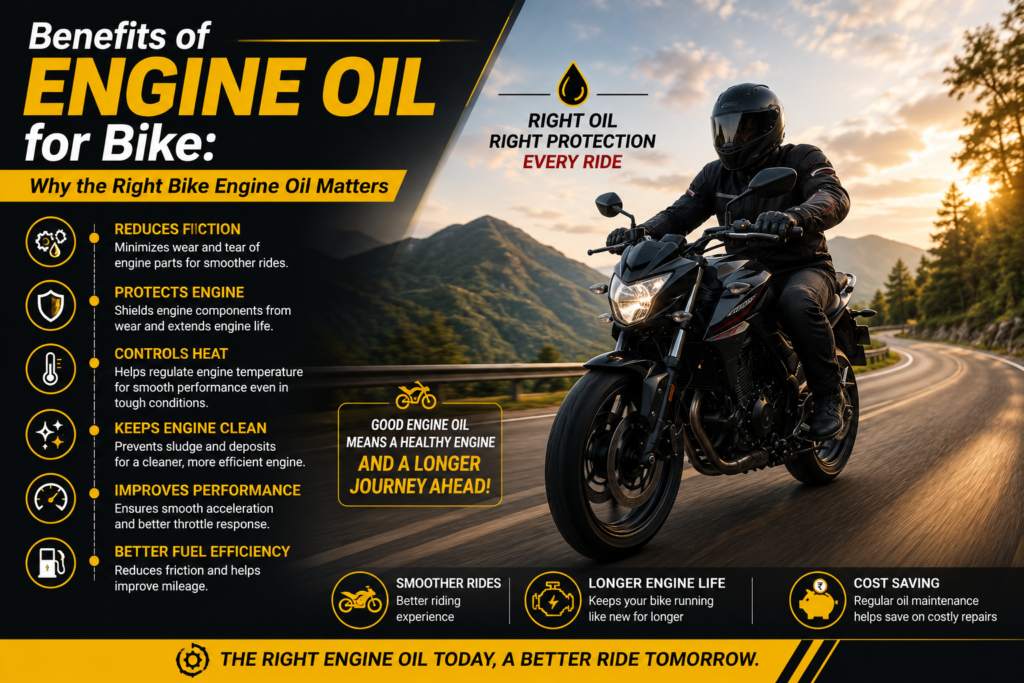
Choosing the right bike engine oil is one of the most important parts of motorcycle maintenance. Engine oil lubricates the internal components of the engine, reduces friction, controls heat, and helps keep the engine running smoothly. Among the different types of motorcycle engine oils available today, synthetic engine oil for bikes has become a popular choice for riders who want better engine protection and performance.
Synthetic engine oils are specially formulated using advanced base oils and additives to provide consistent lubrication under different riding conditions. Whether you use your motorcycle for daily commuting, highway riding, or long-distance journeys, the right synthetic bike engine oil can help maintain engine performance and efficiency.
Synthetic engine oil is a specially engineered lubricant designed to provide improved performance compared with conventional mineral oils. Its formulation offers better resistance to heat, oxidation, and viscosity breakdown.
Fully synthetic engine oil is particularly designed to maintain stable lubrication across a wide range of operating temperatures. This makes it suitable for modern motorcycles that operate at high engine speeds and temperatures.
Depending on the motorcycle manufacturer’s recommendation, riders may choose grades such as 10W-30, 10W-40, 15W-40, or 20W-40 4T bike engine oil.
1. Better Engine Protection
One of the biggest benefits of synthetic engine oil for bikes is improved engine protection. Synthetic formulations create a strong and consistent lubricating film between moving engine components.
This helps reduce metal-to-metal contact between components such as pistons, bearings, camshafts, and other moving parts. Better lubrication can help minimize wear and support longer engine life.
For riders who use their motorcycles frequently, choosing a suitable motorcycle engine oil can be an important part of regular maintenance.
2. Reduces Engine Friction
Engine components are constantly moving against each other. Excessive friction can generate heat and contribute to component wear.
Synthetic oil is formulated to provide effective lubrication, helping reduce friction between moving components. Lower friction can allow the engine to operate more smoothly and efficiently.
Using the correct synthetic engine oil for bikes according to the manufacturer’s recommended viscosity can therefore contribute to smoother engine operation.
3. Excellent High-Temperature Performance
Motorcycle engines can reach high temperatures, particularly during heavy traffic, long rides, or high-speed highway riding.
A quality synthetic lubricant generally offers strong resistance to thermal breakdown. This means the oil can continue providing effective lubrication when the engine is operating under demanding conditions.
This makes fully synthetic bike engine oil a useful option for riders who regularly experience high engine temperatures or demanding riding conditions.
4. Helps Keep the Engine Clean
Engine oil can accumulate contaminants and deposits over time. High-quality synthetic engine oils contain carefully balanced additive packages that help control sludge and deposits.
A cleaner engine can support smoother operation and effective lubrication of internal components.
Regular oil changes are still essential. Even the best engine oil for bikes needs to be replaced according to the motorcycle manufacturer’s recommended service interval.
5. Better Performance in Different Temperatures
A motorcycle may be started in a cool morning and later operated at high temperatures. Engine oil needs to provide suitable lubrication across these changing conditions.
Synthetic engine oils are engineered to maintain their viscosity characteristics over a broad temperature range. This can help provide reliable lubrication during both cold starts and hot engine operation.
However, riders should always select the oil viscosity recommended in their motorcycle owner’s manual.
6. Supports Smooth Engine Performance
The right engine oil can make a noticeable difference in how a motorcycle feels during everyday riding.
By providing consistent lubrication and helping reduce friction, synthetic 4T bike engine oil can support smooth engine operation. Riders may notice smoother engine response and quieter operation, although actual results depend on the motorcycle, engine condition, oil grade, and riding conditions.
7. Suitable for Modern Motorcycle Engines
Many modern motorcycles are designed with advanced engine technology and require lubricants that meet specific performance standards.
Synthetic engine oils are available in a variety of viscosity grades and specifications to suit different motorcycle engines. Some formulations are also designed specifically for four-stroke motorcycles and wet-clutch systems.
Before purchasing synthetic motorcycle engine oil, always check the motorcycle manufacturer’s recommended viscosity and performance specification.
Understanding the difference between synthetic and mineral oil can help you choose the right bike engine oil.
| Feature | Synthetic Engine Oil | Mineral Engine Oil |
| Engine protection | High | Standard |
| Temperature stability | Excellent | Moderate |
| Resistance to oxidation | Generally higher | Generally lower |
| Friction control | Excellent | Good |
| Performance under demanding conditions | Strong | Moderate |
| Price | Usually higher | Usually lower |
| Suitable for modern engines | Often suitable | Depends on manufacturer specification |
Synthetic oil can offer advantages in demanding conditions, but the most important factor is always selecting an oil that meets your motorcycle manufacturer’s requirements.
Not necessarily.
The best engine oil for a bike depends on the motorcycle’s engine design, age, operating conditions, manufacturer’s specifications, and recommended viscosity.
For example, some motorcycles may require a specific 10W-30 or 10W-40 motorcycle engine oil, while others may require a different grade.
Therefore, don’t choose engine oil only because it is synthetic. Check the owner’s manual and select an oil that meets the required viscosity and performance standards.
Synthetic oil can provide excellent protection, but it does not mean you can ignore regular oil changes.
Engine oil gradually becomes contaminated with combustion by-products, dirt, moisture, and other particles. Its additives can also become depleted over time.
Follow your motorcycle manufacturer’s recommended oil-change interval. You should also consider your riding conditions. Frequent stop-and-go traffic, dusty environments, very high temperatures, heavy loads, and aggressive riding can place additional demands on engine oil.
Before buying synthetic engine oil for bikes, consider these factors:
- Check the motorcycle manufacturer’s recommended viscosity.
- Check the required API or other applicable performance specification.
- Make sure the oil is suitable for your motorcycle’s engine type.
- For motorcycles with wet clutches, use oil that meets the required motorcycle clutch specification.
- Buy engine oil from a reliable manufacturer or authorized source.
- Follow the recommended oil-change schedule.
Choosing the correct 4T bike engine oil is more important than simply choosing the most expensive product.