Maxmollubricants

Bike Engine Oil

Bike Engine Oil: Guides, Tips and Maintenance

Choosing the right bike engine oil is important for smooth engine operation, effective lubrication and routine motorcycle maintenance. The correct oil depends on your bike manufacturer’s recommendations, engine design, riding conditions and the required oil specification.

Explore our bike engine oil articles to understand engine oil grades, compare mineral and synthetic oils, learn how to check engine oil levels, and identify common problems such as engine oil leakage. These practical guides help Indian riders make informed decisions about motorcycle engine oil and everyday bike care.

Explore Bike Engine Oil Guides

Choosing the Right Engine Oil for Your Bike

Learn how to select engine oil based on your motorcycle’s recommended viscosity grade, specifications and riding requirements.

Understanding Bike Engine Oil Grades

Understand what grades such as 10W-30 and 20W-40 mean and why you should follow the viscosity recommended in your owner’s manual.

Bike Engine Oil Maintenance

Discover how to check your engine oil level, recognise signs of low oil and understand when an oil change may be required.

Common Bike Engine Oil Problems

Learn about possible causes of bike engine oil leakage, warning signs and when professional inspection is necessary.

Mineral, Semi-Synthetic and Synthetic Engine Oil

Understand the differences between common engine oil types and how to choose an option that meets your motorcycle manufacturer’s specifications.

Explore more educational resources from MAXMOL Lubricants to build your understanding of engine oil selection, motorcycle maintenance and lubrication.

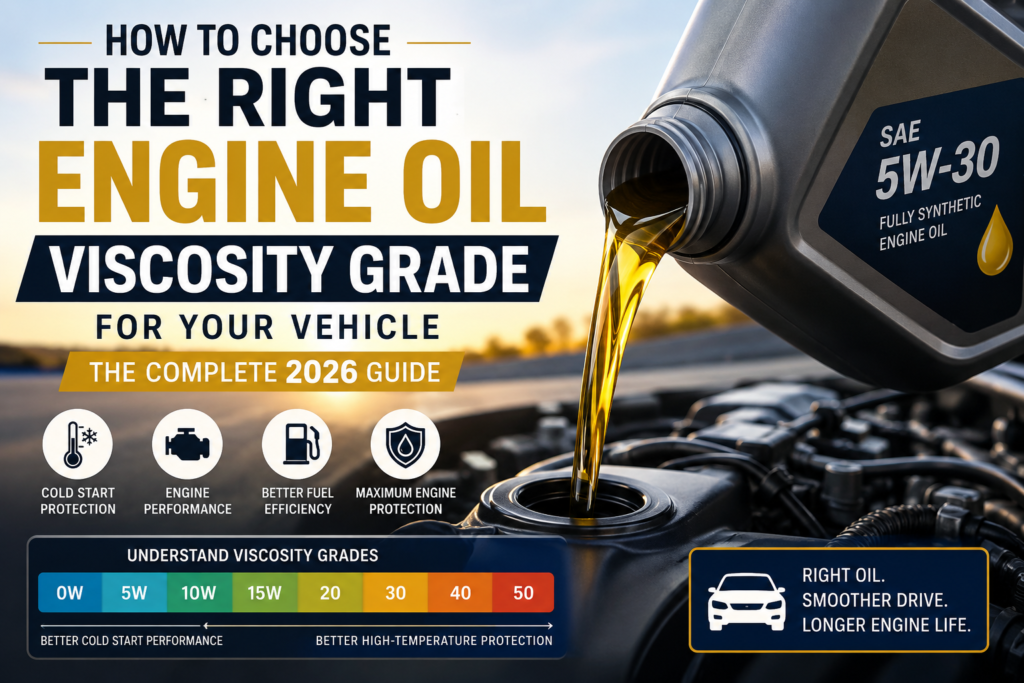
MAXMOL 20W-40 4T engine oil bottle featured in a 2026 guide to choosing the right engine oil viscosity grade

How to Choose the Right Engine Oil Viscosity Grade for Your Vehicle: The Complete 2026 Guide

Choosing the right engine oil viscosity grade is one of the simplest things you can do for your vehicle — and one of the most misunderstood. Pour in the wrong grade, and you could be looking at poor cold starts, reduced fuel economy, increased engine wear, or in worst cases, long-term engine damage. Pour in the right one, and your engine runs smoother, lasts longer, and performs the way the manufacturer intended. In this guide, we’ll break down exactly what viscosity means, how to read the numbers on every oil bottle, which grade suits which vehicle, how climate and driving habits change the equation, and the biggest trends reshaping engine oil in 2026 — including the industry-wide shift toward ultra-low-viscosity synthetics. Table of Contents Viscosity is a measurement of a fluid’s resistance to flow. Think of the difference between honey and water: honey is thick and pours slowly (high viscosity), while water is thin and flows quickly (low viscosity). Bike Engine oil behaves the same way, except its thickness changes dramatically depending on temperature. When your engine is cold, oil naturally thickens. When it heats up during operation, it thins out. Bike Engine oil viscosity grades are designed to describe how an oil performs across this temperature range — both when your engine is freezing cold at start-up and when it’s running hot on the highway. Modern engines are precision-built machines with incredibly tight tolerances between moving parts. The oil’s job is to maintain a consistent, protective film between these parts under wildly different conditions — from a sub-zero morning start to a summer highway drive. Choosing the right viscosity ensures that film is neither too thick (causing drag and poor cold flow) nor too thin (causing metal-on-metal contact and excessive wear). It’s easy to think of oil viscosity as a minor technical detail, but it has an outsized impact on several things that matter to every driver: Open the hood of almost any modern car and you’ll find a viscosity grade like 5W-30, 0W-20, or 10W-40 stamped somewhere near the oil cap. These numbers follow a standard set by SAE (the Society of Automotive Engineers), and once you understand the formula, you’ll never be confused by an oil bottle again. The first number (before the “W”): Cold-weather performance The “W” stands for Winter, not weight. The number before it tells you how the oil behaves in cold temperatures — specifically, how easily it flows and pumps at low temperatures. A lower number means the oil stays fluid even in very cold conditions: The second number: High-temperature viscosity The number after the “W” describes the oil’s thickness once the engine reaches normal operating temperature (measured around 100°C). A higher number means a thicker oil that maintains a stronger protective film under heat and pressure: So when you see 5W-30, it means: this oil flows like a “5-weight” oil when cold, and behaves like a “30-weight” oil once warmed up. It’s engineered to perform well across that entire range, rather than being ideal at just one temperature. Single-grade oils (like SAE 30 or SAE 40) maintain roughly the same viscosity regardless of temperature. They were the industry standard decades ago and are still used today in some small engines, older classic cars, and certain industrial or agricultural equipment. Their simplicity keeps costs low, but they aren’t well suited to modern engines that experience wide temperature swings. Multi-grade oils (like 5W-30 or 10W-40) are formulated with additives that allow them to behave differently at different temperatures — thin enough to flow well when cold, thick enough to protect when hot. Nearly every modern passenger vehicle uses a multi-grade oil because it performs reliably across seasons and climates without needing to be changed based on the weather. Grade Typical Use Case 0W-16 Newest-generation hybrid and ultra-fuel-efficient engines with very tight tolerances 0W-20 Widely used in modern passenger cars and hybrids for maximum fuel economy and cold-start protection 5W-20 Many older and newer four-cylinder engines designed for fuel efficiency 5W-30 One of the most common all-purpose grades; suits a huge range of modern gasoline engines 5W-40 Popular for diesel engines and performance vehicles needing strong hot-temperature protection with good cold flow 10W-30 Older gasoline engines and increasingly, modern diesel fleets moving away from 15W-40 10W-40 Older or higher-mileage engines in moderate climates 15W-40 Traditionally the diesel and heavy-duty standard, especially in warmer climates 20W-50 High-performance engines, motorcycles, and vehicles operating in very hot climates or under heavy load Keep in mind this table is a general reference — your owner’s manual always overrides general guidance, since it reflects testing specific to your exact engine. If you’ve bought a new car recently, you may have noticed the recommended oil is thinner than what your last vehicle used. This isn’t a coincidence — it reflects one of the biggest trends in the automotive industry right now. Passenger vehicles: More than 40% of passenger vehicle oil sales today are 5W-30 and 0W-20 grades, and automakers are increasingly factory-filling new models — especially hybrids — with 0W-20 or even 0W-16. These ultra-thin oils are designed to meet strict fuel-economy targets by minimizing internal friction from the moment the engine starts. Heavy-duty and diesel fleets: The change is even more dramatic in the trucking and fleet world. Traditional 15W-40, once the universal diesel standard, is being phased out. Major engine manufacturers such as Detroit, Cummins, and Volvo now factory-fill with 10W-30 instead. Fleets that stick with 15W-40 out of habit are estimated to lose several hundred dollars per truck annually in fuel savings. Looking further ahead, upcoming API PC-12 heavy-duty oil specifications are expected to introduce even lower-viscosity 0W-20 and 5W-20 options for diesel engines. Why this shift is happening: An important caveat: thinner is not automatically better for every engine. Older engines, high-performance engines, and engines with more internal wear were often designed around thicker oil specifications, and switching to an ultra-thin oil not approved for that engine can reduce protection rather than improve it. The trend
How to Choose the Right Engine Oil Viscosity Grade for Your Vehicle: The Complete 2026 Guide Read More »

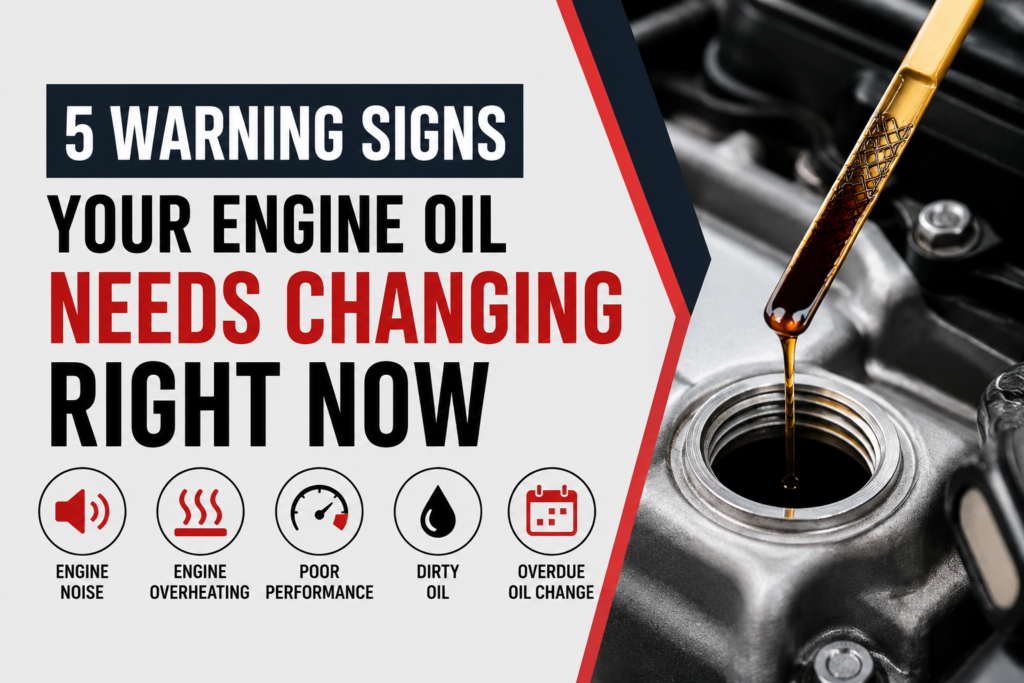
5 warning signs your engine oil needs changing right now, including engine noise, overheating, poor performance, dirty oil, and overdue oil change.

5 Warning Signs Your Engine Oil Needs Changing Right Now

Engine oil is one of the most important fluids in your bike. It lubricates moving engine parts, reduces friction, helps control heat, and protects the engine from excessive wear. But engine oil gradually loses its effectiveness as you ride. The problem is that many riders wait until the next scheduled service instead of paying attention to the warning signs. In some cases, your bike can give you clear signals that the engine oil needs attention sooner than expected. Here are 5 warning signs your engine oil needs changing right now that every bike owner should know. One of the first signs of old or degraded engine oil can be a noticeable change in engine noise. Fresh engine oil creates a protective lubricating layer between moving engine components. As the oil becomes contaminated or loses some of its protective properties, lubrication may become less effective. You may notice: A change in engine sound does not always mean the oil is the problem. However, checking the oil level and condition is a good first step. If the noise is sudden, severe, or continues after an oil change, have the engine inspected by a qualified mechanic. Does your bike no longer feel as smooth as it used to? A rough-running or less responsive engine can be another warning sign that the engine oil needs attention. As engine oil ages, contaminants can accumulate and its lubricating performance can change. You may notice that your bike: Old engine oil is not necessarily the only reason for these symptoms. Air filters, spark plugs, fuel systems, clutch components, and other engine parts can also affect performance. Still, if your oil-change interval is due and the engine feels different, checking the oil should be part of your maintenance routine. Engine oil does more than lubricate engine components. It also helps manage heat inside the engine. When oil becomes degraded or the oil level is too low, the engine may experience increased friction. This can contribute to higher operating temperatures. You might notice: Remember that overheating can have several causes, including problems with the cooling system, coolant level, airflow, or other components. If your motorcycle is overheating, do not ignore it. Check the oil and have the bike inspected if the problem continues. Checking the oil itself is one of the easiest ways to monitor its condition. Used engine oil naturally becomes darker as it circulates through the engine. Therefore, dark oil alone does not always mean that it must immediately be replaced. However, oil that appears extremely dirty, thick, gritty, or contaminated deserves attention. When checking the oil, look for: If you notice metal particles or an unusual amount of debris, do not simply change the oil and forget about it. The motorcycle should be inspected to determine why the contamination is occurring. Regular oil checks can help you catch potential problems before they become more expensive Sometimes the biggest warning sign is simply the number of kilometres or months since your last oil change. Every motorcycle has a recommended maintenance schedule. The correct interval depends on the motorcycle model, engine design, oil specification, riding conditions, and manufacturer’s recommendations. You may need to pay particular attention if you frequently ride in: If your bike has reached the manufacturer’s recommended oil-change interval, don’t wait for symptoms such as engine noise or poor performance. Preventive maintenance is better than waiting for an engine problem to develop. Engine oil gradually becomes contaminated during normal operation. It can collect combustion by-products, dirt, and microscopic wear particles while additives in the oil become depleted over time. Delaying an oil change for too long may contribute to: Changing engine oil at the recommended interval is one of the simplest ways to support long-term engine health. Checking your bike’s engine oil regularly is a simple maintenance habit. Step 1: Park on a Level Surface Keep the motorcycle on a level surface and follow your manufacturer’s instructions for checking the oil. Step 2: Locate the Oil-Level Indicator Depending on your motorcycle, you may have an oil dipstick or an oil inspection window. Step 3: Check the Oil Level Make sure the oil level is between the minimum and maximum marks. Step 4: Look at the Oil Condition Check for excessive contamination, unusual particles, or sludge. Step 5: Change the Oil When Required If the oil-change interval has been reached, use the correct engine oil specification recommended for your motorcycle. There is no universal oil-change interval for every motorcycle. Your motorcycle manufacturer’s owner’s manual should be your primary reference. The recommended interval may be based on kilometres, months, or both. Your riding conditions can also influence how quickly the oil becomes contaminated or degraded. For example, frequent short trips and heavy stop-and-go traffic can place different demands on an engine compared with regular highway riding. Instead of relying on a fixed interval from another motorcycle, always check the recommendations for your specific model. Using the correct engine oil is just as important as changing it on time. Before buying engine oil, check your motorcycle manufacturer’s recommendations for: Common motorcycle oil grades may include 10W-30, 10W-40, 15W-40, and 20W-40, but the correct grade depends on the motorcycle. Do not select an engine oil based only on viscosity. Always make sure the oil meets the specifications required by your motorcycle manufacturer. If your engine oil is overdue for replacement, continuing to ride without servicing it is not a good maintenance practice. Old or degraded oil may provide less effective protection than fresh oil. Continuing to delay an overdue oil change can increase the risk of engine wear. If you notice multiple warning signs—such as increased engine noise, rough performance, overheating, or unusually dirty oil—check the oil level and condition and consider having the motorcycle inspected. Knowing the 5 warning signs your engine oil needs changing right now can help you take action before a small maintenance issue becomes a bigger problem. If your engine becomes noisier, feels rough, runs hotter than usual, the oil looks heavily contaminated, or

5 Warning Signs Your Engine Oil Needs Changing Right Now Read More »

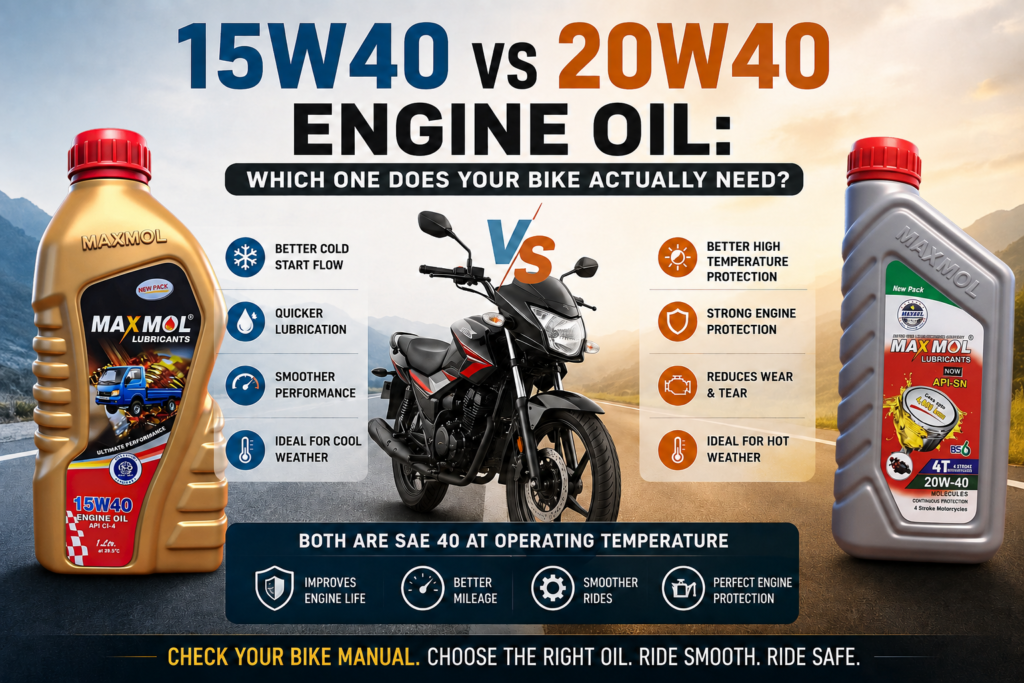
MAXMOL Lubricants 15W40 vs 20W40 engine oil comparison featuring MAXMOL 15W40 and 20W40 4T bike engine oil bottles, motorcycle, cold-weather flow, high-temperature protection, engine protection, smoother performance, and reduced wear.

15W40 vs 20W40 Engine Oil: Which One Does Your Bike Actually Need?

Choosing the right engine oil is one of the most important parts of motorcycle maintenance. The right oil helps keep the engine lubricated, supports smooth performance, and protects important engine components from wear. But when you see different viscosity grades such as 15W40 and 20W40, it can be difficult to know which one is right for your bike. So, 15w40 vs 20w40 engine oil—what is the actual difference, and which one should you use? Both are commonly discussed engine oil grades, but they behave differently at lower temperatures. Understanding their viscosity ratings can help you make a better decision when choosing bike engine oil. 15W40 vs 20W40 Engine Oil: Which Grade Is Right for Your Vehicle? 15W-40 and 20W-40 engine oils are both SAE 40-grade oils at operating temperatures, but they differ in their cold-temperature performance. The right choice depends on your engine type, operating conditions, and manufacturer recommendations. Feature 15W-40 Engine Oil 20W-40 Engine Oil SAE Winter Grade 15W 20W Operating Temperature Grade SAE 40 SAE 40 Cold-Temperature Performance Generally flows better at lower temperatures Generally less suitable for colder starts Cold Starting Better low-temperature performance than 20W-40 May be suitable for applications with less demanding cold-start conditions Engine Compatibility Depends on the manufacturer’s specifications Depends on the manufacturer’s specifications Common Applications Vehicles and machinery specifying 15W-40 Vehicles and machinery specifying 20W-40 Which Is Better? May be preferable in colder conditions when approved Can be suitable when specifically recommended Key Difference Between 15W-40 and 20W-40 The main difference is the winter viscosity rating. 15W-40 is designed to perform better at lower temperatures than 20W-40, while both have the same SAE 40 operating-temperature viscosity grade. Before selecting either oil, check your owner’s manual for the recommended viscosity and performance specifications. Do not switch grades based on viscosity alone.    15W-40 vs 20W-40: Which Is Better? Choosing between 15W-40 and 20W-40 engine oil depends on your vehicle’s engine requirements, operating temperature, and manufacturer’s recommendations. Both oils have the same SAE 40 operating-temperature viscosity grade, but they differ in their cold-temperature performance. 15W-40 engine oil generally offers better cold-temperature performance than 20W-40. It is designed to flow more readily at lower temperatures, which can help during cold starts. On the other hand, 20W-40 may be suitable for engines whose manufacturers specifically recommend this viscosity grade. When Should You Choose 15W-40 Engine Oil? 15W-40 may be a suitable option when: Your vehicle manufacturer recommends SAE 15W-40. You need an oil designed for better low-temperature performance than 20W-40. The oil meets the required API or other performance specifications for your engine. Your vehicle or machinery is designed to operate with this viscosity grade. When Should You Choose 20W-40 Engine Oil? 20W-40 may be appropriate when: Your owner’s manual specifies SAE 20W-40. Your engine’s operating conditions are compatible with this viscosity grade. The oil meets the engine manufacturer’s required performance standards. Is 15W-40 Better Than 20W-40 for Bikes? Not necessarily. The best engine oil for a motorcycle depends on its engine design, manufacturer’s recommendations, and required oil specifications. Some motorcycles require specific motorcycle-engine oil standards, particularly for wet-clutch systems. Always check the owner’s manual before switching between 15W-40 and 20W-40. Final Verdict: 15W-40 or 20W-40? If both grades are approved for your engine, 15W-40 may provide an advantage in colder starting conditions. However, 20W-40 can be the correct choice when specified by the manufacturer. Neither grade is universally better for every engine. For reliable engine performance, select an oil with the correct viscosity and performance specifications rather than choosing by viscosity grade alone. What Does 15W40 vs 20W40 Engine Oil Mean? To understand 15w40 vs 20w40 engine oil, you first need to understand what the numbers mean. Engine oil viscosity is represented by two numbers. The first number, followed by the letter W, indicates how the oil behaves at lower temperatures. The second number indicates its viscosity at higher operating temperatures. For example: 15W40: 15W represents its low-temperature viscosity rating, while 40 represents its high-temperature viscosity grade. 20W40: 20W represents its low-temperature viscosity rating, while 40 represents its high-temperature viscosity grade. The W means winter, not weight. The major difference between these two grades is therefore their low-temperature behavior. Both have a 40-grade viscosity at operating temperature. 15W40 Engine Oil Explained 15W40 engine oil is designed to flow more easily at lower temperatures compared with 20W40. This can be useful during cold starts because engine oil needs to circulate through the engine after the motorcycle is started. Faster oil circulation can help provide lubrication to engine components. Some potential characteristics of 15W40 engine oil include: Better low-temperature flow than 20W40 Easier circulation during cold starts Suitable for applications where 15W40 is recommended Available in different formulations for different engine requirements However, choosing 15W40 simply because it has a lower first number is not always the right decision. Your motorcycle manufacturer’s recommended viscosity should always come first. 20W40 Engine Oil Explained 20W40 engine oil has a higher low-temperature viscosity rating than 15W40. This means it is slightly thicker during colder conditions. At normal engine operating temperature, however, both 15W40 and 20W40 have a 40-grade viscosity. 20W40 may be suitable for motorcycles that specifically require this viscosity grade. It can provide the lubrication characteristics expected by an engine designed around that specification. Before using 20W40 motorcycle engine oil, check your owner’s manual to confirm that the viscosity and performance specifications match your bike. 15W40 vs 20W40 Engine Oil: Key Difference The biggest difference in 15w40 vs 20w40 engine oil is their low-temperature viscosity. 15W40 is designed to flow more easily at lower temperatures, while 20W40 is slightly thicker under the same conditions. At normal operating temperatures, both oils are SAE 40 grade. Feature 15W40 Engine Oil 20W40 Engine Oil Low-temperature flow Better Slightly thicker Operating-temperature grade SAE 40 SAE 40 Cold-start behavior More fluid Less fluid than 15W40 Suitable for bikes Depends on manufacturer specification Depends on manufacturer specification Best choice When recommended by manufacturer When recommended by manufacturer Which Is Better for Your Bike: 15W40 or 20W40?

15W40 vs 20W40 Engine Oil: Which One Does Your Bike Actually Need? Read More »

MAXMOL 20W-40 4T motorcycle engine oil bottle beside an oil filter, with a motorcycle engine being filled with oil and information about engine oil change intervals, performance, engine life, mileage, and smooth rides.

How often should you really change your bike’s engine oil?

Bike Engine Oil is one of the most important fluids for maintaining a motorcycle’s engine. It helps lubricate moving parts, reduce friction, control heat, and support smooth engine performance. But one common question among motorcycle owners is, how often should you change bike engine oil? The correct oil-change interval depends on the motorcycle model, riding conditions, oil type, and manufacturer’s recommendations. Understanding when to replace your engine oil can help maintain reliable motorcycle performance. How Often Should You Change Bike Engine Oil? For many motorcycles, bike engine oil may need to be changed every 3,000–5,000 km or every 3–6 months. However, this is only a general guideline. Always check the motorcycle manufacturer’s recommended service interval. Motorcycles that are regularly used in heavy traffic, dusty areas, high temperatures, or for frequent short-distance trips may require more frequent oil changes. Using suitable engine oil for bike applications and following the correct maintenance schedule can help support smooth and reliable engine operation. Why Is Bike Engine Oil Important? The engine contains many moving components that operate at high speeds and temperatures. Without proper lubrication, friction and heat can increase. Good-quality Motor Bike oil helps create a protective lubricating film between moving components. It can also help: Reduce friction and engine wear Support smoother engine operation Help control engine temperature Keep engine components lubricated Reduce the accumulation of harmful deposits Support consistent engine performance For this reason, choosing the correct engine oil for bike is an important part of regular motorcycle maintenance. Signs That Your Bike Engine Oil Needs Changing Apart from following the recommended service interval, there are several signs that your motorcycle’s oil should be checked. 1. Rough Engine Performance If the motorcycle starts feeling rougher than usual, old or degraded oil may be one possible reason. Checking the oil level and condition can help identify potential maintenance requirements. 2. Increased Engine Noise Engine components require proper lubrication to operate smoothly. When oil becomes degraded or the oil level is too low, increased mechanical noise may sometimes occur. 3. Difficult Gear Shifting Many motorcycles use a wet clutch system where the same oil lubricates the engine, clutch, and transmission. Using the correct motorcycle engine oil can therefore be important for smooth operation. 4. Dirty or Contaminated Oil Engine oil gradually collects contaminants during normal operation. If the oil appears excessively dirty or contaminated, it should be checked and replaced according to the manufacturer’s recommendations. 5. Changes in Engine Performance If acceleration, smoothness, or overall engine operation changes noticeably, checking the oil level and condition should be part of your maintenance routine. What Is the Best Bike Engine Oil? The best bike engine oil is not necessarily the most expensive product. The right oil is the one that meets your motorcycle manufacturer’s recommended specifications. Before purchasing Engine oil for  bike, check: Recommended SAE viscosity grade API specification JASO specification Recommended oil quantity Manufacturer’s service interval Different motorcycles require different viscosity grades, such as 10W-30, 10W-40, 15W-40, 20W40 engine oil, or 20W-50. 20W40 Engine Oil for Bikes 20W40 engine oil is a motorcycle engine oil viscosity grade suitable for applications where the manufacturer specifies SAE 20W-40. The “20W” indicates the oil’s cold-temperature viscosity rating, while “40” represents its viscosity at operating temperature. However, you should not select 20W40 engine oil simply because it is commonly used. Always check your motorcycle owner’s manual to confirm whether this grade is recommended for your particular engine. How to Choose the Best Bike Engine Oil Choosing the best bike engine oil involves more than comparing different brands. The oil should match your motorcycle’s requirements. Check the Viscosity Always select the SAE viscosity grade recommended by your motorcycle manufacturer. Check API and JASO Specifications Motorcycles may require specific API and JASO performance standards. These specifications help ensure that the oil is appropriate for the intended application. Consider Your Riding Conditions City traffic, frequent stopping and starting, long-distance riding, high temperatures, dusty roads, and heavy loads can affect engine oil performance. Select Motorcycle-Suitable Engine Oil Use an engine oil formulated and specified for your motorcycle application rather than choosing a product based only on its price or viscosity. Bike Engine Oil Price: What Determines the Cost? The bike engine oil price can vary depending on the brand, formulation, viscosity grade, pack size, and performance specifications. Some of the factors that can affect bike engine oil price include: Mineral, semi-synthetic, or fully synthetic formulation SAE viscosity grade API and JASO specifications Additive technology Packaging size Brand and product positioning When comparing bike engine oil price, don’t choose a product based only on cost. Check whether the oil meets the specifications recommended for your motorcycle. How Often Should You Check Engine Oil? You should periodically check your motorcycle’s oil level instead of waiting for the scheduled oil change. Before a long journey, checking the oil level can be particularly useful. Follow the procedure specified in your motorcycle owner’s manual because different motorcycles may use different methods for checking oil. If the oil level is low, top it up with the correct Engine oil for bike applications recommended for your motorcycle. What Happens If You Don’t Change Bike Engine Oil? Delaying an oil change for too long can allow contaminants to accumulate and may reduce the oil’s ability to provide effective lubrication. Old or degraded engine oil may contribute to increased friction, deposits, engine noise, and component wear over time. Regular oil changes help maintain proper lubrication and support the long-term operation of the motorcycle engine. Bike Engine Oil Manufacture and Quality Professional Bike engine oil manufacture involves selecting suitable base oils, additives, viscosity grades, and performance specifications for the intended application. A reliable Bike engine oil manufacture process focuses on consistent product quality and compliance with the required performance standards. For motorcycle owners, this means selecting motor bike oil  from a manufacturer or brand that provides clear product specifications and recommends the correct application. How to Get Better Performance From Your Bike Engine Oil To get the best results from your

How often should you really change your bike’s engine oil? Read More »

maxmol-mineral-vs-semi-synthetic-vs-fully-synthetic-engine-oil-buyers-guide.jpg

Mineral vs. Synthetic vs. Fully Synthetic Engine Oil: A Buyer Guide​

Choosing the right engine oil can make a significant difference to your vehicle’s engine performance, protection, and overall maintenance. With so many options available, buyers often ask: What is the difference between mineral, semi-synthetic, and fully synthetic Bike engine oil? Each type of engine oil has different characteristics, benefits, and ideal applications. The best choice depends on your vehicle, engine design, driving conditions, manufacturer recommendations, and budget. In this buyer guide, we will compare mineral vs. semi-synthetic vs. fully synthetic engine oil 15W50 to help you make an informed decision. What Is Mineral Engine Oil? Mineral engine oil is made from refined petroleum-based crude oil. It is the traditional type of Bike engine oil and has been used in vehicles for many years. Mineral Engine oil provides essential lubrication between moving engine components, helping reduce friction and wear. It is generally more affordable than synthetic alternatives and can be suitable for older vehicles and engines designed to use conventional lubricants. Advantages of Mineral Engine Oil More economical than synthetic engine oils Suitable for many conventional and older engines Provides reliable lubrication for normal operating conditions Available in a wide range of viscosity grades Suitable for applications where the manufacturer recommends mineral oil However, mineral oil may have lower resistance to oxidation and thermal breakdown compared with synthetic formulations, particularly under extreme operating conditions.   What Is Synthetic Engine Oil? Semi-synthetic engine oil, also known as synthetic blend engine oil, combines mineral base oil with synthetic base oil and performance additives. It is designed to offer a balance between the affordability of mineral oil and some of the performance benefits associated with synthetic oil. Semi-synthetic engine oil can offer a practical balance of protection, performance, and cost for suitable motorcycles. Advantages of Synthetic Engine Oil Better performance than conventional mineral oil in many applications Good protection against engine wear Generally better temperature stability than mineral oil More affordable than most fully synthetic oils Suitable for many everyday driving conditions The exact performance of a semi-synthetic oil depends on its formulation, base-oil composition, additive package, viscosity, and performance specifications. What Is Fully Synthetic Engine Oil? Fully synthetic engine oil is formulated using highly refined and engineered base oils combined with advanced additives. It is designed to provide consistent lubrication and protection across a broad range of operating temperatures. Fully synthetic bike engine oil may be suitable for modern or high-performance motorcycles when recommended by the manufacturer. Advantages of Fully Synthetic Engine Oil For Bike Excellent high-temperature stability Strong resistance to oxidation and thermal breakdown Good low-temperature flow Consistent lubrication across a wide temperature range Can provide advanced protection under demanding operating conditions Often suitable for modern and high-performance engines when manufacturer specifications are met Mineral vs. Semi-Synthetic vs. Fully Synthetic: Key Differences Feature Mineral Oil Semi-Synthetic Oil Fully Synthetic Oil Base oil Mineral/refined petroleum Mineral + synthetic base oils Highly refined/engineered synthetic base oils Cost Generally lowest Medium Generally highest Temperature performance Good for normal conditions Better than mineral in many applications Excellent across a wider range Oxidation resistance Moderate Generally improved Generally high Engine protection Basic/standard Enhanced Advanced High-temperature stability Moderate Good Excellent Low-temperature performance Moderate Good Generally excellent Typical use Conventional/older engines Everyday driving Modern/high-performance engines Which Engine Oil Is Best for Your Vehicle? There is no universal answer. The best engine oil is the one that meets your vehicle manufacturer’s required viscosity and performance specifications. Choose Mineral Oil When: Mineral engine oil for Bike may be appropriate if your vehicle manufacturer recommends conventional oil, particularly for older engines or applications where advanced synthetic performance is not required. Choose Semi-Synthetic Oil When: Semi-synthetic oil can be a good middle-ground option for everyday driving when the vehicle manufacturer allows it. It can provide a balance of performance, protection, and cost. Choose Fully Synthetic Oil When: Fully synthetic engine oil for bike may be preferable for modern engines, high-performance vehicles, demanding driving conditions, or applications where the manufacturer specifically recommends synthetic oil. Mineral vs. Semi-Synthetic vs. Fully Synthetic for Bike Engine Oil For motorcycles, choosing the correct engine oil for bike is especially important. Many motorcycles use 4-stroke engine oils that need to meet specific viscosity and performance standards. For example, motorcycle oils may be available in grades such as 10W-30, 20W-40, and 15W-50. Some motorcycles also require specifications such as JASO MA or JASO MA2, depending on the manufacturer’s requirements. Before choosing mineral, semi-synthetic, or fully synthetic motorcycle engine oil, check your owner’s manual and select the recommended viscosity and specification. Can You Change From Mineral to Synthetic Oil? In many cases, a vehicle can be switched from mineral to synthetic oil if the new oil meets the required viscosity and performance specifications. However, the correct approach is to check the vehicle manufacturer’s recommendations first. The same principle applies when switching between mineral, semi-synthetic, and fully synthetic engine oils. What Should You Check Before Buying Engine Oil? Viscosity grade:Make sure the oil has the viscosity recommended by the vehicle manufacturer, such as 10W-30, 20W-40, or 15W-50. Performance specification:Check relevant standards such as API, JASO, ACEA, or manufacturer-specific requirements. Engine type:Consider whether the oil is intended for a car, motorcycle, commercial vehicle, tractor, or another application. Driving conditions:Heavy traffic, high temperatures, frequent long-distance driving, and heavy loads can influence lubricant requirements. Manufacturer recommendation:Always prioritize the owner’s manual and manufacturer’s recommended oil specification. Oil-change interval:Replace the engine oil according to the recommended service interval. Using a premium lubricant does not mean oil changes can automatically be skipped. 15W50 Fully Synthetic Engine Oil for Bikes A 15W50 fully synthetic engine oil for Royal Enfield can be a suitable option for motorcycles that require a 15W50 viscosity grade and fully synthetic formulation. Fully synthetic engine oil 15W50 is designed to provide consistent lubrication, help protect engine components and support smooth performance under different riding conditions. Riders searching for 15W-50 full synthetic oil or 15W50 bike engine oil should always check their motorcycle manufacturer’s recommended viscosity and performance specifications before choosing an engine oil. Selecting

Mineral vs. Synthetic vs. Fully Synthetic Engine Oil: A Buyer Guide​ Read More »

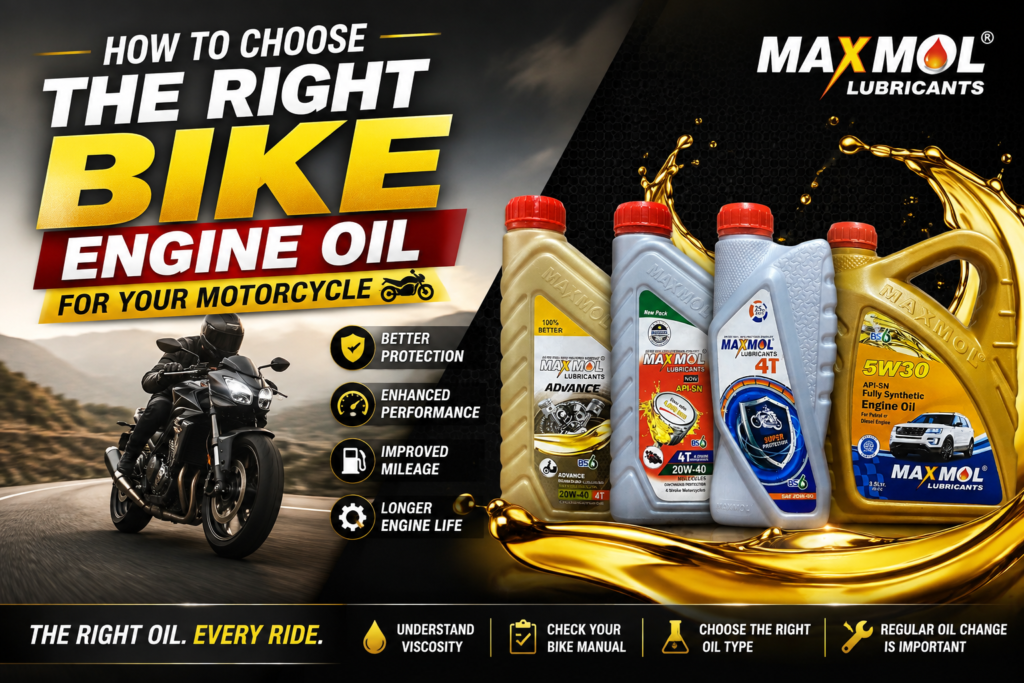
How to Choose the Right Bike Engine Oil for Your Motorcycle

How to Choose the Right Bike Engine Oil for Your Motorcycle

How to Choose the Right Bike Engine Oil for Your Motorcycle Choosing the right bike engine oil is important for maintaining smooth engine operation, proper lubrication, and long-term engine performance. With different SAE grades, API ratings, and JASO specifications available, selecting the right motorcycle engine oil can sometimes be confusing.The best approach is to understand your motorcycle manufacturer’s recommendation and then choose an engine oil that matches the required specifications. Table Of Content Why Choosing the Right Bike Engine Oil Matters Check Your Motorcycle Manufacturer’s Recommendation Understand Engine Oil Grades Like 20W-40 and 20W-50 What Do API and JASO Ratings Mean? Mineral, Semi-Synthetic and Fully Synthetic Engine Oil How Often Should You Change Bike Engine Oil? Common Mistakes to Avoid When Choosing Engine Oil How to Choose the Right Bike Engine Oil Frequently Asked Questions Which  Oil Is Best engine oil for Bike? Is 20W-40 Suitable for Motorcycles? How Often Should Motorcycle Engine Oil Be Changed Why Choosing the Right Bike Engine Oil Matters Engine oil lubricates the moving components inside a motorcycle engine and helps reduce friction and wear. It also helps manage heat, supports engine cleanliness, and contributes to smooth engine operation.Using an engine oil with the appropriate viscosity and performance specifications can help the engine operate as intended under different riding conditions. Check Your Motorcycle Manufacturer’s Recommendation Before choosing any motorcycle engine oil, check the owner’s manual or the manufacturer’s recommended specifications. Look for information such as: Recommended SAE viscosity grade API performance specification JASO specification Recommended oil capacity Recommended oil-change interval For example, some 4-stroke motorcycles may require grades such as SAE 20W-40 or SAE 15W-50. However, the correct grade depends on the specific motorcycle and the manufacturer’s recommendation. Understand Engine Oil Grades Like 20W-40 and 20W-50 SAE grades describe the viscosity characteristics of engine oil. In 20W40 Motorcycle Oil, the first number with the letter “W” indicates the oil’s viscosity characteristics at lower temperatures, while the second number indicates its viscosity characteristics at higher operating temperatures.Similarly, 15W50 Bike Engine Oil is a different viscosity grade.Neither grade is universally better for every motorcycle. The appropriate choice is the grade specified or approved by the motorcycle manufacturer. Mineral, Semi-Synthetic and Fully Synthetic Engine Oil Motorcycle engine oils are available in different formulation types, including mineral, semi-synthetic, and fully synthetic oils. The right choice depends on factors such as: Motorcycle manufacturer’s recommendation Engine design Riding conditions Operating temperature Service requirements Oil specification A more expensive oil is not automatically the correct oil for every motorcycle. The important point is to select an oil that meets the required viscosity and performance specifications. How Often Should You Change Bike Engine Oil? Lorem ipsum dolor sit amet, consectetur adipiscing elit. Ut elit tellus, luctus nec ullamcorper mattis, pulvinar dapibus leo.The recommended oil-change interval varies between motorcycles. Factors that can affect the interval include: Manufacturer recommendations Riding frequency Traffic conditions Short-distance riding High-temperature operation Heavy loads Riding environment Always follow the maintenance schedule provided by your motorcycle manufacturer. If your motorcycle is used under severe operating conditions, the manufacturer may recommend more frequent maintenance.   Common Mistakes to Avoid When Choosing Engine Oil Choosing Oil Only by Price Price should not be the only deciding factor. Check the required SAE, API, and JASO specifications first. Choosing a Grade Without Checking the Manual Do not assume that 20W-40 Bike Engine Oil, 15W-50 Bike Engine Oil, or another viscosity grade will work for every motorcycle. Ignoring Motorcycle-Specific Specifications Motorcycle engines may have specific requirements, particularly when the engine and wet clutch share the same oil. Mixing Different Oils Without Checking Compatibility If you need to top up or change the oil, follow the manufacturer’s recommendations and use a suitable product with the required specifications. How to Choose the Best Engine Oil for Your Bike Choosing the right motorcycle engine oil is important for smooth performance, engine protection and long-term reliability. Before selecting an oil, consider these key points: 1. Check the Recommended Viscosity Always check the motorcycle manufacturer’s recommended viscosity before buying engine oil. For bikes that require this grade, 10W30 motorcycle oil can provide suitable lubrication and reliable performance under the recommended operating conditions. 2. Choose the Right 4T Engine Oil Most modern motorcycles use four-stroke engines and require a suitable 4T motorcycle lubricant. Products such as Max 4T engine oil should be selected according to the bike manufacturer’s recommended viscosity and API specification. 3. Consider Engine Compatibility When searching for Max engine oil for bike, don’t choose an oil based only on the brand name. Check whether its viscosity and performance specification match your motorcycle’s requirements. 4. Focus on Engine Protection The best bike engine oil should provide reliable lubrication, help reduce friction and support protection against engine wear during everyday riding. 5. Choose According to Riding Conditions Daily commuting, long-distance riding, heavy traffic and demanding riding conditions can affect engine oil requirements. The best engine oil for bike is therefore the one that matches both the manufacturer’s specification and your riding conditions. 6. Compare the Recommended Specifications When looking for the best engine oil for motorbike, compare viscosity grade, API specification and the manufacturer’s recommendations rather than choosing solely on price or popularity. 7. Select the Right Oil for Your Engine Ultimately, the best oil for bike engine is not necessarily the most expensive option. It is the lubricant that meets the motorcycle manufacturer’s required viscosity and performance specifications while providing dependable lubrication and engine protection. Conclusion Choosing the right bike engine oil Manufacture is not simply about selecting a particular brand or viscosity grade. The most important factors are your motorcycle manufacturer’s recommendations, SAE viscosity, API classification, and JASO specification where applicable. By checking these requirements before purchasing motorcycle engine oil, you can choose a product that is appropriate for your bike’s specified application and maintenance requirements. Frequently Asked Questions Which engine oil is best for a bike?   The best engine oil depends on your motorcycle manufacturer’s recommended SAE viscosity and performance specifications. Always select an oil that

How to Choose the Right Bike Engine Oil for Your Motorcycle Read More »

Smooth Rides Ahead: Choosing the Right Engine Oil for Your Bike with Maxmol Lubricants

When it comes to keeping your two-wheeler in prime condition, one of the most critical elements is the engine oil you choose. The right oil can enhance your bike’s performance, improve fuel efficiency, and prolong the life of the engine. In this guide, we’ll explore the ins and outs of selecting the best engine oil for your motorcycle, with a special focus on Maxmol Lubricants—a brand known for its quality and performance. The Importance of Engine Oil Engine oil is essential for your bike’s performance. It serves multiple functions:   Lubrication: It reduces friction between engine components, which minimizes wear and tear. Cooling: Engine oil helps dissipate heat generated during combustion, keeping your engine at a safe operating temperature. Cleaning: It carries away dirt, dust, and debris, preventing sludge buildup and maintaining engine cleanliness. Protection: High-quality oil creates a protective barrier against rust and corrosion, ensuring your engine remains in optimal condition. Understanding Engine Oil Types When selecting engine oil, you’ll come across several types, each with its advantages.   Mineral Oil: This is the most basic form of engine oil, derived from refining crude oil. While it’s cost-effective, it may not provide the performance levels needed for high-performance bikes. *Synthetic Oil: This type is engineered through chemical processes to offer superior protection and performance. Synthetic oils, like those from *Maxmol Lubricants, maintain their viscosity better under extreme temperatures, providing excellent lubrication and reducing engine wear. Semi-Synthetic Oil: A blend of mineral and synthetic oils, semi-synthetic options provide a balanced performance and cost, making them suitable for many riders. Choosing the Right Viscosity The viscosity rating of engine oil is crucial for ensuring optimal performance. Oils are labelled with a “W” rating, such as 10W-40. The number before the “W” indicates the oil’s viscosity at cold temperatures, while the number after refers to its viscosity at high temperatures. Selecting the correct viscosity ensures that your bike runs smoothly under varying conditions. Why Maxmol Lubricants? Maxmol Lubricants stands out in the crowded market for several reasons:   Quality and Performance: Maxmol offers a range of oils specifically designed for motorcycles, ensuring they meet the unique demands of two-wheeler engines. Their synthetic oils provide superior protection, maintain performance under extreme conditions, and keep engines cleaner for longer. Advanced Additives: Maxmol Lubricants contain a blend of high-quality additives that enhance oil performance. These additives help prevent sludge buildup, reduce wear, and ensure the oil remains stable across various temperatures. Wide Range of Options: Whether you ride a commuter bike, a touring motorcycle, or a high-performance sport bike, Maxmol offers a variety of engine oils tailored to different riding styles and conditions. Factors to Consider When Choosing Engine Oil   Manufacturer Recommendations: Always refer to your bike’s owner manual for specific oil recommendations. Maxmol Lubricants are designed to meet or exceed many manufacturers’ specifications, ensuring compatibility with your motorcycle. Riding Conditions: If you ride in extreme temperatures, harsh environments, or long distances, consider synthetic oils from Maxmol. They provide enhanced performance and protection under demanding conditions. Age and Condition of Your Bike: For older bikes, consider oils designed for high mileage that may include additives to rejuvenate engine seals and reduce leaks. Personal Preference: Some riders prefer specific brands based on their experiences. Trust your instincts, but ensure that the oil you select meets your bike’s requirements. Maintenance and Change Intervals Once you’ve chosen the right engine oil, establishing a regular maintenance schedule is essential. Engine oil should typically be changed based on the manufacturer’s recommendations. Synthetic oils from Maxmol often have longer change intervals compared to mineral oils, but regular checks on oil levels and quality are still vital. Conclusion Choosing the right engine oil for your bike is crucial for maintaining its performance, ensuring longevity, and enjoying a smooth ride. With Maxmol Lubricants, you can be confident that you’re selecting high-quality oils tailored to your motorcycle’s specific needs. By understanding the types of oils available, considering viscosity ratings, and adhering to manufacturer recommendations, you’ll set your bike up for success. So, gear up, choose the right oil, and hit the road with the peace of mind that your engine is well taken care of. With Maxmol Lubricants by your side, smooth rides are just around the corner!

Smooth Rides Ahead: Choosing the Right Engine Oil for Your Bike with Maxmol Lubricants Read More »

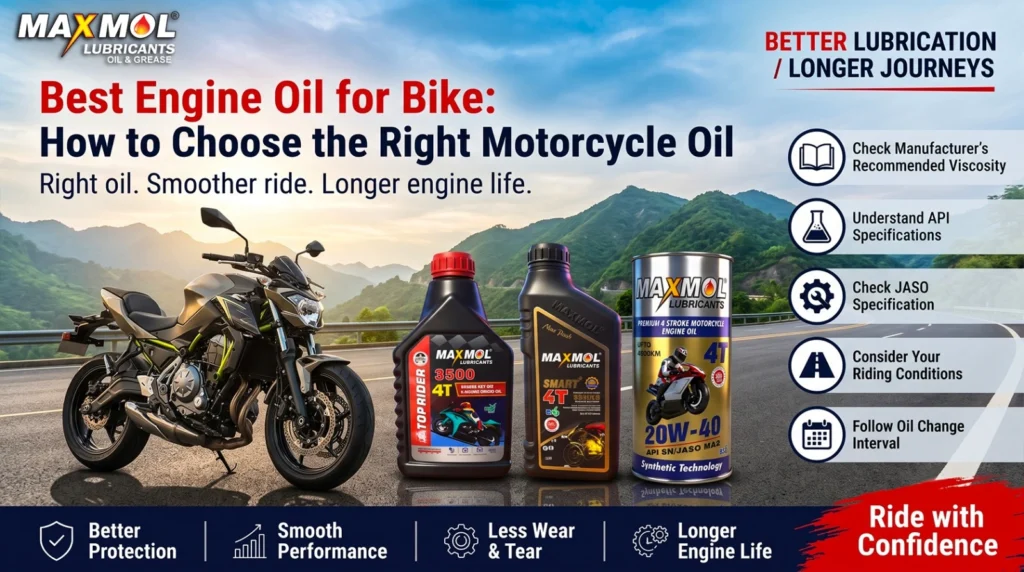
Best engine oil for bike with Maxmol motorcycle engine oils and tips for choosing the right motorcycle oil

Best Engine oil for Bike: How to Choose the Right Motorcycle Oil

Best Engine Oil for Bike: How to Choose the Right Oil Choosing the best engine oil for a bike depends on several factors, including the motorcycle manufacturer’s recommended viscosity, engine type, API specification, JASO specification and riding conditions. The right motorcycle engine oil helps provide proper lubrication, reduce friction and support smooth engine performance. With different options such as 10W-30, 10W-40, 15W-40 and 20W-40 available in the market, choosing the right oil can be confusing. In this guide, we explain how to choose engine oil for a bike, how viscosity grades work and what to consider when selecting motorcycle engine oil.  Why Is Engine Oil Important for a Bike? The engine contains many moving components that operate at high temperatures and speeds. Friction between these components can cause wear if the engine does not receive adequate lubrication. Motorcycle engine oil performs several important functions, including: Lubricating moving engine components Helping reduce friction and wear Supporting smooth engine operation Helping transfer heat away from engine components Helping keep internal engine components cleaner Supporting reliable performance under normal operating conditions Using the appropriate bike engine oil can therefore play an important role in maintaining your motorcycle. However, choosing an engine oil should not be based only on brand, price or viscosity. The motorcycle manufacturer’s recommended specifications should always be the starting point. Next, the engine oil is added, which lessens wear between the engine’s components to prevent damage. Engine oil’s primary purpose is to supply the engine with enough lubrication so that it can operate smoothly and effectively. After learning about motor bike engine oil, let’s discuss selecting the right engine oil for your motorcycle. How to Choose the Best Engine Oil for Bike The best engine oil for a bike is not necessarily the same for every motorcycle. Different engines require different oil specifications. Follow these important factors when selecting motorcycle engine oil. 1. Check the Manufacturer’s Recommended Viscosity The first step is to check your motorcycle owner’s manual. The manufacturer normally specifies one or more recommended SAE viscosity grades for the engine. Common motorcycle oil grades may include: 10W-30 10W-40 15W-40 20W-40 20W-50 The correct grade depends on the motorcycle’s engine design, operating conditions and manufacturer’s recommendations. Do not select an oil simply because a particular viscosity is popular. Always check which viscosity is recommended for your motorcycle. Understand API Specifications API, or the American Petroleum Institute, classifies engine oils according to performance requirements. You may see specifications such as: API SL API SM API SN API SP The appropriate API specification depends on the motorcycle manufacturer’s requirements and the engine design. If you want to understand API classifications in more detail, see our guide on API engine oil specifications. 3. Check the JASO Specification JASO specifications are particularly relevant to motorcycle engine oils. Many motorcycles use a wet clutch, where the engine oil can also come into contact with the clutch system. Therefore, using an oil with the appropriate motorcycle specification is important. Common JASO classifications include: JASO MA JASO MA2 JASO MB The correct JASO specification should be selected according to the motorcycle manufacturer’s recommendation. For motorcycles with wet-clutch systems, the manufacturer may specify a JASO MA or MA2 oil. 4. Consider Your Riding Conditions Your riding conditions can also affect engine oil requirements. For example, motorcycle use may involve: Frequent traffic and stop-and-go riding Long-distance highway riding Hot weather Frequent short trips Heavy loads High engine speeds However, riding conditions should be considered after checking the manufacturer’s recommended specifications. They should not be used as a reason to ignore the recommended viscosity or performance requirements. 5. Follow the Recommended Oil Change Interval Even good-quality engine oil needs to be changed at the recommended interval. Over time, engine oil can become contaminated and its performance can change because of heat, engine operation and contaminants. Follow the oil-change interval provided by your motorcycle manufacturer. If your motorcycle is used under particularly demanding conditions, consult the manufacturer’s maintenance recommendations. What Is the Best Engine Oil for a Motorcycle? The best engine oil for a motorcycle is the oil that meets the specifications recommended by the motorcycle manufacturer. There is no single engine oil that is universally best for every motorcycle. When selecting best motorcycle oil, consider: Recommended SAE viscosity API specification JASO specification Engine type Motorcycle manufacturer’s recommendations Operating and riding conditions For example, one motorcycle may require 10W-30 while another may recommend 10W-40 or 20W-40. Therefore, choosing oil based only on the engine’s size or another motorcycle owner’s recommendation may not be appropriate. Which Engine Oil Is Best for Bike? If you are wondering which engine oil is best for bike, start with your motorcycle owner’s manual. The correct engine oil should meet the manufacturer’s recommended viscosity and performance specifications. For example, if the manufacturer recommends a particular SAE grade and JASO specification, choose a motorcycle engine oil that meets those requirements rather than selecting an oil simply because it has a higher price or a different viscosity. The right oil should be matched to the motorcycle—not selected based on a universal “best” grade. Types of Motorcycle Engine Oil Motorcycle engine oils are commonly available in three broad categories: If you want to understand the differences between these oil types, read our guide to mineral vs semi-synthetic vs fully synthetic engine oil. Mineral Engine Oil Mineral engine oils are formulated from mineral base oils and are commonly used in various motorcycle applications. They can be suitable where the motorcycle manufacturer recommends a mineral-based oil of the required specification. Semi-Synthetic Engine Oil Semi-synthetic engine oils combine mineral and synthetic base-oil components. They can provide a balance between performance characteristics and cost, depending on the specific formulation and manufacturer’s requirements. Fully Synthetic Engine Oil Fully synthetic engine oils are formulated using synthetic base oils and are designed for applications where higher performance characteristics may be required. They can offer good performance over a range of operating temperatures, depending on the formulation. Important: Engine displacement alone should not determine whether you should use

Best Engine oil for Bike: How to Choose the Right Motorcycle Oil Read More »

Shopping Cart
WhatsApp

BECOME A
DISTRIBUTOR

Partner with Maxmol Lubricants and grow your business with our quality lubricant products and reliable distribution opportunities.

✓ Attractive Distributor Margins
✓ Premium Quality Lubricant Products
Become A Distributor