
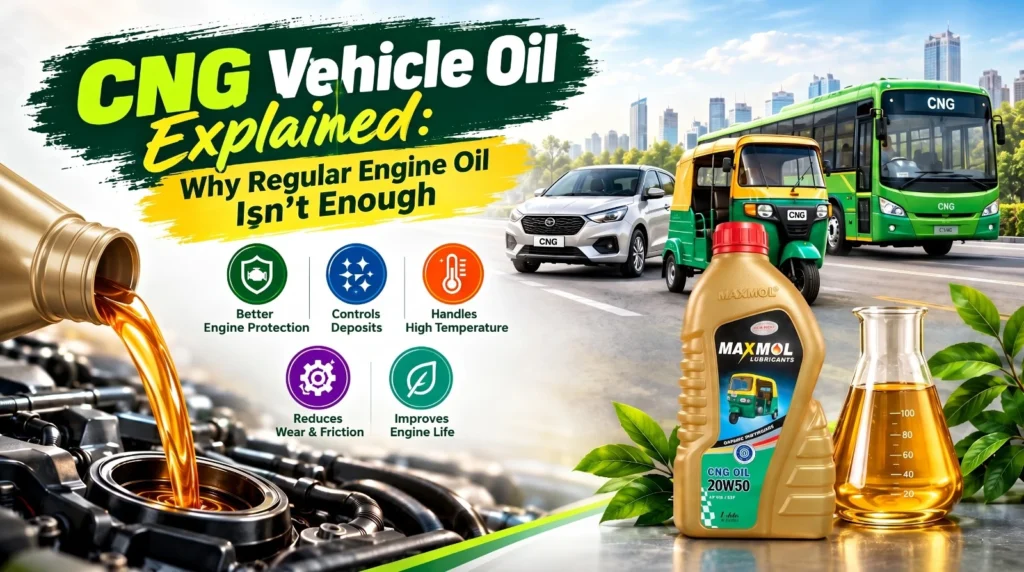
CNG Vehicle Oil Explained: Why Regular Engine Oil Isn’t Enough
CNG vehicles are becoming increasingly popular in India because they can offer lower running costs and practical everyday performance. From passenger cars and commercial vehicles to auto rickshaws, CNG-powered vehicles require proper lubrication to keep their engines operating smoothly. But is regular petrol engine oil enough for a CNG vehicle? The answer depends on the engine design, manufacturer’s recommendation, oil specification, and operating conditions. While some oils are formulated for both petrol and CNG applications, choosing the right CNG engine oil is important because gaseous-fuel engines can place different demands on lubricants. In this guide, we’ll explain how CNG affects engine oil, what to look for when choosing CNG car engine oil, and how to select the right lubricant for different CNG applications. What Is CNG Engine Oil? CNG engine oil is an engine lubricant formulated or approved for use in engines operating on Compressed Natural Gas. Engine oil does much more than simply lubricate moving parts. It helps: However, not every engine oil is automatically suitable for every CNG engine. The correct viscosity and performance specification should always be checked against the vehicle manufacturer’s requirements. Why Are CNG Engines Different? CNG is a gaseous fuel, primarily consisting of methane, and it burns differently from petrol or diesel. These differences can influence the operating environment inside the engine. Depending on the engine design and operating conditions, lubricant requirements may include good oxidation resistance, deposit control and wear protection. CNG vehicles can include: Each application can have different lubrication requirements. Why Regular Engine Oil Isn’t Always Enough One of the most common misconceptions is that all engine oils are essentially the same. They aren’t. An engine oil is made from base oils and a carefully balanced additive package. These additives can provide properties such as: Therefore, selecting an oil only by its viscosity—for example, simply looking for a 5W-30 or 10W-40 oil—isn’t enough. The oil must meet the performance specification recommended for your particular engine. CNG Car Engine Oil: What Should You Check? If you’re searching for CNG car engine oil, don’t choose a product solely because it has “CNG” written on the label. Instead, check these factors: 1. Manufacturer recommendation Start with your vehicle owner’s manual. It normally specifies the recommended viscosity and performance level. 2. Viscosity grade Depending on the engine, you may encounter grades such as: The correct grade varies by vehicle, climate, engine design and manufacturer requirements. 3. Performance specification Check the required API, ACEA or OEM specification where applicable. 4. Vehicle usage A private CNG car used occasionally has different operating conditions from a taxi running continuously in city traffic. CNG Oil for Auto Rickshaw Auto rickshaws are among the most common commercial applications for CNG in many Indian cities. A CNG oil for auto rickshaw should be selected according to the engine manufacturer’s specification and the type of engine. Auto rickshaws can experience: These conditions can place additional demands on engine lubrication. For this reason, operators should pay attention to the recommended oil specification and service interval rather than choosing an oil simply because it is inexpensive. What About CNG 2T Oil? The term CNG 2T oil can be confusing. 2T oil is generally associated with two-stroke engines, where the lubricant is used according to the engine manufacturer’s lubrication system and specification. It should not automatically be treated as the same product as four-stroke CNG engine oil. If a CNG vehicle uses a two-stroke engine, the correct 2T lubricant must be selected according to the manufacturer’s requirements. Never substitute 2T oil for four-stroke engine oil unless the vehicle manufacturer specifically recommends that application. CNG Motor Oil: Is It Different? “CNG motor oil” is another common search term used by vehicle owners looking for lubricants for CNG-powered engines. The important point is that the word “CNG” alone doesn’t define the complete performance of an engine oil. When purchasing CNG motor oil, look beyond the marketing description and check: This approach helps ensure that the lubricant is appropriate for the engine rather than relying only on a product name. Does CNG Make Engine Oil Dirty? CNG combustion can produce different combustion by-products compared with petrol and diesel, but that doesn’t mean CNG engine oil will remain clean indefinitely. Engine oil can still experience: This is why regular inspection and timely oil changes remain important. CNG Oil Price: What Determines the Cost? People searching for CNG oil price often compare products based only on the price printed on the pack. However, engine oil pricing can vary because of several factors, including: Therefore, the cheapest oil isn’t necessarily the appropriate oil for your vehicle. Instead of comparing only CNG oil price, compare the product’s required specifications and suitability for your engine. Indian Oil CNG and CNG Fuel Stations: Don’t Confuse Fuel With Lubricant You may also see searches such as “Indian Oil CNG”, “Indian Oil CNG station”, or “CNG Indian Oil” when looking for CNG fuel. These searches relate to CNG fuel availability and CNG stations, whereas CNG engine oil is a lubricant used inside the vehicle’s engine. Fuel and engine lubricant perform completely different functions. CNG fuel CNG is used as the fuel that powers the engine. Engine oil Engine oil lubricates and protects internal engine components. Therefore, finding an Indian Oil CNG station and choosing the correct engine oil are two separate considerations for a CNG vehicle owner. How to Select the Right CNG Engine Oil: Step by Step Follow this simple process when choosing engine oil. Step 1: Identify your vehicle Determine whether you have: Step 2: Check your owner’s manual Find the recommended oil viscosity and performance specification. Step 3: Check the product label Confirm that the oil meets the required specifications. Step 4: Consider your operating conditions Heavy traffic, frequent short trips, commercial operation and long running hours can affect lubricant requirements. Step 5: Follow the service schedule Use the manufacturer’s recommended oil-change interval. Step 6: Buy genuine lubricant Purchase sealed, genuine products from reliable distributors and dealers. Common CNG Engine Oil Mistakes
CNG Vehicle Oil Explained: Why Regular Engine Oil Isn’t Enough Read More »