
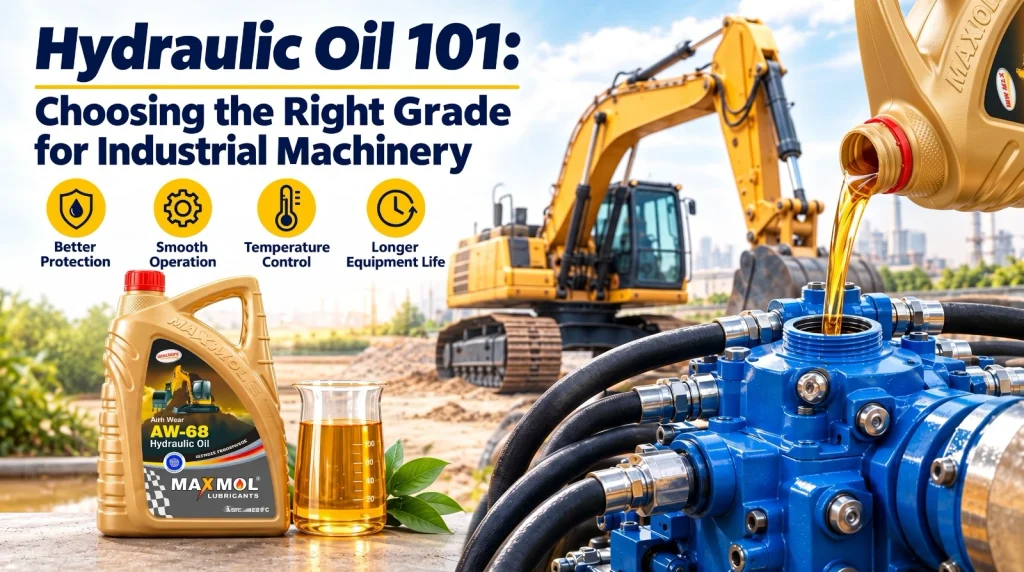
Hydraulic systems are essential for powering a wide range of industrial machinery, construction equipment, agricultural machines, and automotive applications. At the center of these systems is hydraulic oil, a specially formulated fluid that transfers power, lubricates components, controls heat, and helps protect hydraulic systems from wear and corrosion.
Whether you are looking for hydrolic oil, hydraulic jack oil, or tractor hydraulic fluid, choosing the correct grade is important for reliable machine performance. The wrong fluid can lead to poor lubrication, overheating, leakage, component wear, and increased maintenance costs.
This guide explains the basics of hydraulic oil and how to select the right fluid for different applications.
Table of Contents
- What Is Hydraulic Oil?
- Why Is the Correct Hydraulic Oil Grade Important?
- Understanding Hydraulic Oil Viscosity
- Hydraulic Jack Oil and Hydraulic Jack Fluid
- Tractor Hydraulic Fluid
- How to Choose the Right Hydraulic Oil
- Factors Affecting Hydraulic Oil Price
- Where to Find Hydraulic Oil Near Me
- Common Hydraulic Oil Selection Mistakes
- Final Thoughts
What Is Hydraulic Oil?
Hydraulic oil is a fluid used in hydraulic systems to transfer power from one component to another. Besides transmitting hydraulic pressure, it provides lubrication and helps protect pumps, valves, cylinders, motors, and other moving components.
People sometimes search online for hydrolic oil or hydrolic fluid when looking for hydraulic lubricants. Although “hydrolic” is a common spelling variation, the correct technical term is hydraulic oil or hydraulic fluid.
Depending on the application, hydraulic oils can contain additives that provide:
- Anti-wear protection
- Rust and corrosion protection
- Oxidation resistance
- Foam control
- Better viscosity stability
- Improved performance under temperature changes
Why Is the Correct Hydraulic Oil Grade Important?
Hydraulic systems operate under different pressures, temperatures, loads, and working conditions. Therefore, selecting the correct hydraulic oil grade is essential.
Oil that is too thin may not provide adequate protection, while oil that is too thick can restrict flow and increase the energy required to operate the system.
Using the appropriate hydraulic fluid can help provide:
- Smooth hydraulic operation
- Better component lubrication
- Reduced wear
- Efficient power transmission
- Improved pump performance
- Better temperature control
- Longer equipment life
Always check the equipment manufacturer’s recommended fluid and viscosity before changing hydraulic oil.
Understanding Hydraulic Oil Viscosity
Viscosity describes how easily an oil flows. Hydraulic oils are commonly identified by ISO VG (International Organization for Standardization Viscosity Grade) numbers.
Some commonly used grades include:
| Hydraulic Oil Grade | Typical Application |
| ISO VG 32 | Certain cooler-temperature and high-speed hydraulic applications |
| ISO VG 46 | General industrial hydraulic applications |
| ISO VG 68 | Applications requiring higher viscosity, including some higher-temperature conditions |
The appropriate grade depends on the machine design, operating temperature, load, and manufacturer’s specification.
ISO VG 32
ISO VG 32 may be suitable for hydraulic systems requiring relatively low viscosity. It can be used in certain high-speed or cooler operating environments when specified by the equipment manufacturer.
ISO VG 46
ISO VG 46 is a commonly encountered hydraulic oil grade for general industrial machinery. It can provide a balance between fluid flow and lubrication when the equipment is designed for this viscosity.
ISO VG 68
ISO VG 68 has a higher viscosity and may be specified for certain applications operating under higher temperatures or loads.
Hydraulic Jack Oil and Hydraulic Jack Fluid
A hydraulic jack relies on fluid pressure to lift heavy loads. Hydraulic jack oil is therefore an important part of the jack’s operation.
You may also see people searching for hydraulic jack fluid when looking for a suitable replacement fluid.
Hydraulic jack oil should have the appropriate viscosity and performance characteristics for the jack. Using unsuitable oil, brake fluid, engine oil, or other fluids can affect the jack’s operation and may damage seals or internal components.
Before replacing hydraulic jack oil, check the manufacturer’s instructions for the recommended fluid type.
Tractor Hydraulic Fluid
Agricultural machinery operates under demanding conditions, making proper fluid selection important. Tractor hydraulic fluid is designed for hydraulic systems used in tractors and other agricultural equipment.
Depending on the tractor design, the fluid may also serve additional functions, such as lubrication of transmission or wet-brake components. For this reason, tractor hydraulic fluid should not be selected solely based on viscosity.
Always follow the tractor manufacturer’s specifications and use a fluid meeting the required performance standards.
How to Choose the Right Hydraulic Oil
Choosing hydraulic oil requires more than simply selecting a viscosity number.
1. Check the Manufacturer’s Recommendation
The machine manual is the best starting point. Look for the recommended hydraulic oil type, viscosity grade, and performance specification.
2. Consider Operating Temperature
Temperature affects oil viscosity. Machinery operating in cold environments may require suitable low-temperature flow properties, while high-temperature applications require good thermal and oxidation stability.
3. Consider Pressure and Load
Heavy-duty hydraulic equipment can operate under high pressure and continuous loads. The selected fluid should provide suitable anti-wear and lubrication performance for the application.
4. Consider the Hydraulic Pump
Different hydraulic pumps, including gear, vane, and piston pumps, may have specific fluid requirements. Check the manufacturer’s recommendation before selecting or changing the oil.
5. Check Fluid Compatibility
Seals, hoses, filters, and other system components must be compatible with the hydraulic fluid. Avoid mixing different hydraulic fluids unless compatibility has been confirmed.
What Affects Hydraulic Oil Price?
The hydraulic oil price can vary depending on several factors, including:
- Viscosity grade
- Base oil quality
- Additive technology
- Performance specifications
- Brand
- Packaging size
- Application
- Quantity purchased
Industrial hydraulic oil designed for demanding applications may cost more than basic hydraulic fluid because of its formulation and performance characteristics.
When comparing hydraulic oil prices, it is important to consider the required specification and performance rather than choosing an oil based only on the lowest price.
Looking for Hydraulic Oil Near Me?
If you search for hydrolic oil near me, local lubricant distributors, industrial oil suppliers, agricultural equipment dealers, and automotive lubricant retailers may offer suitable products.
Before purchasing, confirm:
- The required viscosity grade
- The manufacturer’s recommended specification
- The required quantity
- The application for which the oil is intended
- Whether the product is suitable for your machine
For industrial machinery, purchasing from a reliable lubricant supplier can also help ensure that you receive the correct product for your application.
Common Hydraulic Oil Selection Mistakes
Choosing Oil Only by Price
A cheaper product is not necessarily suitable for every hydraulic system. Always check the required specification and viscosity.
Selecting the Wrong Viscosity
Incorrect viscosity can affect hydraulic flow, lubrication, efficiency, and component protection.
Mixing Different Fluids
Different formulations may contain different additive systems. Mixing fluids without confirming compatibility can affect performance.
Final Thoughts
Choosing the right hydraulic oil is essential for maintaining the performance and reliability of industrial machinery. Whether you need hydrolic oil, hydrolic fluid, hydraulic jack oil, hydraulic jack fluid, or tractor hydraulic fluid, the correct viscosity and performance specification should always match the equipment requirements.
Before purchasing, check the machine manufacturer’s recommendations, operating temperature, pressure, load, pump type, and fluid compatibility.
If you are comparing hydraulic oil price or searching for hydrolic oil near me, focus not only on cost but also on product quality, specifications, and suitability for your application.
The right hydraulic fluid, combined with regular maintenance and contamination control, can help hydraulic machinery operate smoothly and reliably for longer.