
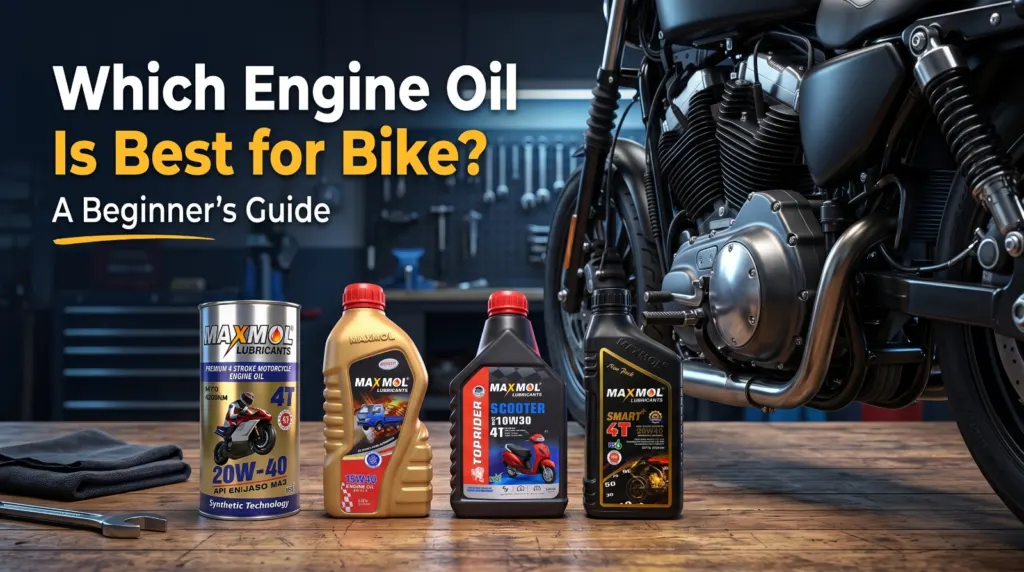
Which Engine Oil Is Best for Bike? A Beginner’s Guide
Choosing the right engine oil is important for keeping your motorcycle running smoothly. The correct oil helps lubricate engine parts, manage heat, reduce friction, and protect the engine from wear. However, with different oil grades such as 10W-30, 10W-40, 15W-40, and 20W-40 available, many bike owners wonder: which engine oil is best for bike?
The answer depends on your motorcycle model, the manufacturer’s recommendations, riding conditions, and the type of engine. In this beginner’s guide, you will learn how to choose the right bike engine oil, understand different oil grades, and identify what to check before buying.
Which Engine Oil Is Best for Bike?
The best engine oil for your bike is the oil that matches the viscosity grade and performance specifications recommended in your motorcycle’s owner’s manual.
Different motorcycles require different engine oils. For example, some bikes use 10W-30, while others require 10W-40 or 20W-40. Using a different grade without checking the manufacturer’s recommendation may affect lubrication and engine performance.
Before choosing motorcycle engine oil, check these three things:
- Viscosity grade: Make sure the oil grade matches your motorcycle’s requirements.
- API specification: Check the required performance classification in your owner’s manual.
- Engine type: Confirm whether your bike requires 4-stroke engine oil or another specified lubricant.
There is no single engine oil that is best for every motorcycle. Always follow the manufacturer’s recommendations.
The best engine oil for your bike is the oil that matches the viscosity grade and performance specifications recommended in your motorcycle’s owner’s manual.
What Are the Different Types of Bike Engine Oil?
Motorcycle engine oils are commonly available in three categories.
1. Mineral Engine Oil
Mineral oil is made from refined petroleum base oils. It can be suitable for motorcycles whose manufacturers recommend this type of lubricant. Its suitability depends on the required oil grade and performance specification.
2. Semi-Synthetic Engine Oil
Semi-synthetic oil combines mineral and synthetic base oils. Depending on its formulation, it may provide a balance of engine protection, performance, and cost.
3. Fully Synthetic Engine Oil
Fully synthetic oil is formulated using synthetic base oils and suitable additives. Depending on the product specification, it may offer good performance under demanding operating conditions.
Which type should you choose? Select the oil type recommended for your motorcycle rather than assuming that a more expensive oil is automatically the best choice.
What Do 10W-30, 10W-40, 15W-40, and 20W-40 Mean?
Engine oil grades describe how the oil flows at different temperatures.
| Engine oil grade | What it indicates |
|---|---|
| 10W-30 | A viscosity grade designed to meet specified cold-temperature and operating-temperature viscosity requirements |
| 10W-40 | Meets a different operating-temperature viscosity range from 10W-30 |
| 15W-40 | Has a different cold-temperature viscosity classification and a 40 operating-temperature grade |
| 20W-40 | Has a higher winter viscosity number than 10W-40, with the same 40 operating-temperature grade |
The letter W stands for winter. The number before W relates to low-temperature viscosity performance, while the second number indicates the oil’s viscosity classification at higher operating temperatures.
These grades are not interchangeable for every motorcycle. For example, even if 20W-40 is commonly used in some motorcycles, you should not switch to it unless it meets your bike manufacturer’s requirements.
Before buying 10W-30 engine oil, check whether this viscosity grade is recommended for your motorcycle.
Which Engine Oil Is Best for a 100cc, 125cc or 150cc Bike?
Engine capacity alone does not determine the correct engine oil. The motorcycle’s design, model year, engine requirements, and manufacturer’s specifications are more important.
Best Engine Oil for a 100cc Bike
For a 100cc motorcycle, check the recommended viscosity grade and performance specification in the owner’s manual. Choose a compatible oil designed for the engine type.
Best Engine Oil for a 125cc Bike
The best engine oil for a 125cc bike depends on the particular motorcycle model. Check whether the manufacturer recommends 10W-30, 10W-40, or another grade before purchasing.
Best Engine Oil for a 150cc Bike
A 150cc motorcycle may require a different viscosity grade or performance specification from another bike with the same engine capacity. Always verify the exact requirements for your model.
The same principle applies to 200cc, 250cc and higher-capacity motorcycles: follow the manufacturer’s specifications rather than choosing oil based only on engine size.
Which Engine Oil Is Best for Bikes in India?
Motorcycles in India may be used in city traffic, on highways, in hot weather, and on roads with frequent stops. These conditions can influence how an engine operates, but they do not automatically determine which oil grade you should use.
When buying bike engine oil in India, consider the following:
- The recommended viscosity grade for your motorcycle.
- The API or other performance specification required by the manufacturer.
- Whether your motorcycle has a wet clutch that requires motorcycle-specific oil.
- Your usual riding conditions, including traffic and long-distance travel.
- The oil change interval recommended in the owner’s manual.
For motorcycles with a wet clutch, check whether the manufacturer requires JASO MA or MA2 oil. Using the correct motorcycle-specific lubricant can help maintain proper clutch operation.
Is 10W-30 Better Than 20W-40 for Bikes?
Neither grade is universally better. The right choice depends on the motorcycle manufacturer’s recommendations and the engine’s design.
10W-30 and 20W-40 have different viscosity characteristics. A motorcycle designed for 10W-30 may not benefit from switching to 20W-40, and a bike requiring 20W-40 may need that specific grade to meet its intended lubrication requirements.
Before changing grades, check the owner’s manual. Do not choose an oil only because it is thicker, thinner, cheaper, or marketed as suitable for many motorcycles.
Choosing between 10W-30 and 20W-40 engine oil depends on your motorcycle manufacturer’s recommendations and engine requirements.
How Often Should You Change Bike Engine Oil?
The correct engine oil change interval varies by motorcycle model, engine design, oil type, and riding conditions.
Follow the service schedule provided in your owner’s manual. Some motorcycles may require more frequent checks or servicing under demanding riding conditions.
Here are a few useful habits:
- Check the engine oil level according to the procedure in your owner’s manual.
- Inspect for oil leaks and unusual changes in oil consumption.
- Use the recommended quantity of oil when servicing the motorcycle.
- Replace the oil filter or clean the oil strainer when specified by the manufacturer.
- Never exceed the recommended service interval without guidance from the manufacturer.
Regular oil checks and timely servicing help maintain reliable engine lubrication.
For additional motorcycle maintenance guidance, refer to the Hero MotoCorp maintenance guide.
What Should You Check Before Buying Bike Engine Oil?
Before purchasing engine oil for your motorcycle, review these important details.
1. Viscosity grade: Confirm the correct grade for your bike.
2. Performance specifications: Check the required API and JASO classifications, where applicable.
3. Product suitability: Make sure the oil is designed for your engine type and clutch requirements.
4. Packaging and authenticity: Buy from a reliable seller and inspect the packaging, seal, batch details, and product information.
5. Manufacturer recommendations: Avoid choosing an oil solely because it is advertised as suitable for all bikes.
These checks can help you make a more informed decision and avoid using an unsuitable lubricant.
Why Choose the Right Bike Engine Oil?
Using the correct engine oil supports several important functions:
- Lubrication: Helps reduce friction between moving engine components.
- Wear protection: Helps protect engine parts when the oil meets the required specifications.
- Heat management: Helps carry heat away from lubricated engine components.
- Engine cleanliness: Suitable additives help control deposits and contaminants.
- Reliable operation: Correct oil selection supports the engine’s intended operating conditions.
Actual performance depends on the oil formulation, engine design, maintenance practices, and operating conditions. Engine oil cannot replace regular servicing or repair of worn components.
Frequently Asked Questions
Which engine oil is best for a bike?
The best engine oil is the one that matches your motorcycle’s recommended viscosity grade and performance specifications. Check your owner’s manual before buying.
Is 10W-40 engine oil good for bikes?
10W-40 can be suitable for motorcycles that specify this viscosity grade and the appropriate performance classification. Check your model’s requirements before using it.
Can I use car engine oil in my bike?
Do not assume that car engine oil is suitable for a motorcycle. Many motorcycles have wet clutches and shared engine-transmission lubrication requirements. Use oil that meets the motorcycle manufacturer’s specifications, including any required JASO classification.
Which engine oil is best for a bike in hot weather?
Hot weather alone does not determine the correct oil grade. Use the viscosity grade recommended for your motorcycle and the relevant operating conditions.
Is synthetic oil better than mineral oil for motorcycles?
Synthetic oil may offer advantages in certain applications, but the best choice depends on your motorcycle’s requirements, the product specifications, and your maintenance schedule.
Can I change from 10W-30 to 20W-40?
Only change grades if the alternative is approved for your motorcycle by the manufacturer. A different viscosity grade is not automatically an improvement.
How much engine oil does a bike need?
Oil capacity varies by motorcycle model and whether the service includes an oil filter change. Check the owner’s manual and follow the specified filling procedure.
Conclusion
So, which engine oil is best for bike? The best choice is the oil that meets your motorcycle’s recommended viscosity grade, performance standards, and engine requirements.
Whether you are comparing 10W-30, 10W-40, 15W-40, or 20W-40, always verify compatibility before making a purchase. Choosing the correct lubricant and following the recommended oil change schedule can help support engine protection, smooth operation, and long-term maintenance.
MAXMOL Lubricants offers lubricant products for different applications. Before selecting a product for your motorcycle, check its specifications against your bike manufacturer’s recommendations.
Learn more about MAXMOL Lubricants as a lubricant manufacturer in Delhi and explore our lubricant product range.
Interested in working with MAXMOL Lubricants? Learn how to become an engine oil distributor and explore dealership opportunities.