
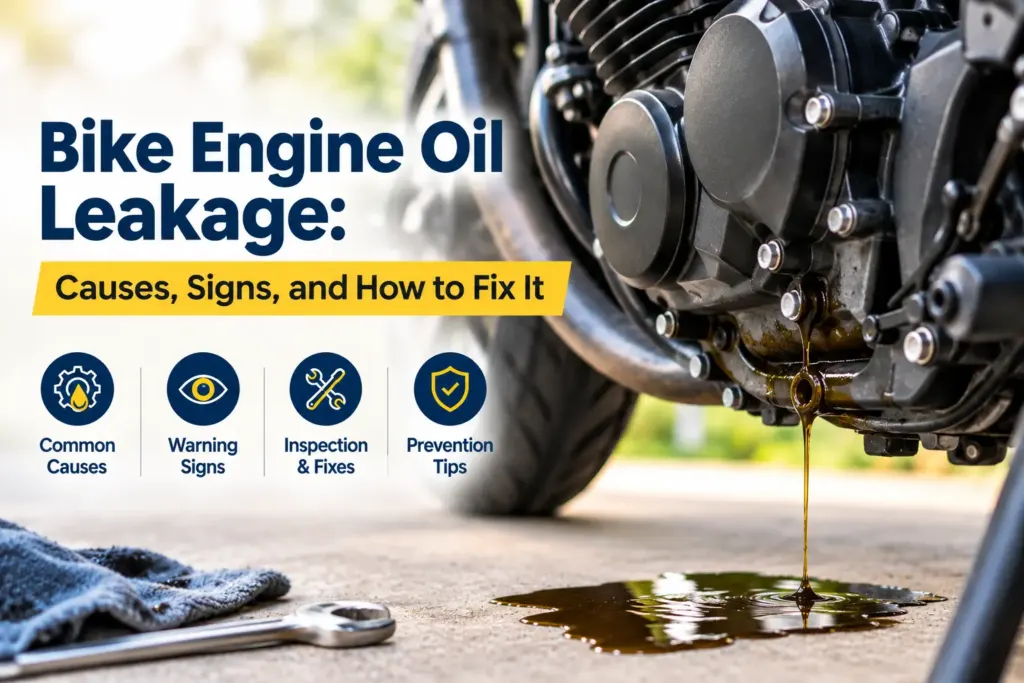
Bike Engine Oil Leakage: Causes, Signs, and How to Fix It
Bike engine oil leakage is a common problem that motorcycle owners should never ignore. A few drops of oil under your bike, oily marks around the engine, or a noticeable drop in engine oil level can indicate a leak. While some leaks may result from a loose drain bolt or worn seal, others may require professional inspection.
Understanding the causes of bike engine oil leakage can help you identify warning signs early, protect your engine, and avoid unnecessary repair costs. In this beginner-friendly guide, we will explain why engine oil leaks, how to identify the problem, and what you should do to fix it safely.
To understand how to select the correct oil for your motorcycle, read our guide on [choosing the right engine oil for your bike].
What Is Bike Engine Oil Leakage?
Bike engine oil leakage occurs when lubricating oil escapes from the engine or its connected components. Engine oil reduces friction between moving parts, helps manage heat, and protects internal components from wear.
When oil leaks out, the engine may not receive adequate lubrication if the oil level becomes too low. This can increase friction, cause overheating, and potentially lead to serious engine damage.
A small oil stain does not always mean there is major engine damage, but every suspected leak should be checked to find its source.
What Are the Common Causes of Bike Engine Oil Leakage?
Several issues can cause engine oil to leak from a motorcycle. The most common causes include the following.
1. Loose or Damaged Oil Drain Bolt
The oil drain bolt is removed during an engine oil change. If it is not tightened correctly, or if its sealing washer is damaged, oil may leak from the bottom of the engine.
What to look for: Fresh oil around the drain bolt or an oily patch underneath the engine.
2. Worn Engine Oil Seals
Oil seals help prevent lubricating oil from escaping around rotating shafts and other engine components. Over time, seals may harden, wear out, or become damaged.
What to look for: Oil around shaft openings, engine covers, or other sealed areas. The exact location depends on the motorcycle’s design.
3. Damaged Gaskets
Gaskets create a seal between engine components, such as the crankcase sections or engine covers. A damaged, incorrectly installed, or deteriorated gasket may allow oil to escape.
What to look for: Oil seeping along the joint between two engine components.
4. Overfilled Engine Oil
Adding more engine oil than the manufacturer recommends can contribute to leakage or oil being forced through certain openings, depending on the engine design.
What to do: Check the oil level according to the owner’s manual. Do not assume that adding more oil will improve engine protection.
5. Loose or Improperly Fitted Engine Components
Incorrect installation after servicing can leave bolts, covers, filters, or sealing components improperly secured. This may result in oil leakage after an oil change or engine repair.
What to look for: Leakage that starts soon after servicing. Have the workshop inspect the area rather than tightening engine bolts randomly.
6. Excessive Crankcase Pressure
Problems with the crankcase ventilation system or other internal engine issues can increase pressure and contribute to oil escaping through seals or vents.
What to do: If the leak continues despite correct oil levels and intact external seals, ask a qualified mechanic to inspect the ventilation system and engine condition.
What Are the Warning Signs of Bike Engine Oil Leakage?
Identifying the signs early can help you respond before the problem becomes serious.
- Oil spots under the bike: Fresh, oily drops appear where the motorcycle is parked.
- Wet engine surfaces: Oil collects around the engine casing, drain bolt, or seals.
- Falling engine oil level: The oil level drops between checks without an obvious explanation.
- Burning oil smell: Leaking oil may contact hot engine or exhaust components and produce a noticeable smell.
- Smoke near the engine: Oil reaching hot surfaces may produce smoke.
- Unusual engine noise: Inadequate lubrication can cause abnormal mechanical noise, although noise may have other causes too.
Do not rely on visible stains alone. Oil can travel along engine surfaces, so the point where it drips may not be the actual source of the leak.
How Can You Check Bike Engine Oil Leakage at Home?
You can perform a basic visual inspection before visiting a mechanic. Follow these steps carefully.
Step 1: Park the Bike Safely
Park the motorcycle on level ground, switch off the engine, and allow it to cool. Keep the bike stable and away from traffic.
Step 2: Check for Oil Under the Bike
Look for fresh drops or puddles beneath the engine. Avoid touching hot components or crawling under an unstable motorcycle.
Step 3: Inspect Visible Engine Areas
Look for wetness around the drain bolt, engine covers, accessible seals, and other visible joints. Do not dismantle engine components unless you have the necessary skills and tools.
Step 4: Check the Engine Oil Level
Use the checking procedure specified in your owner’s manual. Some bikes require the motorcycle to be upright, while the correct method for checking the level varies by model.
For more guidance, read this guide on [how to check your bike’s engine oil level] and always follow the checking procedure recommended for your motorcycle.
Step 5: Observe When the Leakage Occurs
Notice whether the leak appears after parking, after riding, or immediately following an oil change. This information can help a mechanic diagnose the problem.
Important: If oil is leaking rapidly, the oil level is very low, an oil-pressure warning appears, or oil reaches the tyre or brake components, do not ride the bike. Arrange professional assistance.
How Can Bike Engine Oil Leakage Be Fixed?
The correct repair depends on the source of the leak. There is no single solution for every motorcycle.
| Cause | Possible repair |
|---|---|
| Loose drain bolt | Correct tightening to the manufacturer’s specification and inspection of the sealing washer |
| Damaged drain-bolt washer | Replacement with the correct washer |
| Worn oil seal | Replacement of the affected seal |
| Damaged gasket | Replacement of the gasket and proper reassembly |
| Excess engine oil | Correct the oil level using the manufacturer’s procedure |
| Faulty crankcase ventilation | Inspection and repair of the ventilation system |
| Damaged engine casing | Professional assessment and appropriate repair |
Avoid using random sealants, additives, or excessive tightening as quick fixes. Incorrect repairs may damage threads, interfere with proper sealing, or make the problem worse.
For persistent or significant leakage, consult a qualified motorcycle mechanic.
Can the Wrong Engine Oil Cause Bike Engine Oil Leakage?
Using an unsuitable engine oil is not necessarily the direct cause of a leak. However, the wrong viscosity or a lubricant that does not meet the motorcycle manufacturer’s requirements may affect engine performance and protection.
Oil leakage is more commonly associated with damaged seals, worn gaskets, loose fasteners, incorrect oil levels, or installation problems.
To choose the right engine oil for your motorcycle, check the owner’s manual for the recommended SAE viscosity grade and required performance specifications. Also, follow the manufacturer’s instructions for oil capacity and oil-change intervals.
Do not choose engine oil based on viscosity alone. The correct product depends on your bike’s engine design and lubrication requirements.
Before selecting engine oil, consult your [motorcycle owner’s manual] to confirm the recommended viscosity grade, oil capacity, and required specifications for your bike model.
How Can You Prevent Bike Engine Oil Leakage?
Regular maintenance can help reduce the risk of oil leaks and make problems easier to identify.
- Check oil levels regularly: Follow the schedule and method specified in your owner’s manual.
- Use the recommended engine oil: Choose a lubricant that meets the required viscosity and performance specifications.
- Service your bike on schedule: Routine servicing helps identify worn seals, damaged gaskets, and loose components.
- Use correct installation procedures: Ensure drain bolts, covers, and sealing washers are fitted properly during servicing.
- Inspect after an oil change: Look for fresh oil around the service area and check the oil level using the recommended method.
- Fix small leaks promptly: A minor leak can worsen over time or indicate an underlying mechanical issue.
Preventive maintenance is generally easier and less expensive than repairing damage caused by insufficient lubrication.
Frequently Asked Questions About Bike Engine Oil Leakage
1. Is bike engine oil leakage dangerous?
It can be. A leak that lowers the engine oil level may reduce lubrication and lead to overheating or engine damage. Oil on tyres or brakes can also create a serious safety hazard. Stop riding if the leak is significant or affects these components.
2. Why is my bike leaking oil after an oil change?
Possible causes include an improperly fitted drain bolt, a damaged sealing washer, an incorrectly installed filter or gasket, or excess oil. Have the serviced area checked if the leakage continues.
3. Can I ride my bike if engine oil is leaking?
It is safest not to ride until the severity and source of the leak have been assessed. Never continue riding if the oil level is below the safe range, oil is leaking rapidly, a warning light appears, or oil reaches the tyres or brakes.
4. Why is oil leaking from the bottom of my bike?
Possible causes include the drain bolt, its washer, an engine cover gasket, or oil running down from a leak higher on the engine. A mechanic can identify the actual source.
5. Does engine oil leakage mean the engine is damaged?
Not always. Some leaks come from simple external sealing problems, while others may indicate more serious mechanical faults. Early inspection can help prevent further damage.
6. How much does it cost to repair bike engine oil leakage?
The cost depends on the motorcycle model, the leak’s location, the replacement parts required, and labour charges. A simple sealing-washer replacement generally involves less work than replacing an internal oil seal or repairing a damaged engine casing. Get a diagnosis and estimate before approving repairs.
7. How often should I check my bike’s engine oil?
Follow the checking frequency and procedure in your motorcycle owner’s manual. Check promptly if you notice an oil stain, unusual engine noise, or a change in oil level.
Conclusion
Bike engine oil leakage should never be ignored, even if only a few drops are visible. Loose drain bolts, worn seals, damaged gaskets, overfilled oil, and crankcase ventilation problems are among the possible causes.
Check the oil level safely, inspect visible areas, and seek professional help when the leak is persistent or significant. Most importantly, use the engine oil grade and specifications recommended by your motorcycle manufacturer and keep up with regular servicing.
With timely inspection and proper maintenance, you can help protect your bike’s engine, reduce the risk of expensive repairs, and enjoy more reliable rides.
About MAXMOL Lubricants: MAXMOL Lubricants provides lubricant products for different automotive applications. Always select an engine oil that matches your motorcycle manufacturer’s specifications.